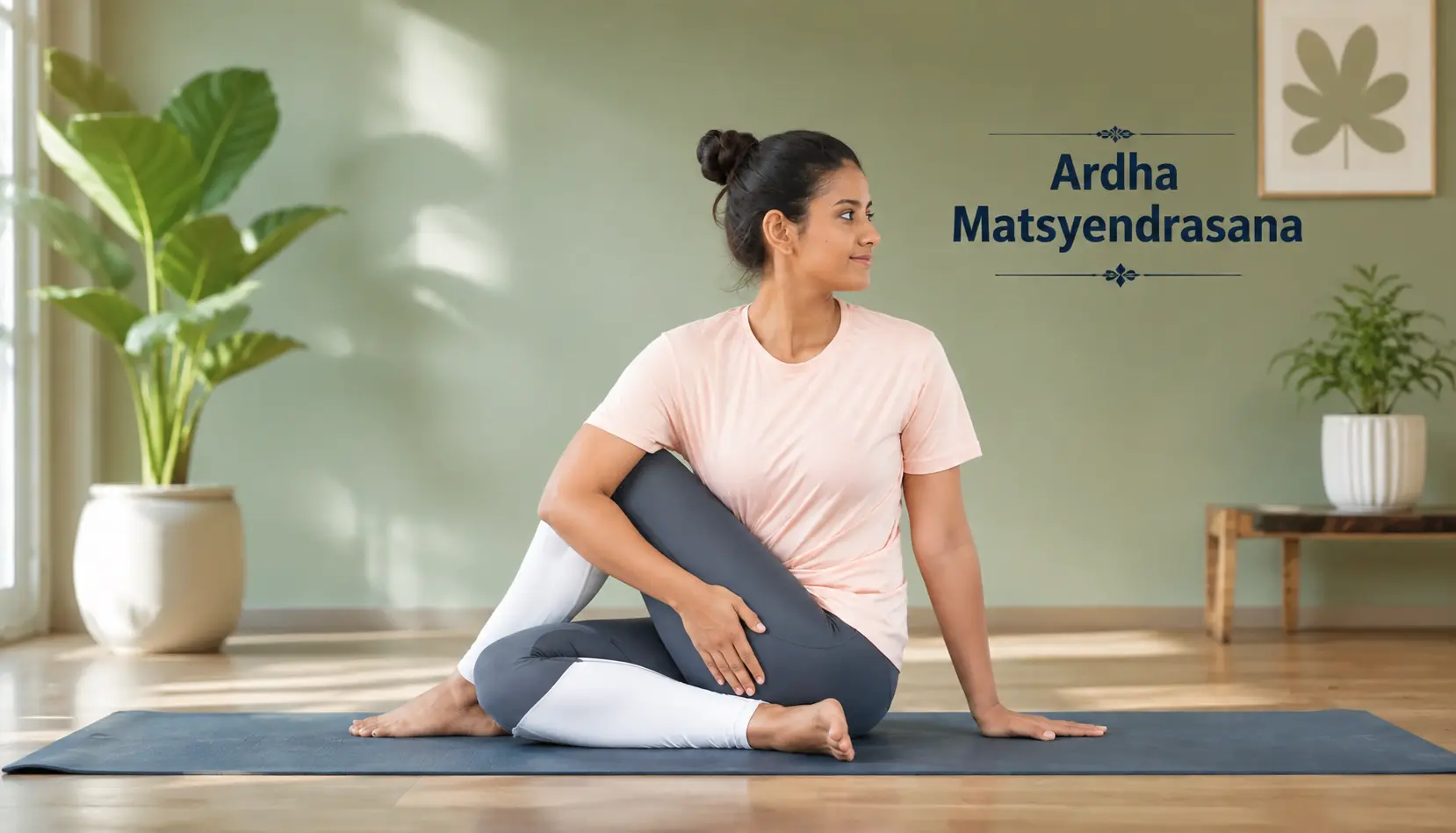
Ardha Matsyendrasana: Half Lord of the Fishes Pose
‘Ardha Matsyendrasana’ is popularly known as the Half Lord of the Fishes Pose, which is a twisting asana done while sitting down that engages the hips, shoulders, and the spine. A seated pose in yoga can produce an incredible amount of movement throughout the body without the need for any specialized equipment or quick movements.
It can be incorporated into your yoga session to ensure that you maintain proper mobility and breathe in a controlled way. The process requires you to sit straight, arrange your legs asymmetrically, and start to rotate your torso to one side. Instead of twisting your body deeper, the focus will be on elongating the spine and then proceeding to rotation. This asana can boost your metabolic system and improve your energy levels.
Key Takeaways:
- Enhances spinal flexibility, mobility, and posture through a controlled twist.
- Boosts digestion, liver health, and kidney function by stimulating internal organs.
- Stretches the shoulders, hips, and neck while relieving fatigue and backache.
What Is Ardha Matsyendrasana (Half Lord of the Fishes Pose)?
Ardha Matsyendrasana derives its name from Sanskrit. ‘Ardha’ stands for “half”, ‘Matsyendra’ is named after Matsyendranath, a great saint from Hatha Yoga, and Asana stands for posture.
It is also called ‘Half Spinal Twist Pose’. In this pose, one sits on the floor with one leg straight and the other bent, and then twists the body towards the bent leg.
Benefits of Ardha Matsyendrasana (Half Lord of the Fishes Pose)
When practised with appropriate alignment and within a comfortable range, Ardha Matsyendrasana can contribute to several aspects of physical practice.
|
|
|
|
|
|
|
|
|
|
|
|
|
|
|
|
|
|
|
|
|
|
|
|
How to Practise Ardha Matsyendrasana
Follow these steps to perform Half Lord of the Fishes Pose:
1. Begin from a seated position
Assume a seated position on your yoga mat with both legs stretched out straight in front of you in Dandasana. Keep your spine erect and let your sitting bones press steadily into the ground.
Using a folded blanket underneath you may help if you have a tendency for your lower back to round.
2. Position Your Legs
Fold your right knee and place your right foot on the ground to the outside of your left knee. Keep the left leg straight.
Make sure that your weight is distributed evenly between the sitting bones rather than being lopsided.
3. Extend the Spine
In preparation for the pose, breathe in slowly and visualize the crown of your head lifting up. Extending the spine gives you a stronger base for twisting.
4. Twist Your Body
As you breathe out, start to twist your body to the right. Reach your left arm to the outside of the right knee. Your right arm may lie on the ground behind you.
Try to avoid using your arm to pull yourself aggressively into the twist.
5. Develop the Pose
Keep elongating the spine with every breath you inhale. Every time you exhale, ensure that you turn your body more if your body allows you.
Your chest must turn before your head. You can turn your eyes to the right shoulder if you are comfortable doing so.
6. Hold and Breathe
Stay in the pose for some slow breaths. Remember to breathe normally instead of holding your breath in order to hold the pose.
7. Release and Repeat
Start releasing from the pose back to the neutral seated pose. Perform the whole sequence on the other side as well.
Precautions for Ardha Matsyendrasana
Learn this posture carefully, especially if you are a beginner in seated spinal twisting postures.
- Warm yourself up first: Get ready for your spine, hips, and shoulders to get into a twist.
- Do not strain your body: Do not twist more than your body permits.
- Care for your spine: Do not try to twist using forceful pulling with the hands.
- Take care with any injuries: Be careful if you already have a spine, hip, shoulder, or knee problem.
- Change as needed: Put a folded blanket or change leg positioning.
- Keep breathing steadily: Decrease the amount of effort if your breathing is troubled.
- Cease the practice if it hurts: Any sharp pain, numbness, or dizziness needs to stop the practice.
To Conclude
Ardha Matsyendrasana is an active seated twist which combines spine, hip, core, and breath work in one pose. It is easy to modify because of its simple nature. The rotation action of the pose prompts you to focus your mind on alignment and your body.
The best method for this pose is gradual building of the pose. Lengthen the spine, rotate the spine gently, breathe deeply, and always modify where needed. Regular practice will make the pose helpful in a good yoga practice regimen. You can achieve inner balance and mental peace with a consistent practice of this asana. Build a healthy and improved lifestyle with holistic yoga.
FAQs
1. Do I have to turn all the way in Ardha Matsyendrasana?
No. A comfortable and controlled turn is more desirable than getting into the deepest position. It is crucial to keep your spine elongated and not push too much.
2. Why is there a curve in my lower back during the pose?
It may be due to the feeling of tightness in the hip joints or hamstrings. Using a folded blanket as a cushion will help you lift your pelvis up and stay upright.
3. Which disease is believed to be cured by Matsyendrasana?
Patients suffering from Type 2 Diabetes may benefit by practising Matsyendrasana. This asana is believed to lower blood sugar levels.
4. What do I need to wear for Ardha Matsyendrasana?
Opt for comfortable and stretchy clothing that allows your hips, waist, and shoulders to move freely.
Disclaimer: The content on LifePositive.com, including articles/blogs on yoga, acupuncture, naturopathy, and other alternative healing modalities for holistic wellness, is for informational and educational purposes only. It is not a substitute for professional medical advice, diagnosis, or treatment. Always consult a qualified healthcare provider before starting any new health protocol or making changes to an existing treatment plan.
Also Read: Supta Konasana
By Umesh Kumar Khiri



Discussion (0)
No comments yet. Be the first to comment!
Leave a Comment
You need to login to post a comment.