Couples Yoga Poses: Strengthen Connection
Couples yoga poses turn a solo practice into a shared experience, using each other's weight, breath and balance to build trust and connection on the mat.
Key Takeaways
- Couples yoga builds trust through touch, breath and balance.
- Clear communication prevents most partner yoga mishaps.
- Start slow, match your partner's pace, and modify as needed.
What Are Couples Yoga Poses?
Couples yoga, also called partner yoga, adapts traditional poses so two people support, counterbalance or mirror one another. Unlike solo practice, it depends on shared weight and coordinated movement rather than individual balance alone.
How to Prepare for Couple Yoga Poses
- Find a peaceful spot that is uncluttered and spacious enough to accommodate two mats.
- First warm up individually for a couple of minutes
- Decide on a cue to stop before you begin.
- Wear comfortable clothes that will allow you to move freely.
- Ease into simple postures before proceeding to more difficult ones.
Communication Between Partners
Effective communication is the backbone of couples yoga poses. Before each pose, briefly agree on who leads and who follows.
Check in verbally during holds ("too much pressure?" or "ready to release?"). Maintain eye contact where possible, and always honour a partner's request to ease off or stop. At the end, trust the process.
6 Couples Yoga Poses
1. Seated Back-to-Back Breathing
- Sit back-to-back against each other, cross-legged, spines gently touching.
- Close your eyes and breathe gently together.
- Feel your partner's breath slowly as you rise and fall.
Benefit: Synchronises breathing and builds calm connection.
Modification: Sit on a cushion if hips feel tight.
2. Double Downward Dog
- First partner holds Downward Dog on the mat.
- Second partner places hands on the ground behind.
- Second partner lifts hips onto partner one's lower back.
Benefit: Deepens the stretch and builds core stability for both.
Modification: Partner two keeps one foot grounded instead of lifting fully.
3. Partner Forward Fold
- Sit facing each other, soles of both your feet touching.
- Hold wrists and inhale together to lengthen your spines.
- Take turns leaning back as the other folds forward and breathe gently.
Benefit: Deepens the hamstring stretch safely using shared resistance.
Modification: Hold behind the knees instead of the wrists.
4. Supported Tree Pose
- Stand side by side; inner arms should be around each other's waist.
- Each partner lifts the outer foot to the inner thigh.
- Raise both arms and hold, breathing steadily.
Benefit: Improves balance using mutual support.
Modification: Rest the lifted foot on the ankle instead of the thigh.
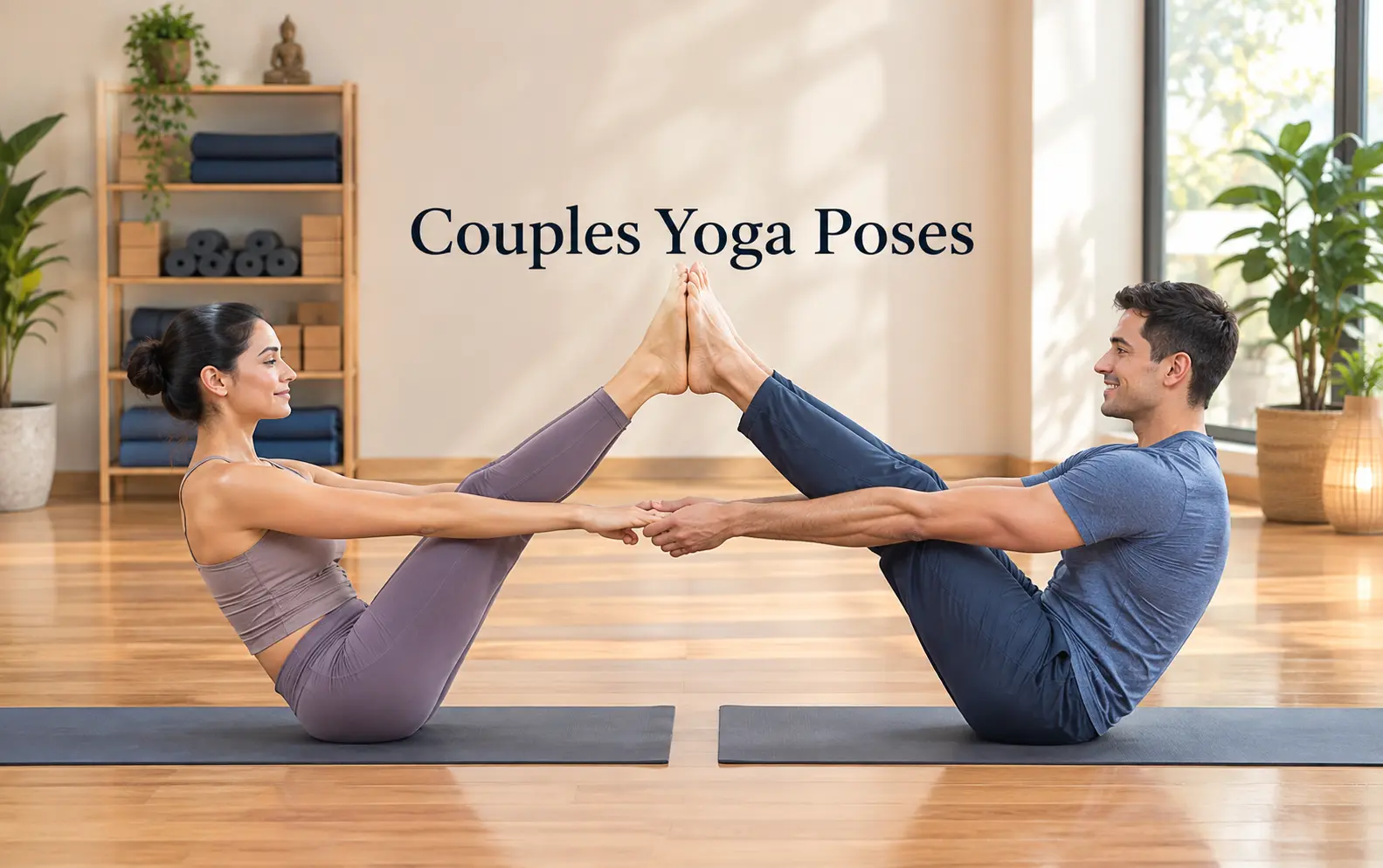
5. Double Boat Pose
- Sit facing each other, with your knees bent, feet touching.
- Hold hands and lift your feet off the floor.
- Straighten legs so your soles press together.
Benefit: Strengthens your core while balancing together.
Modification: Keep your knees bent instead of straightening the legs.
6. Seated Twist with Partner Support
- Sit back-to-back with your partner, spines aligned.
- Both twist gently to the same side together.
- Place hands on each other's opposite knee for support.
Benefit: It deepens the spinal twist with gentle assistance.
Modification: Twist only halfway and hold your own knee.
Tension Release Counter Poses
a. Child's Pose Release for Partners
Sit face to back with your partner and bend forward into Child’s pose.
Benefit: Relaxes spinal tension accumulated during backbends and twists.
b. Side Stretch for Partners with Support
Stand side by side, interlace your inner arms and raise outer arms above head.
Benefit: Stretches the sides after working core and balance.
A 30-Minute Couples Yoga Routine
|
|
|
|
|
|
|
|
|
|
|
|
|
|
|
|
|
|
|
|
|
|
|
|
|
|
|
|
|
|
|
|
Flow and emotion: Begin quietly to settle nerves, move into playful balance poses. Let some good laughter happen. Couple yoga poses often bring out giggles during wobbly balances, and that's part of the emotional bonding.
Physical Benefits
- Couples yoga builds flexibility, balance and core strength
- Improves posture through shared alignment cues
- Increases body awareness via partner feedback
Mental and Emotional Benefits
- Couples yoga deepens trust and non-verbal communication
- Couple yoga poses stress through shared, calming breathwork
- Strengthens emotional bonds through shared vulnerability
Precautions
- Always avoid forcing your stretching range to fit your partner’s flexibility.
- Make sure to pick a partner of similar size when practicing weight-bearing poses.
- Never perform couple yoga poses that might aggravate an existing injury.
- Do not continue if either partner experiences pain or dizziness.
Common Mistakes
- Rushing into advanced poses without warming up
- Ignoring a partner's discomfort to "push through"
- Uneven weight distribution in balance poses
- Skipping communication before transitions
How Long Should a Couple Yoga Session Last?
It is recommended for couples to practice yoga for 20 to 45 minutes, two to three times per week. Newbies should begin with sessions lasting 15 minutes with seated poses only.
To Conclude
Couples yoga poses offer more than a workout. They build trust, improve communication and create shared moments of calm and laughter. Start simple, listen to each other, and let the practice become a ritual you both look forward to.
Frequently Asked Questions
1. What are some romantic yoga poses?
Seated Back-to-Back Breathing, Partner Forward Fold and Supported Tree Pose are gentle, connecting options often seen as romantic.
2. What is hot yoga for couples?
It's a partner yoga session practised in a heated room, which increases sweat and flexibility but requires extra hydration and caution.
3. What is intimacy yoga?
It's a slow, breath-focused style of partner yoga designed to deepen emotional and physical closeness between partners.
4. Can beginners try couples yoga poses?
Yes, starting with simple seated and standing poses is a safe way to begin together.
Also Read: Stretch Yoga
By Umesh Kumar Khiri

Discussion (0)
No comments yet. Be the first to comment!
Leave a Comment
You need to login to post a comment.