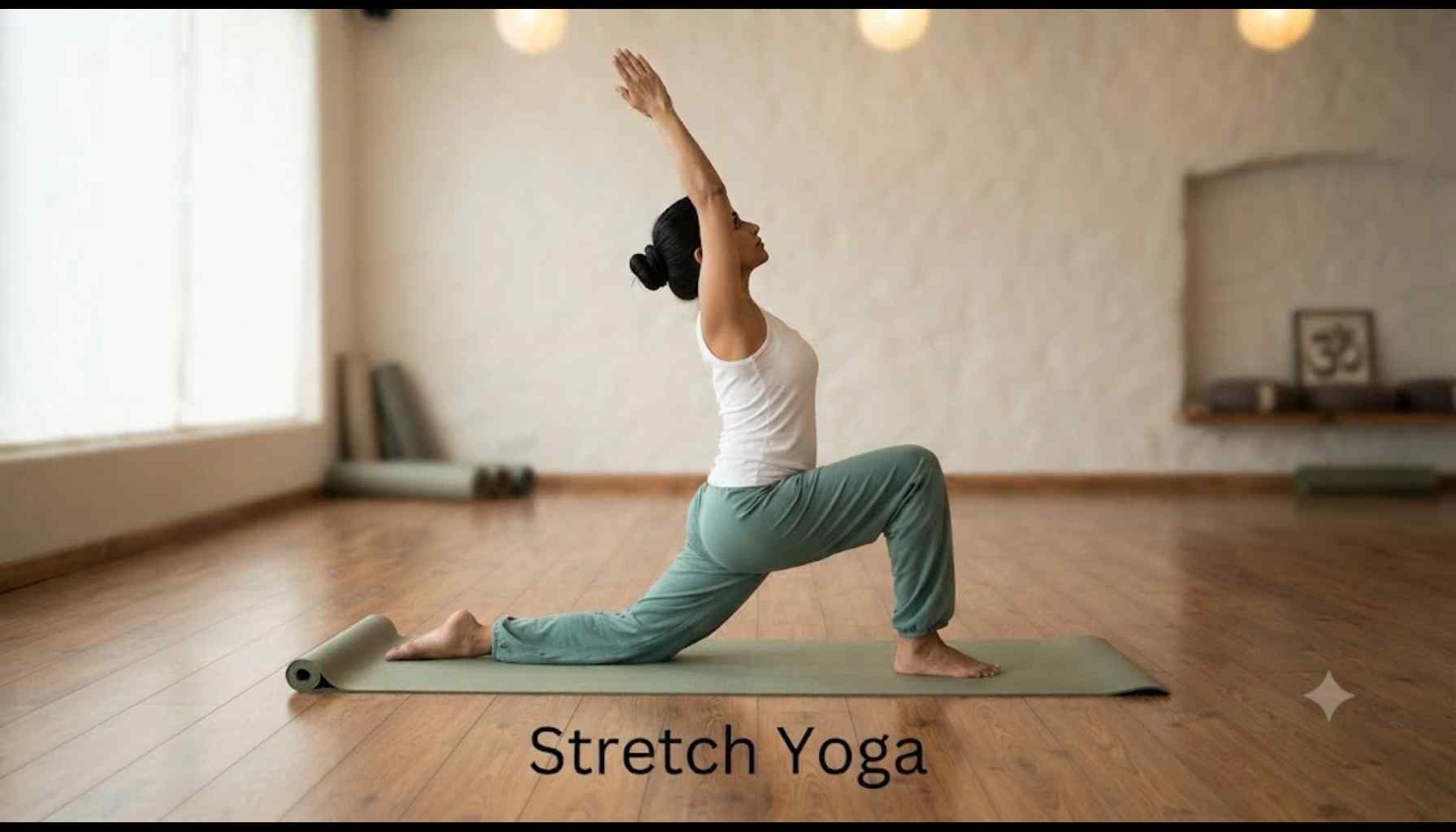
Stretch Yoga: Move Freely
Stretch yoga combines slow, controlled poses with mindful breathing to release tension and restore range of motion in the body.
Stretching yoga is one of the most calming forms of yoga, which involves holding postures for long enough to stretch muscles and joints.
Key Takeaways
- Stretch yoga lengthens muscles and improves range of motion.
- Move slowly, breathe with each stretch, never force it.
- Consistency matters more than how deep you stretch.
Why Does the Body Need Stretching Yoga?
Nowadays, a sedentary lifestyle, working at a computer, and constant stress can tighten muscles and restrict joint movement. Stretching yoga helps solve this problem. In the yoga sessions, we work with all large muscle groups, which relaxes our neck, shoulders, back, hips, and legs.
Stretch Yoga Poses
1. Standing Forward Fold (Uttanasana)
- Stand straight, feet slightly apart, fold from your hips.
- Inhale and extend your spine, exhale and fold forward.
- Hands should be hanging, and knees bent slightly.
- Modification: Rest your hands on a chair or yoga blocks for support.
2. Seated Forward Fold (Paschimottanasana)
- Sit with straightened legs, extending spine.
- Inhale, raising both arms above head.
- Exhale, bending and reaching for feet.
- Modification: Sit on a cushion and loop a yoga strap around your feet.
3. Cat-Cow Stretch (Marjaryasana-Bitilasana)
- Begin on hands and knees with wrists below shoulders.
- Inhale and extend spine backward, arching back and lifting tailbone.
- Exhale and arch back to a cat position, rounding the spine and tucking chin towards chest.
4. Low Lunge (Anjaneyasana)
- Begin in kneeling position, placing one foot before you, bend this knee.
- Inhale and raise torso along with both arms.
- Exhale and fold forward.
- Modification: Place your hands on yoga blocks or a chair for balance.
5. Seated Twist (Ardha Matsyendrasana)
- Sit straight, placing one foot over the other knee.
- Inhale, extending spine upward.
- Exhale, twisting your spine to the bent leg.
6. Child’s Pose (Balasana)
- Kneel on the floor, sit back on your heels.
- Inhale, reaching forward through arms.
- Exhale, touching forehead to the floor.
Counter Poses to Relieve Tension
1. Downward Facing Dog (Adho Mukha Svanasana): Start from hands and knees and then lift your hips up into an inverted V position. It lightly decompresses the spine from forward bends and twists.
2. Supine Knee to Chest (Apanasana): Lay down in supine position and draw both the knees into your chest. It calms your lower back after backbends and deep hip stretches.
Alignment in Stretching Yoga
Proper alignment is essential for the safety and effectiveness of stretching yoga.
- Starting position: Start each pose from a balanced position, either standing or sitting.
- Breathing with movement: Breathe in during stretching and breathe out when deepening the stretch.
- Stacking joints: Always ensure that your knees stack over your ankles and shoulders do not touch your ears.
- Gaze point: It is important to have a steady gaze point as it will help you remain balanced.
It is recommended to hold each pose for 20 to 60 seconds. For beginners, they can begin at the lower range and work their way up. Each session should take between 15 and 30 minutes.
Benefits of Stretch Yoga
- Improves flexibility in muscles and joints
- Reduces stiffness and everyday tension
- Supports better posture
- Eases stress and calms the nervous system
- Improves circulation and eases minor aches
- Complements strength training and cardio routines
Stretch Yoga for Common Conditions
|
|
|
|
|
|
|
|
|
|
|
|
|
|
|
|
|
|
|
|
|
|
|
|
|
|
|
|
|
|
|
|
Best For:
Stretch yoga suits almost everyone: desk workers with tight hips and shoulders, athletes needing recovery, beginners easing into yoga, and older adults wanting gentle mobility work. It's especially useful for anyone who sits for long hours or feels chronically stiff.
Precautions for Stretching Yoga
- Never force a stretch into pain; mild tension is enough.
- Warm up slightly before deep stretches, especially in the morning.
- Avoid stretch yoga poses that strain an existing injury.
- Consult a doctor if pregnant or managing a chronic condition.
- Come out of poses slowly to avoid dizziness.
Stretching Yoga Routine
Three to five short sessions a week work well for most people. Pair stretch yoga with strength or cardio days as a recovery tool, or practise it alone in the evening to unwind.
Hygiene Practices
- Do the exercise on a clean yoga mat that is frequently washed.
- Cleanse your hands and feet prior to exercising.
- Clean the mat after exercising to keep it fresh.
- Keep your practice space ventilated and dust-free.
Final Thoughts
Stretch yoga is a simple, accessible way to release tension and move more freely. You can also include pranayama in your stretching yoga sessions. With consistent practice, correct alignment, and patience, stretch yoga can become one of the most rewarding parts of your routine.
Frequently Asked Questions
1. What is stretching yoga?
It's a slow, holding-based style of yoga focused on lengthening muscles and improving flexibility.
2. Can I lose belly fat by stretch yoga?
Stretching yoga alone burns few calories, so it supports but doesn't replace diet and cardio for fat loss.
3. Is yoga better than the gym?
Neither is universally better; yoga builds flexibility and calm, while gym training builds strength and cardiovascular fitness.
4. How many minutes of yoga a day is beneficial?
Even 15 to 30 minutes a day can noticeably improve flexibility, posture and stress levels.
Also Read: Sun and Moon Yoga
By Umesh Kumar Khiri

Discussion (0)
No comments yet. Be the first to comment!
Leave a Comment
You need to login to post a comment.