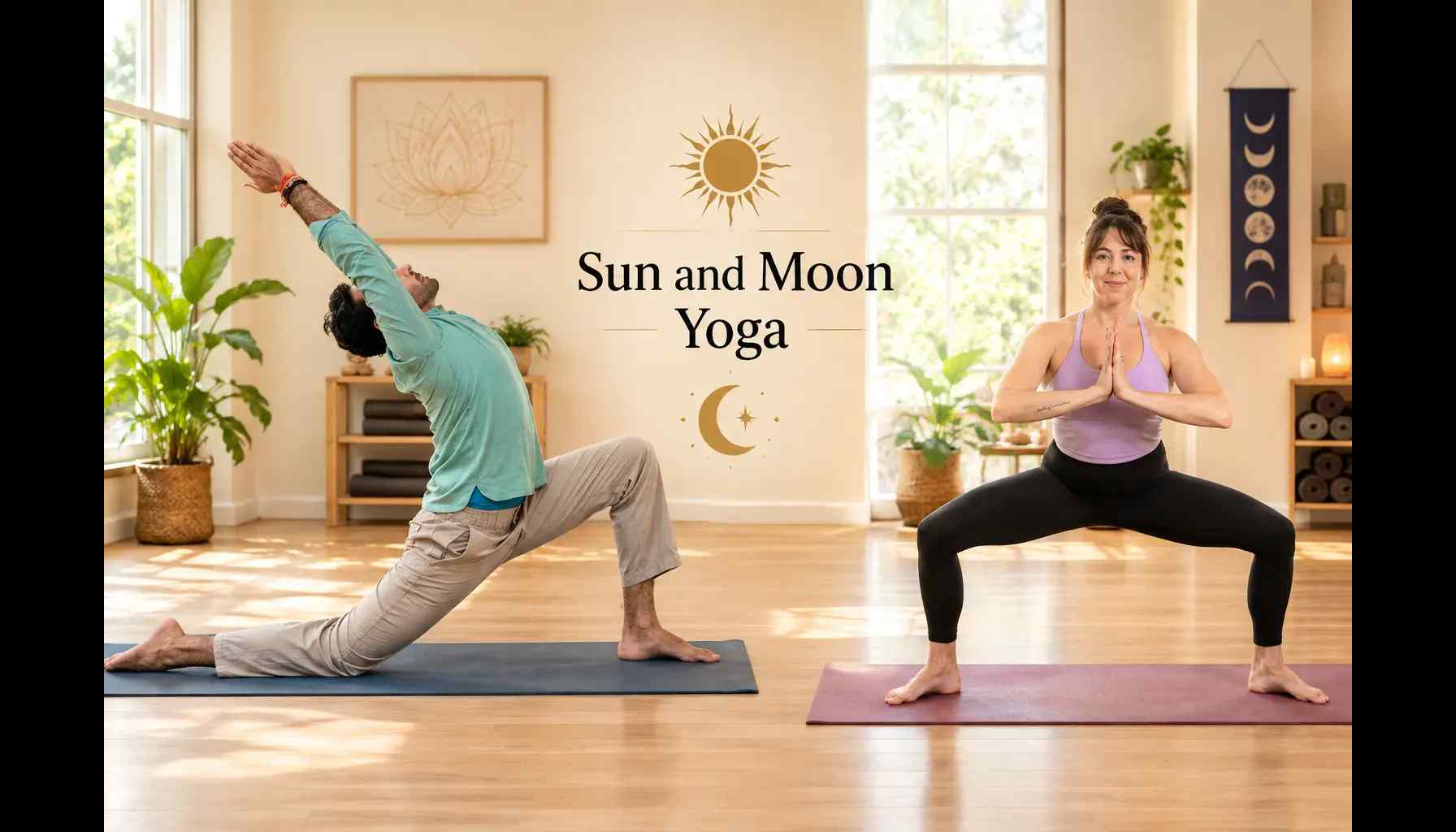
Sun and Moon Yoga: Balance Your Energy
Sun and moon yoga is a way of blending two qualities within one practice. The sun stands for heat, effort and clarity. The moon stands for coolness, receptivity and rest.
Some days you feel fired up and restless. Other days you feel drained and foggy. Sun and moon yoga offers a simple idea: pair energising movement with calming stillness, so your body and mind settle somewhere steady in between.
Key Takeaways
- Sun yoga is warming and active, while moon yoga is cooling and restful. Together they create balance.
- Practise energising flows in the morning and slower, softer sequences in the evening.
- Match your practice to how you feel, not to a fixed rulebook.
What is Sun and Moon Yoga?
The idea comes from Hatha yoga. Traditionally, the word is read as a union of "ha" (sun) and "tha" (moon). The aim is to bring opposing energies into harmony, so that neither vigour nor calm takes over your life.
The Sun Side: Energy and Drive
The Sun Style is energetic. Imagine dynamic flows, powerful standing postures and breathing techniques that boost your energy. The most well-known technique of the Sun practice is the Sun Salutation – the sequence of postures which warms up the muscles and improves concentration.
You should follow this style when you feel lethargic, lack motivation, or have problems with slow mornings. But an excess of this style can make you overexcited or overworked.
The Moon Side: Calm and Renewal
The Moon Style practice is slow and fluid. Gentle stretches, holding postures, and gentle breathing techniques are used here. The Moon Salutation is the best-known sequence. Its sideways waves relieve your nervous system.
Follow this style when you feel overstimulated, restless or unable to relax at night.
Masculine and Feminine Energies in Sun and Moon Yoga
According to yogic philosophy, the sun symbolizes masculine energy that relates to action and vigor. The moon, on the other hand, is feminine energy related to intuition and calmness. These kinds of energies are symbolic in nature and can be found in everyone despite their sex. The aim of practicing sun and moon yoga is to balance the two types of energies using movement, breathwork, and meditation.
The yogic tradition has a lot of information on the flow of energy through subtle energy channels called nadis. There is a nadi known as pingala that is associated with the sun and flows on the right side of the body. There is another nadi called ida which flows on the left side and is associated with the moon. A common way of balancing these two channels is by breathing alternately through the nose.
Not all concepts have to be accepted in order to do the exercise. The symbolic concepts of the sun and the moon encourage an alternation between effort and relaxation.
Sun and Moon Yoga - Balancing Poses
Sun Poses
1. Upward Salute (Urdhva Hastasana)
Stand up straight, bring your arms above your head while lifting your chest and take a breath. It wakes up the body and helps with good posture.
2. Low Lunge (Anjaneyasana)
Step one foot in front and bend your back knee while raising your arms. It releases tight hips and strengthens your legs.
3. Downward-Facing Dog (Adho Mukha Svanasana)
Push through your hands, raise your hips and back, and stretch out your spine. It energizes the entire body and stretches hamstrings and shoulders.
Moon Poses
4. Goddess Pose (Utkata Konasana)
Stand with your legs apart, point your toes outward, bend the knees and place your hands on your chest. It tones the legs and also keeps the mind calm.
5. Wide-Legged Forward Bend (Prasarita Padottanasana)
Place the feet wide apart, hinge forward from the hip joints and release the head. It relaxes the spine and keeps the mind relaxed.
6. Child’s Pose (Balasana)
Come to a kneeling position, sit back on your heels and rest your head on the floor with your arms stretched forward. It soothes the nervous system and eases back tension.
How to Build a Sun and Moon Yoga Routine
Morning: Start with a few gentle rounds of Sun Salutation. Begin slowly and add rounds as your stamina improves. Finish with a minute of deep breathing.
Evening: Wind down with a slow, flowing sequence, then hold two or three floor poses for a minute or so each. End by lying still for a few minutes.
Whenever you need it: If you're wired, lean toward the moon. If you're flat, lean toward the sun. The best practice is the one that answers what you need today.
Health Benefits of Sun and Moon Yoga
Sun and moon yoga is an exercise regimen that includes physical actions and restorative actions. The following health benefits can be attributed to the regular practice of this yoga.
- Increase flexibility: Gently stretching increases joint flexibility.
- Builds strength: Sun salutations and standing postures build leg, arm and abdominal muscles.
- Stress reduction: Slow actions combined with deep breathing reduce stress.
- Promotes good sleep: The calm actions of moon yoga will enhance sleep.
- Increases balance: Standing postures increase the body's coordination.
- Increase energy: Dynamic moves of sun yoga will increase alertness and eliminate fatigue.
- Posture improvement: Stretches and strengthening moves will improve posture.
Tips for Beginners
- Always warm up prior to a dynamic routine.
- Breathe in your practice – inhale when lengthening, exhale when folding or releasing.
- Work with blocks, blankets or a wall for support and comfort.
- Practice on an empty or slightly filled stomach.
- Make it brief and frequent. One ten-minute session daily is more beneficial than one long weekly practice.
- Listen to your body and avoid if any pose hurts.
On Safety
Surya routines elevate heart rate, so approach slowly. In case of illness, injury, hypertension or pregnancy consult your doctor or an authorized teacher prior to beginning. An authorized teacher can also assist with modification of poses to suit you.
Final Thoughts
Sun and moon yoga is not about choosing sides. It teaches you to move between effort and rest with awareness. Give both a place in your week and you may find yourself feeling more energised by day and calmer by night.
Frequently Asked Questions
1. What is the difference between sun and moon yoga?
Sun yoga is energising and dynamic, while moon yoga is cooling, slow and calming.
2. Should I do sun salutations or moon salutations first?
Sun salutations suit the morning and moon salutations suit the evening, though you can do either whenever it fits your mood.
3. Is moon yoga only for women?
No, moon-style practice is for everyone, whatever your gender.
4. Can beginners try sun and moon yoga?
Yes, start with a few slow rounds and modify poses as needed.
Also Read: Sculpt Yoga
By Umesh Kumar Khiri
Discussion (0)
No comments yet. Be the first to comment!
Leave a Comment
You need to login to post a comment.