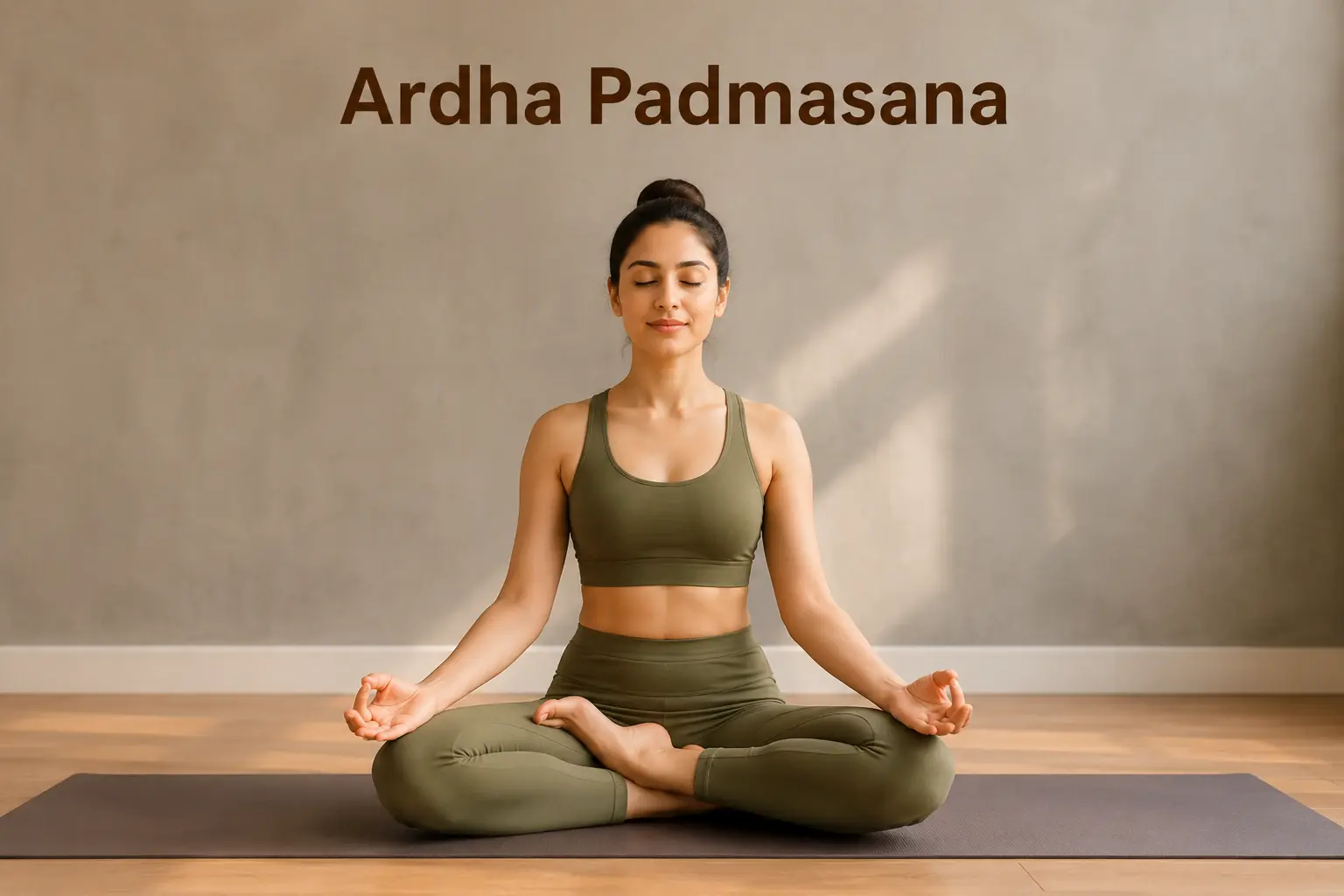
Ardha Padmasana (Half Lotus Pose)
The Ardha Padmasana or Half Lotus Pose, is a yoga asana which is a compromise between the basic criss-crossed sitting pose and the difficult Full Lotus Pose.
The ability to maintain a comfortable and relaxed posture is important in maximizing the potential advantages offered by meditation, pranayama, and mindful yoga. The Half Lotus Pose involves crossing one leg over the thigh of the other leg and holding it in place. This posture ensures a straight spine and maintains stability of the body, while at the same time improving hip flexibility.
Key Takeaways
- Bridges basic cross-legged sitting and Full Lotus.
- Lengthens the spine to aid meditation and breathing.
- Opens hips gently with less joint strain.
What Is Ardha Padmasana (Half Lotus Pose)?
In Sanskrit, 'Ardha Padmasana' is made up of three terms: 'Ardha', which means "half"; 'Padma', which means "lotus"; and 'Asana', which stands for "pose." Hence, its English translation would be Half Lotus Pose.
In Full Lotus pose, the two feet are placed in the opposing thighs; however, in Half Lotus, the foot of one leg is placed in the opposite thigh while the other leg stays underneath the raised leg.
This is easier compared to the Full Lotus pose for most people, but it requires some flexibility in the hips.
How to Perform Ardha Padmasana (Half Lotus Pose)
Ardha Padmasana can be performed using the following guidelines:
- Sitting on a yoga mat, extend your legs straight ahead.
- Flex one leg and take it close to the opposite thigh.
- Place the foot gently on the opposite thigh, making sure that the sole faces upward as much as possible.
- Flex the other leg and place it below the lifted leg.
- Sit equally on both sitting bones.
- Maintain an erect spine without tensing your back muscles.
- Rest your palms on your thighs.
- Loosen your shoulder blades and keep your head straight.
- Close your eyes or gaze softly.
- Inhale and exhale deeply, and maintain the pose as long as you wish to.
- Come out of the pose and perform with the other leg on top.
Tip for Beginners
If your lifted knee is quite high from the other leg, avoid pressing it down. You can sit on a folded blanket or cushion to raise your hips.
Benefits of Ardha Padmasana
Practising Ardha Padmasana with appropriate alignment can offer several physical and mental benefits.
|
|
|
|
|
|
|
|
|
|
|
|
|
|
|
|
|
|
|
|
|
|
|
|
The benefits of Ardha Padmasana depend on individual flexibility, alignment, and consistency. It should be approached as a comfortable seated posture rather than a flexibility test.
Ardha Padmasana for Meditation
The procedure of Ardha Padmasana includes sitting in meditation since its base is fairly stable, allowing one to maintain an upright torso with hands remaining free for meditation practices.
For meditation in this position:
- Maintain a naturally upright spine.
- Allow the shoulders to be relaxed.
- Place your hands in a comfortable position.
- Do not contract your abdomen unnaturally.
- Continue breathing normally.
- Change the position of the top leg every time.
It is especially vital in long periods of meditation to be comfortable. If you feel any numbness or pain, release the posture gently.
Common Mistakes to Avoid
Even slight misalignments could result in discomfort with this asana.
1. Pressing the Raised Knee Down
You should never try to push the raised knee down to the ground. Hip joint inflexibility might pass on to the knees.
2. Rounding the Back
If your back is rounded while trying to sit in the pose, it means you lack flexibility in the hips.
3. Placing the Leg Too Forcefully
Place the leg gently; don’t forcefully place it on the opposite thigh.
4. Remaining on One Side Only
If you perform the pose always with one side on top, it may create imbalances.
Precautions
Even though the Half Lotus Pose is an easier position than Full Lotus, it should not be forced into position.
Take note of the following cautions:
- Skip the position if it induces knee, hip, or ankle discomfort.
- Avoid forcing your knees to the floor by using your hands.
- Go easy on the position if you have tight hips.
- Persons recovering from injuries to their hips, knees, or ankles should first get proper advice from professionals before attempting the position.
- Leave the position gradually instead of immediately straightening the legs.
- Cease when you feel any sharp pain, continuous pain, or numbness.
Final Thoughts
Ardha Padmasana is an effective sitting yoga pose that helps you build stability and awareness and learn to sit comfortably erect. You may use this pose during meditation or breathing exercises as well. The most important thing about this asana is not to push your knees and hips beyond what you can do. With proper patience, support, and even treatment of both sides, Ardha Padmasana will be very comfortable for you to do.
Frequently Asked Questions
1. Is Ardha Padmasana simpler than Full Lotus Pose?
In most cases, yes. In Ardha Padmasana, one foot rests on the opposite thigh, whereas in Full Lotus Pose, both feet must be on the opposite thighs. But it all depends on individual flexibility.
2. Is it possible for me to place a cushion while performing Ardha Padmasana?
Sure. Placing yourself on the cushion can help you lift the hips and perform the pose comfortably without having to strain.
3. How should I choose which leg to place above in Ardha Padmasana?
There is no strict rule as far as choosing the leg that you need to place on top is concerned. It is recommended that each leg gets its turn in performing Ardha Padmasana.
4. What can I do in case my knee feels uncomfortable?
Do not try to force your knee down or perform the pose while experiencing any discomfort. You can choose some other pose for sitting.
Disclaimer: The content on LifePositive.com, including articles/blogs on yoga, acupuncture, naturopathy, and other alternative healing modalities for holistic wellness, is for informational and educational purposes only. It is not a substitute for professional medical advice, diagnosis, or treatment. Always consult a qualified healthcare provider before starting any new health protocol or making changes to an existing treatment plan.
Also Read: Baddha Padmasana
By Umesh Kumar Khiri


Discussion (0)
No comments yet. Be the first to comment!
Leave a Comment
You need to login to post a comment.