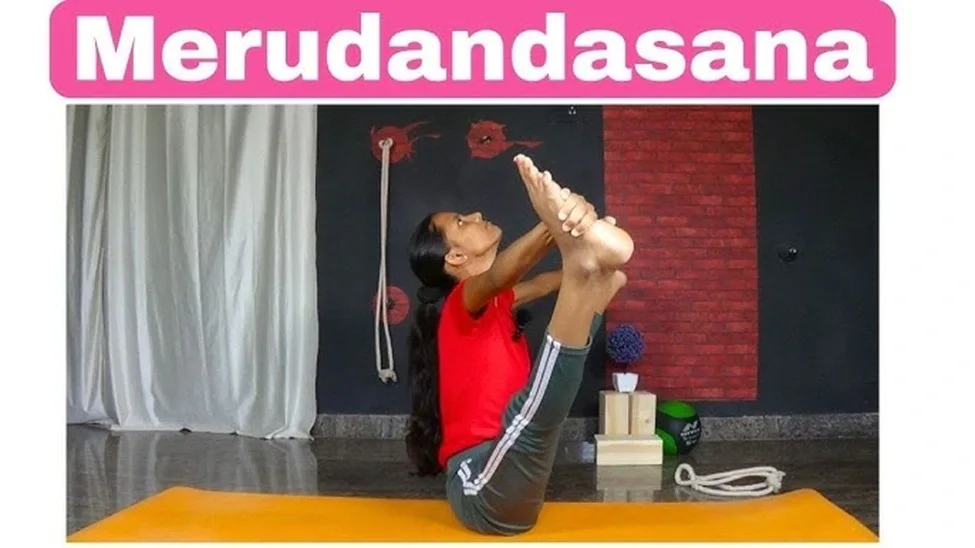
Merudandasana: Build Core & Spinal Stability
Practising Merudandasana regularly helps you maintain your spine health and enhances your concentration level. It improves your posture to a great extent.
Maintaining good posture, building a strong core, and having a healthy spine is necessary to help move easily throughout life. Be it while sitting at the office desk, walking, or exercising, our spine plays an important role in most movements we perform. There are many yoga poses that help in building this foundation, and Merudandasana is one of them.
Merudandasana is popularly known as ‘Spinal Column Pose’ and is basically a balancing pose done in a seated position. Even though it looks like a hard pose at first, regular practice will definitely make it easier for you to develop body awareness and balance along with building confidence.
Key Takeaways
- Supports Spine Health: Aligns the spinal column and improves posture.
- Enhances Flexibility: Stretches hamstring muscles and strengthens the back.
- Builds Inner Focus: Requires steady concentration to maintain balance.
What Is Merudandasana (Spinal Column Pose)?
The name Merudandasana is derived from two Sanskrit words: ‘Meru ’, which stands for spine/spinal cord, and ‘Asana’, meaning posture. While in this position, the body rests on the sitting bones as the legs are held up straight.
One of the rare yoga poses that involves engaging the core muscles of the body in a seated position, Merudandasana requires the body to elongate the spine while balancing itself. This pose is typically an intermediate-level balancing asana since it combines flexibility, strength, and concentration.
The Spinal Column Pose improves posture awareness and promotes controlled breathing and movement.
How to Practice Merudandasana (Spinal Column Pose)
Here is how to practice Merudandasana (Spinal Column Pose).
- Take a comfortable seated yoga pose on a yoga mat with your legs stretched out in front of you.
- Bend your knees and keep your feet firmly planted on the ground.
- Grasp your big toes or the sides of your feet with your fingers.
- Lean backward as you balance on your sitting bones.
- Lift up your feet from the floor and straighten your legs gradually.
- Extend your spine as you keep your chest lifted.
- Gently open up your legs if you find it comfortable without losing your balance.
- Hold your breath for 10 to 20 seconds.
- Gently bend your knees to return to the starting position.
Tips for Beginners
- If you find that your hamstrings are tight, then bend your knees slightly.
- It’s best to concentrate on keeping your spine straight rather than raising your legs too high.
- Remember to use your core muscles during the pose.
- Do the exercise near the wall for additional stability.
Wellness Benefits of Merudandasana
Regular Merudandasana (spinal column pose) practice contributes to overall physical stability while encouraging mindful awareness.
|
|
|
|
|
|
|
|
|
|
|
|
|
|
|
|
|
|
|
|
|
|
|
|
|
|
|
Tips and Precautions
Be mindful while performing Merudandasana to prevent any undue stress.
- Prepare your hips, hamstrings, and lower back for the pose.
- Do not yank your legs into the posture.
- Continue with smooth and easy breathing during the entire exercise.
- Discontinue performing the exercise right away if you feel any sudden pain or vertigo.
- Individuals with hypertension, slipped disc, sciatica, back injuries, and abdominal surgery must consult their doctor prior to doing this pose.
- If you are new to balance postures, learn this asana with the help of a trained yoga teacher.
Wrapping Up
Merudandasana is a rewarding yoga pose that involves both balancing and mindfulness. Though it may take time to get used to the pose, Merudandasana enables one to build strong core and back muscles as well as improve body coordination. If one applies the right technique while doing this yoga pose, he or she will be physically and mentally stable.
Frequently Asked Questions
1. Is Merudandasana good for beginners?
Yes, a beginner can perform Merudandasana with some adjustments to the leg position and under the supervision of an experienced yoga teacher.
2. How long should I stay in Merudandasana?
Initially, one may remain in this pose for 10–20 seconds and gradually increase the time as one's balancing skills and core strength improve.
3. Does Merudandasana enhance posture?
Yes, this pose will help strengthen the core and back muscles, which leads to improved posture.
Disclaimer: The content on LifePositive.com, including articles/blogs on yoga, acupuncture, naturopathy, and other alternative healing modalities for holistic wellness, is for informational and educational purposes only. It is not a substitute for professional medical advice, diagnosis, or treatment. Always consult a qualified healthcare provider before starting any new health protocol or making changes to an existing treatment plan.
Also Read: Naukasana
By Umesh Kumar Khiri



Discussion (0)
No comments yet. Be the first to comment!
Leave a Comment
You need to login to post a comment.