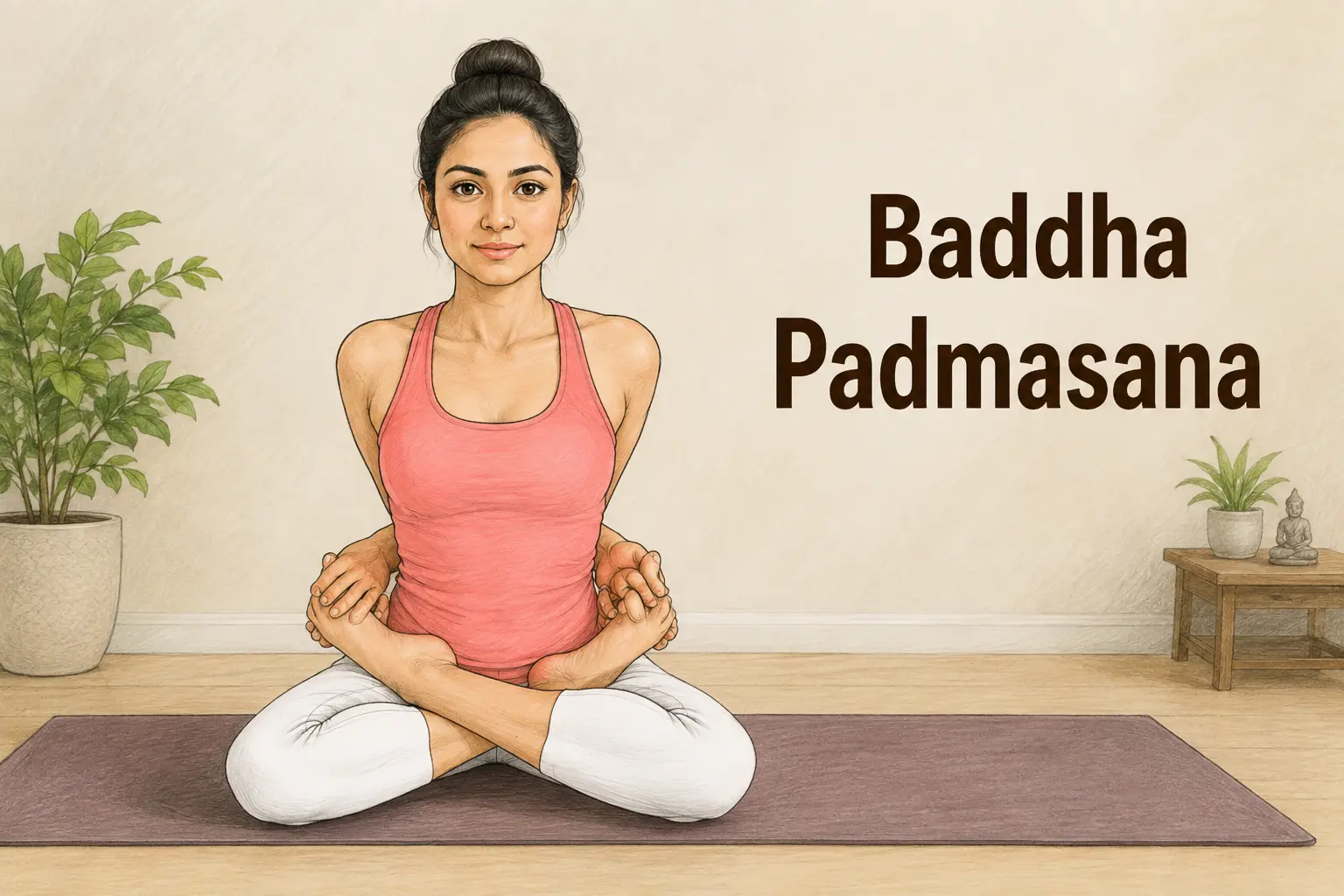
Baddha Padmasana (Bound Lotus Pose)
Baddha Padmasana, or Bound Lotus Pose, is one such advanced pose that integrates the classic Lotus Pose and the binding of arms at the back.
Asanas include a variety of sitting poses for various levels of yoga practice, ranging from beginner-level poses to more advanced poses that require flexibility and control. It involves hip flexibility, shoulder mobility, spine stability, and concentration. Although the pose may look only physical in nature, it teaches the practitioner to move slowly and concentrate on the pose. As it puts a lot of strain on the hips, knees, ankles, and shoulders, it is better to practice it gradually and not forcefully.
Key Takeaways
- Deepens shoulder, chest, and hip flexibility.
- Massages abdominal organs through forward compression.
- Increases core stability and deep focus.
What Is Baddha Padmasana (Bound Lotus Pose)?
The term for ‘Baddha Padmasana’ is derived from Sanskrit, with “Baddha” meaning “bound,” “Padma” meaning “lotus,” and “Asana” meaning “pose.”
In Baddha Padmasana, both legs are placed in Lotus Pose, while the hands are moved behind the back to hold the feet in place. Thus, the “bound” pose is formed.
This pose demands more flexibility than a regular seated pose as it involves both hip and shoulder rotations. Therefore, it must be performed only if Lotus Pose can be done easily.
How to Perform Baddha Padmasana (Bound Lotus Pose)
The following should be done in stages:
- Sit on the yoga mat with your legs stretched out.
- Shift into Padmasana, positioning each foot on the opposite thigh.
- Balance yourself evenly on both sitting bones and elongate your spine.
- Extend one arm behind your back towards the respective foot.
- Do this for the other side.
- Holding the feet and not pulling them in is advised.
- Ensure that the chest is open and shoulders relaxed.
- Breathe normally.
- Only hold for as long as you can without causing any discomfort to yourself.
- Start with the hands and then move to the legs.
Benefits of Baddha Padmasana
When practised with proper technique and adequate mobility, Baddha Padmasana may provide several benefits.
|
|
|
|
|
|
|
|
|
|
|
|
|
|
|
|
|
|
These benefits depend on individual mobility and how the pose is performed. The Bound Lotus Pose should not be treated as a flexibility challenge or held at the expense of comfort.
Preparation for Baddha Padmasana
Because the posture involves many challenging actions, preparing for it may make the practice easier.
Here are some possibilities to consider:
- Sukhasana
- Ardha Padmasana
- Padmasana, if comfortable
- Hip openers
- Shoulder openers
- Spinal stretch in seated position
- Wrist/ankle openers
Try practicing these actions slowly instead of jumping into the full posture right away.
Precautions
Baddha Padmasana is an advanced asana that needs some flexibility. Take some precautions while performing Baddha Padmasana:
- Do not force the joints of the knees, hips, shoulders, or ankles.
- Do not practice Baddha Padmasana if even Padmasana does not suit you.
- If you have any joint pain in the knees, hips, ankles, or shoulders, do not perform this asana unless permitted by an appropriate professional.
- Practice Baddha Padmasana with a professional yoga instructor if you are new to this asana.
- Stop practicing if you experience sharp pain or numbness.
Wrapping Up
Baddha Padmasana is an intermediate pose in which you integrate the stability of Padmasana with an elaborate lock of the arms. Baddha Padmasana demands patience, flexibility, balance, and awareness of your alignment. Instead of hurrying up to perfect your form in the full pose, you should focus on practicing the preparatory poses and respecting the natural limits of your body.
Frequently Asked Questions
1. Why is Baddha Padmasana a more advanced asana?
Baddha Padmasana is a combination of the full Lotus and an arm lock in back. Both positions take flexibility and control of placement, which makes this asana more challenging to achieve than any other simple seated one.
2. What if I can't reach my feet with my hands?
Do not do this. It means that you need more practice of your hip and shoulder flexibility. You should not try the whole lock until you manage to do it without struggle.
3. Is it possible to meditate using Baddha Padmasana?
It can be used for meditation as a comfortable seat. But if the Lotus pose causes discomfort to you, it will be better for you to use another position.
4. Do the arms have to be the same on each side?
During the exercise, one arm can reach faster than the other one. It will help to keep balance in shoulder mobility.
Disclaimer: The content on LifePositive.com, including articles/blogs on yoga, acupuncture, naturopathy, and other alternative healing modalities for holistic wellness, is for informational and educational purposes only. It is not a substitute for professional medical advice, diagnosis, or treatment. Always consult a qualified healthcare provider before starting any new health protocol or making changes to an existing treatment plan.
Also Read: Bitilasana
By Umesh Kumar Khiri

Discussion (0)
No comments yet. Be the first to comment!
Leave a Comment
You need to login to post a comment.