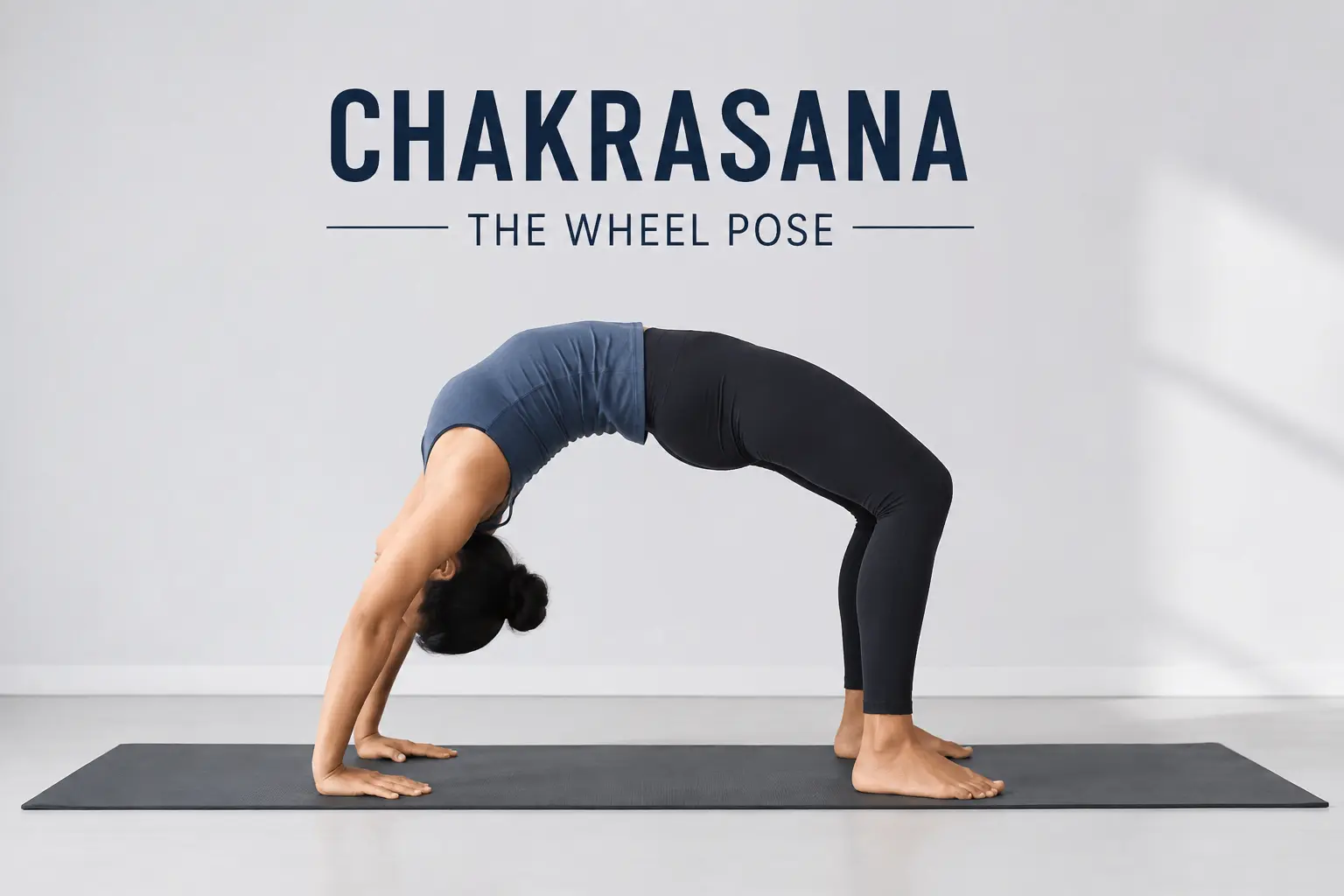
Chakrasana (Wheel Pose): Improve Flexibility
Chakrasana, or Wheel Pose, is one of the most energizing backbends in yoga practice. The dynamic pose promotes relaxation of the body as well as improvement of strength and balance.
A flexible body and a strong spine contribute to maintaining good posture, ease of movement, and general wellness. However, a sedentary lifestyle, lack of exercise, and constant stress cause a loss of flexibility and stiffness of the spine, shoulders, and hips.
Yoga comprises a number of poses that compensate for the effects caused by modern living, and Chakrasana is one of them. Even though this pose might look rather challenging, it becomes more accessible with preparation, regular practice, and focused breathwork.
Key Takeaways
- Energizes body: Deep full-body backbend that boosts vitality.
- Opens posture: Stretches chest, shoulders, hips, and spine.
- Builds power: Requires strong arms, legs, and core.
What Is Chakrasana (Wheel Pose)?
The term Chakrasana is derived from the Sanskrit word “Chakra”, meaning “Wheel,” and “Asana,” meaning “Pose”. In proper execution, the body assumes the shape of an arch similar to that of a wheel.
Chakrasana is a full-body backbend exercise involving the arms, legs, shoulders, spinal muscles, and core muscles. Chakrasana is usually practiced after warm-ups because, in it, the body lifts the torso off the ground, balancing body weight using the hands and feet.
Chakrasana not only enhances flexibility but also strength and balance as well.
How to Practise Chakrasana (Wheel Pose)
Here is the process of performing Chakrasana correctly.
- Sit down comfortably on a yoga mat.
- Bring your knees together to fold them and position your feet about hip-width from each other.
- Bend your elbows and bring your palms near your head, having them pointed towards your shoulders.
- Inhale deeply and press firmly using your hands and feet.
- Gradually raise your hips, chest, and head from the floor.
- Extend your arms and legs as far as possible without straining yourself.
- Breathe steadily while remaining in the pose.
- Remain in the Chakrasana position for 10 to 20 seconds.
- Lower your head, shoulders, and back slowly to the floor, vertebral column by vertebral column.
Tips for Beginners
- Stretch your shoulders, wrists, hips, and spine prior to doing the pose.
- Raise gently rather than pushing yourself into the pose abruptly.
- Position your feet parallel instead of having them in an external rotation.
- Do not hold your breath.
- If you are a novice at backbends, perform this pose with the help of a certified yoga instructor.
Wellness Benefits of Chakrasana
Regular practice of Chakrasana (Wheel Pose) contributes to improved flexibility, strength, and overall body awareness.
|
|
|
|
|
|
|
|
|
|
|
|
|
|
|
|
|
|
|
|
|
|
|
|
|
|
|
Tips and Precautions
Practise Chakrasana with care to minimize the chances of injury.
- Make sure that you are warmed up before performing deep backbend poses.
- Don’t force your body into the pose.
- Move your body slowly and steadily.
- Use a yoga mat with grip so as not to slip off the mat.
- Those who have injuries in their wrists, shoulders, neck, spine, uncontrolled high blood pressure, and post-surgery patients should refrain from practising Chakrasana without any medical advice.
Final Thoughts
Chakrasana (Wheel Pose) is a potent yoga pose that integrates flexibility, strength, and mindfulness into one. Although it demands patience and preparation before practicing it, the benefits associated with Chakrasana include better posture and increased body awareness, among others. Through gradual integration of Chakrasana and by concentrating on the correct alignment instead of perfection, you are able to enjoy all the wellness benefits of this yoga pose.
Frequently Asked Questions
1. How frequently should I perform Chakrasana?
Chakrasana should be performed two or three times per week to give your muscles enough time to rest in between.
2. Do I need to warm up prior to performing Chakrasana?
Yes, you do. Warm up your shoulders, wrists, hips, and spine properly to get your body ready for this deep backbend.
3. What kind of clothes should I wear when performing Chakrasana?
It is recommended that you wear comfortable and stretchable clothes. Do not wear loose-fitting clothes that may hinder your practice.
4. Can Chakrasana be done as a part of a complete yoga routine?
Yes, Chakrasana can be included in a complete yoga sequence. It is usually performed after warming up with some other less intense stretches, followed by relaxation or forward-bending poses.
Disclaimer: The content on LifePositive.com, including articles/blogs on yoga, acupuncture, naturopathy, and other alternative healing modalities for holistic wellness, is for informational and educational purposes only. It is not a substitute for professional medical advice, diagnosis, or treatment. Always consult a qualified healthcare provider before starting any new health protocol or making changes to an existing treatment plan.
Also Read: Vyaghrasana
By Umesh Kumar Khiri

.png)
Discussion (0)
No comments yet. Be the first to comment!
Leave a Comment
You need to login to post a comment.