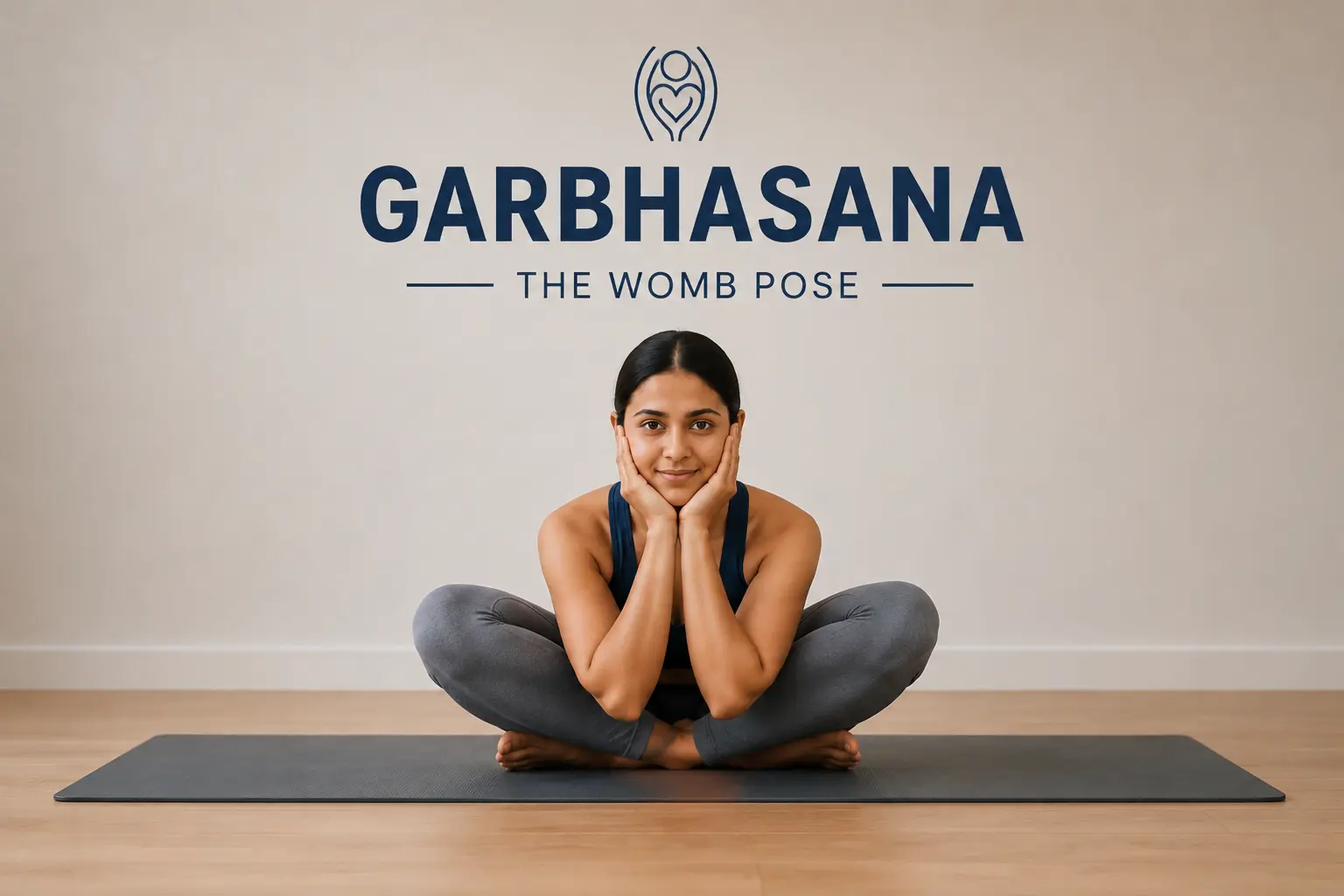
Garbhasana (Womb Pose): Improve Balance
Garbhasana (Womb Pose) is a graceful yoga pose that combines many elements in one posture – balance, flexibility, and mindful awareness. The practice of yoga helps us to slow down and become more aware of our actions, creating a stronger link between our body and mind.
While some postures require us to develop strength and flexibility, there are those that involve balancing, concentration, and controlled breath. ‘Garbhasana’, or the Womb Pose, is an example of such a posture. As its name implies, the shape of this posture mimics the shape of a baby in the mother’s womb. The difficulty level of this pose is considered to be quite high; however, with regular and mindful practice, it will become possible to increase one’s flexibility and concentration abilities.
Key Takeaways
- Challenges balance: Advanced posture requiring deep hip flexibility.
- Calms mind: Embryo-like position promotes quiet mental focus.
- Aids digestion: Gentle abdominal compression supports internal health.
What Is Garbhasana (Womb Pose)?
The term Garbhasana is derived from the Sanskrit term Garbha, which means "womb" or "embryo", and Asana, which means "pose". The body in its final position is shaped in such a manner that resembles an embryo; hence the name of the pose.
Garbhasana was traditionally classified in the group of yoga poses called Padmasana. It involves maintaining balance on the sitting bones with the arms threading through the legs while performing Lotus Pose. This posture is rather complicated since it requires flexibility, balance, and coordination of movements and, therefore, is classified as an intermediate or even an advanced yoga pose.
The practice of Garbhasana does not require excessive physical effort; instead, it implies staying relaxed and focused.
How to Practise Garbhasana (Womb Pose)
Proceed with the following procedure for practicing Garbhasana.
- Start by sitting down in Padmasana.
- Slowly slip your arms between your thighs and calves until you have slipped past your elbow joints.
- Fold your elbow joints and lift your legs slowly in a balanced manner.
- If possible, place your hands beside your ears or close to your face.
- Ensure that you maintain an erect spinal column and a relaxed eye focus.
- Practice breathing without holding your breath.
- Stay in this position for about 10-20 seconds.
- Slowly relax your hands, drop your legs and come back to the Padmasana pose.
Tips for Beginners
- Ensure you warm up your hip and knee joints before practicing Lotus Pose.
- Try not to force your legs into the lotus position.
- Concentrate on balancing rather than remaining in the pose for a long duration.
- Practice under the guidance of a qualified yoga teacher if you are new to advanced sitting postures.
- Keep breathing slowly.
Wellness Benefits of Garbhasana
Some of the benefits of practising Garbhasana regularly are:
|
|
|
|
|
|
|
|
|
|
|
|
|
|
|
|
|
|
|
|
|
|
|
|
|
|
|
Tips and Precautions
Be patient when doing Garbhasana and be well-prepared.
- Warm up your hips, knees, and ankles well before practising the pose.
- Do not force your body to perform Lotus Pose when you have some problems.
- Enter and exit the pose slowly.
- Inhale and exhale smoothly during the pose.
- This pose is not recommended for those who suffer from knee injuries, hip injuries, ankle injuries, or who have recently had any surgery done.
Ending Notes
Practising Garbhasana (Womb Pose) regularly can support overall physical and mental well-being when performed with proper technique. Although this pose needs proper preparation and patience, it helps you improve control, concentration, and tranquility. With regular practice and proper guidance, you can develop confidence in Garbhasana and enjoy all its health benefits.
Frequently Asked Questions
1. Is Garbhasana appropriate for people who cannot assume the Lotus Pose position?
No, because Garbhasana is done from the position of Padmasana (Lotus Pose). It is important for you to have enough flexibility in your hips and knees before doing this pose.
2. Does Garbhasana enhance body balance?
Yes, as it requires you to balance your body on your sitting bones. It helps improve coordination and body awareness over time.
3. What kind of clothes should I put on when doing Garbhasana?
Garbhasana requires comfortable clothes that allow free movement of your hips and knees. Wearing breathable clothes is recommended.
4. Is it advisable to do Garbhasana after warming up?
Yes, since a proper warm-up that involves the hips, knees, ankles, and lower back makes your body ready for Garbhasana.
Disclaimer: The content on LifePositive.com, including articles/blogs on yoga, acupuncture, naturopathy, and other alternative healing modalities for holistic wellness, is for informational and educational purposes only. It is not a substitute for professional medical advice, diagnosis, or treatment. Always consult a qualified healthcare provider before starting any new health protocol or making changes to an existing treatment plan.
Also Read: Kurmasana
By Umesh Kumar Khiri

.jpg)
.jpg)
Discussion (0)
No comments yet. Be the first to comment!
Leave a Comment
You need to login to post a comment.