Gupta Padmasana: Steps, Benefits, Precautions, and Practice Tips
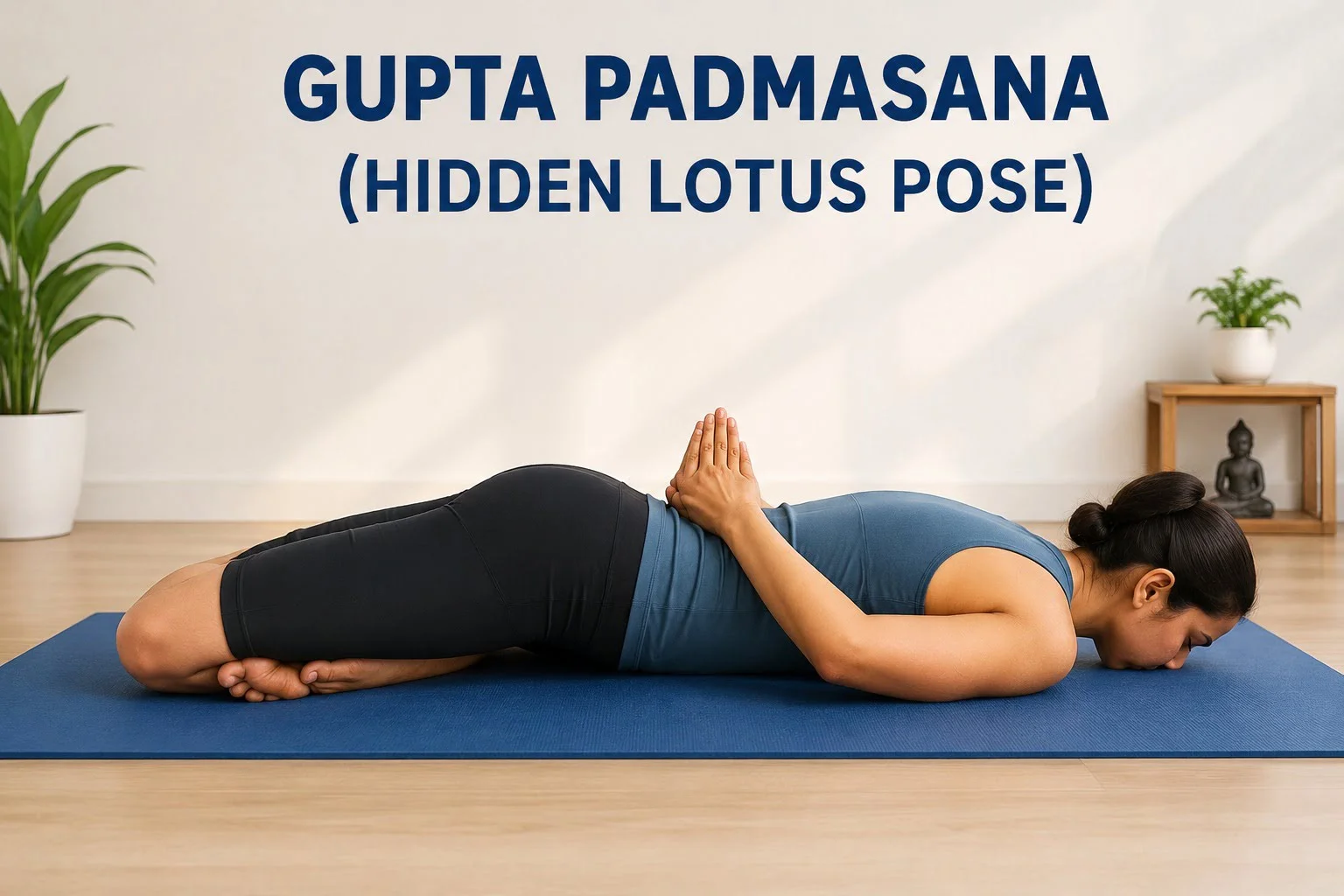
The practice of yoga is an exploration of the complex structures of the body in motion, expanding on the limits of flexibility, awareness of space, and muscular control. Gupta Padmasana is a unique development of the classical Lotus position, moving the axis of the posture from the seated vertical plane to the face-down prone position. This difficult pose requires the practitioner to have a high level of hip rotation and spinal extension to be able to bring their body face down to the floor in a safe manner.
What Is Gupta Padmasana?
‘Gupta Padmasana’ is usually translated to Hidden Lotus Pose. This name is made up of the Sanskrit words Gupta, which means "hidden" or "concealed," Padma, which means "lotus," and Asana, which means "pose."
This pose incorporates the lotus leg position but in a more concealed/reclined manner. Due to the legs being in a difficult crossed position while the rest of the body gets closer to the ground, it is necessary to have enough flexibility in hips and knees.
This is not a pose which requires the practitioner to force his/her legs into Lotus Pose. You need to master easier sitting poses first and then proceed with more advanced versions of Padmasana.
How to Perform Gupta Padmasana
Proceed with the exercise while taking control of the position at all times:
- Position yourself comfortably on a yoga mat with your legs stretched.
- Gently transition to Padmasana if possible without causing any strain to your body.
- Maintain your sitting posture as you breathe deeply.
- Position your hands by your side for support.
- Slowly start lowering your body onto the yoga mat using your arms.
- Avoid suddenly collapsing into the pose by gently lowering yourself.
- Continue with the relaxation technique as you hold the pose.
- Avoid unnecessary tensing of the muscles on your neck and shoulders.
- Do not remain in the position for too long.
- Gently transition back to your previous posture using your hands.
- Position yourself gently out of the pose.
Benefits of Gupta Padmasana
When performed with appropriate mobility and alignment, Gupta Padmasana may provide several benefits.
|
|
|
|
|
|
|
|
|
|
|
|
|
|
|
|
|
|
|
|
|
|
|
|
The benefits of Gupta Padmasana depend on individual mobility, technique, and consistent practice. It should never be performed solely to achieve a particular visual shape.
Preparation for Gupta Padmasana
Preparation is key before undertaking any advanced Lotus posture.
Preparatory postures could involve:
- Sukhasana
- Ardha Padmasana
- Baddha Konasana
- Lightly opening the hip joints
- Seated forward bends
- Ankle stretches
- Light core strengthening
Do these postures progressively without forcing the knees or hip joints past their natural limits.
Precautions
This asana is not a beginner’s asana in yoga. Take care of the following points:
- Never do this pose if you are not familiar with doing Padmasana.
- Don’t force your knees, hips, or ankles.
- Take the right kind of support while doing this pose.
- If you have any injury on your knees, hips, ankles, or lower back, consult a professional trainer before doing this pose.
- Perform the asana under the supervision of an expert yoga trainer, especially when you are trying this pose for the first time.
Key Takeaways
Gupta Padmasana is one of the advanced variations of the Lotus pose and demands flexibility, balance, coordination, and controlled movements. The unique body placement requires extra patience and preparation. Developing enough hip flexibility and getting used to the Padmasana pose before trying the pose can facilitate the exercise significantly. Instead of concentrating on reaching the full pose fast, you should concentrate on smooth breaths and correct alignment.
Frequently Asked Questions
1. Can a beginner try Gupta Padmasana?
No. Gupta Padmasana is an advanced pose and needs experience with Lotus-based poses. Beginners need to acquire enough hip flexibility and practice simpler asanas for sitting.
2. Which poses can I do before Gupta Padmasana?
Some yoga poses such as Sukhasana, Ardha Padmasana, Baddha Konasana, and other hip flexion poses can help prepare. Also, you need to feel comfortable in Padmasana.
3. Why is hip flexibility necessary for Gupta Padmasana?
The legs are in the Lotus pose and therefore require external hip joint rotation. Hip flexibility can prevent compensations via the knee joints.
4. Can I use a cushion or blanket when practicing?
Yes, additional support can be useful during preparation for the pose or while performing it. However, support can help stabilize, but not to overreach.


Discussion (0)
No comments yet. Be the first to comment!
Leave a Comment
You need to login to post a comment.