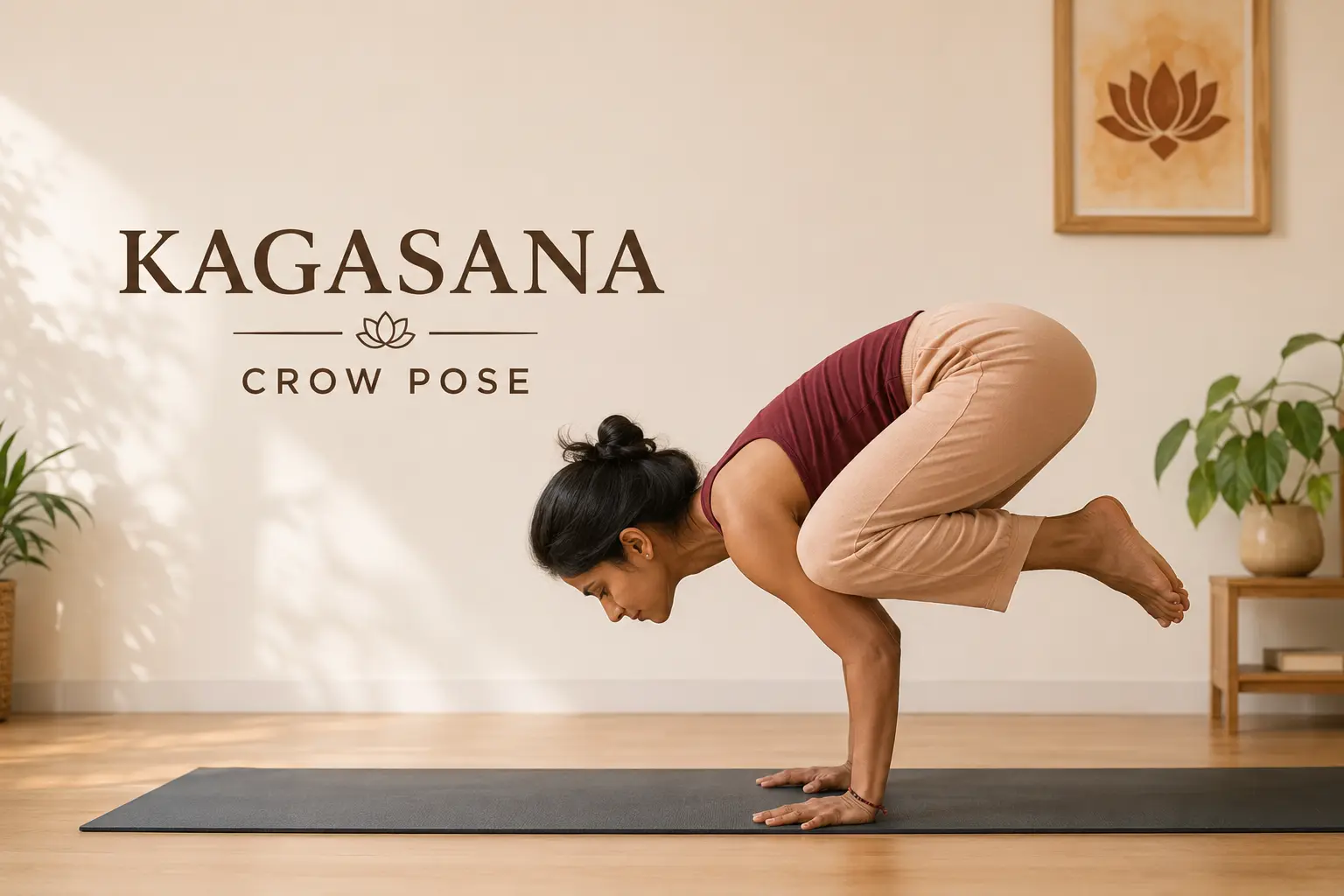
Kagasana (Crow Pose): Health Benefits
Kagasana, or the Crow Pose, brings us back to the natural way we used to move as kids. Remember those days when you were a kid? In case you noticed anything on the ground that you liked – be it a colorful flower or a tiny insect – you did not crouch awkwardly. You just sat down into a squatting position. You could stay there for several minutes, feeling absolutely comfortable, with your heels touching the ground and your spine completely relaxed.
Nowadays, most of us have become inflexible because of all the time we spend sitting at the office, in cars, and on sofas. As a result, our hips are stiff, our ankles are weak, and our lower backs hurt. We have simply forgotten about one of the easiest resting positions our body can take.
Here is where Kagasana, or Crow Squat Pose, helps us out. Not only does it provide a great physical workout, but it also helps one get in touch with oneself and develop a new state of balance.
What Is Kagasana? Understanding the Crow Squat Pose
Kagasana is a combination of two words: Kaga, a Sanskrit term meaning "crow," and Asana, which means "posture." It is a pose that resembles how the crow rests in a deep squat, showing balance, sharpness, and awareness.
In contrast to the other complex yoga postures, Kagasana is a pose based on an innate posture used by different cultures to rest and carry out daily activities. For a yogi, it is appreciated due to its capability of enhancing mobility, promoting correct alignment, and preparing the body for meditation or any other asanas.
When squatting, the person’s focus moves on breathing and posture, which brings mindfulness to the position making it a relaxing pose for physical and mental health.
Far from perfectionism, Kagasana helps you to enjoy comfort and stability.
How to Practice Kagasana Mindfully
Start the pose by standing with your feet placed slightly beyond hip-width distance apart. Turn your toes outward only as much as you need to be able to comfortably bend your knees.
Slowly lower yourself into a deep squat, ensuring that your heels remain on the ground to the maximum extent possible. If your heels rise naturally, support them using a folded blanket. Join your palms in front of your chest and gently press your elbows into your inner knees.
Keep your spine long, your shoulders relaxed, and your chest open. Do not hunch your back or slump forward.
Breathe slowly and deeply. Each time you inhale, you should feel your spine elongate. Each time you exhale, you should feel your hips release into the ground without stretching yourself too hard.
Maintain this pose for 30 seconds to one minute. Gradually increase this time as you get more comfortable with the pose.
Remember that yoga is about mindful awareness rather than achieving the deepest squat. The best part is that you can modify the pose whenever necessary to suit your body's needs.
Wellness Benefits of Kagasana
Despite being a basic pose, regular practice of the posture could assist in promoting good health in many ways.
1. Promotes Good Digestive Health
The light pressure exerted on the abdomen during Kagasana may stimulate the digestive organs to work properly. This can help in promoting good digestive health along with proper dieting and breathing techniques.
2. Increases Mobility of Hips and Ankles
In today’s world, the range of movement of the hips and ankles is restricted due to sedentary lifestyle choices. The pose stretches these joints lightly and helps increase their mobility.
3. Builds Up Strength of the Lower Body
Squatting in this yoga posture will cause the engagement of the thighs, calves, glutes, and core muscles. This can strengthen your overall body.
4. Improves Posture
Holding an erect spine while performing Kagasana allows better awareness of body posture. In due course of time, this will help minimize slumping and promote better posture.
5. Improves Relaxation and Mindfulness
You can concentrate on slow and rhythmical breathing while being in this posture. This helps in promoting relaxation and mindfulness. You can take up mindful squatting for just a minute and use the time to concentrate, breathe deeply, and connect with the present moment.
6. Improves Balance and Body Awareness
In order to balance yourself in the deep squat, you need to be both stable and coordinated. Regular practice of Kagasana will lead to improvement in body awareness (proprioception).
7. Improves Body’s Natural Posture and Movement Pattern
Squatting is one of the natural postures of the body. Performing deep squat regularly as part of Kagasana will allow you to make movement patterns more natural and efficient.
In the end, Kagasana teaches us that often wellness lies in simple practices.
Precautions and Tips for Safe Practice
Even though Kagasana is beneficial for most people, those suffering from serious injuries in their knees, hips, ankles, and lower back must be cautious while performing this pose. In case you find it difficult to balance yourself in the pose, you can use a folded blanket under your heels or practice close to a wall.
Never force yourself to bend your legs, and do not try to perform this pose if you experience pain instead of feeling a gentle stretch.
Wrapping Up
Kagasana is a wonderful reminder that the most efficient methods of maintaining wellness are also the simplest. By facilitating natural movement, enhancing flexibility and mobility, aiding in proper digestion, and helping focus on breath, this stabilizing yoga pose helps to create both bodily comfort and inner peace.
Be it part of your daily yoga routine or a brief mental break during your busy day, Kagasana will allow you to get back in touch with your body and your breathing. With persistence and consistent practice, this humble asana will help you navigate through life with increased ease and stability.
Frequently Asked Questions
1. Can I perform Kagasana to enhance flexibility?
Yes. The practice helps develop flexibility in the hips, ankles, knees, and legs, thus easing body movements and making them more comfortable.
2. Can I practice Kagasana for good digestion?
Kagasana provides a slight compression on the abdomen, which may help with the digestion process, provided that you maintain a healthy diet and remain active.
3. For how long should I stay in Kagasana?
A beginner can begin by holding the pose for 20 to 30 seconds and then move to holding it for one or two minutes over time.
4. Should I do Kagasana daily?
Yes. Kagasana is a mild and functional yoga pose that you can perform daily.
Disclaimer: The content on LifePositive.com, including articles/blogs on yoga, acupuncture, naturopathy, and other alternative healing modalities for holistic wellness, is for informational and educational purposes only. It is not a substitute for professional medical advice, diagnosis, or treatment. Always consult a qualified healthcare provider before starting any new health protocol or making changes to an existing treatment plan.
Also Read
By Umesh Kumar



Discussion (0)
No comments yet. Be the first to comment!
Leave a Comment
You need to login to post a comment.