Stress Induced Heart Attacks in Young Women: Time to Act Is Now.
By Dr. H.K. Chopra, Chief Cardiologist, Delhi, India.
_1786183419.png) Heart attacks are no longer confined to elderly men. Across the world, an alarming rise in heart attacks among young women is emerging as a major public health concern. While traditional risk factors such as diabetes, hypertension, obesity, smoking, and high cholesterol remain important, chronic psychological stress has become a powerful yet under-recognized contributor.
Heart attacks are no longer confined to elderly men. Across the world, an alarming rise in heart attacks among young women is emerging as a major public health concern. While traditional risk factors such as diabetes, hypertension, obesity, smoking, and high cholesterol remain important, chronic psychological stress has become a powerful yet under-recognized contributor.
Today's young women juggle demanding careers, family responsibilities, financial pressures, caregiving roles, and social expectations. Long working hours, inadequate sleep, anxiety, depression, and digital overload create a persistent state of stress that adversely affects cardiovascular health.
Scientific evidence shows that chronic stress activates the sympathetic nervous system (Sympathetic Overdrive) and the hypothalamic-pituitary-adrenal (HPA) axis, resulting in sustained elevations of adrenaline and cortisol. These hormonal changes increase heart rate and blood pressure, promote inflammation, impair endothelial function, enhance platelet activation, and accelerate atherosclerosis. Stress may also trigger coronary artery spasm (Prinzmetal angina), plaque rupture, spontaneous coronary artery dissection (SCAD), and stress-induced cardiomyopathy (Takotsubo syndrome), all of which can precipitate acute myocardial infarction.
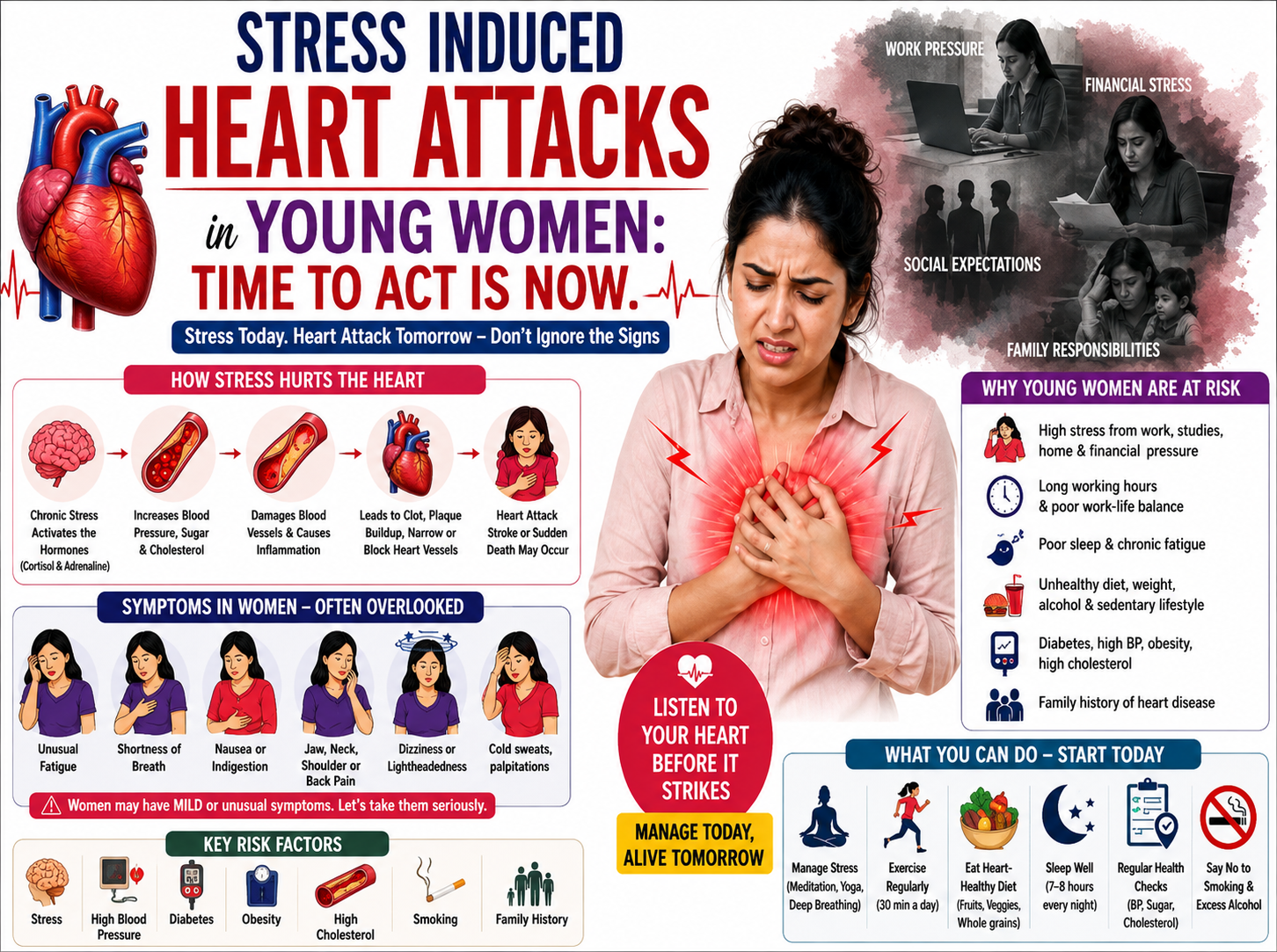
Women often present with symptoms different from the "classic" crushing chest pain. They may experience unusual fatigue, shortness of breath, indigestion, nausea, jaw or back pain, dizziness, palpitations, or unexplained sweating. Because these symptoms are frequently overlooked or attributed to anxiety or gastric problems, diagnosis is often delayed, leading to poorer outcomes.
The COVID-19 pandemic further highlighted the profound impact of emotional stress on cardiovascular disease. Several studies reported increased rates of stress cardiomyopathy and adverse cardiovascular events, particularly among women.
The encouraging news is that many stress-related cardiovascular events are preventable. Effective stress management should become an integral part of cardiovascular prevention. Regular physical activity, adequate sleep, healthy nutrition, smoking cessation, yoga, meditation, mindfulness, and strong social support significantly reduce cardiovascular risk. Early screening for hypertension, diabetes, obesity, and dyslipidemia is equally essential.
Healthcare professionals should routinely assess psychological stress during cardiovascular risk evaluation. Employers and policymakers should create healthier workplaces that encourage work-life balance and mental well-being. Educational institutions should also promote resilience and healthy lifestyles from an early age.
Heart disease remains the leading cause of death among women worldwide. Yet awareness remains disappointingly low. Every young woman should know her blood pressure, blood sugar, cholesterol levels, body weight, and family history of cardiovascular disease. Equally important, she should recognize that chronic stress is not merely an emotional burden; it is a cardiovascular risk factor.
The time has come to redefine heart attack prevention by integrating mental health with cardiovascular care. Protecting the hearts of young women requires action from families, healthcare professionals, employers, educators, and governments alike.
Make Time for Your Heart
In the midst of busy careers, family responsibilities, and everyday pressures, women often forget to care for themselves. But heart health begins with small, consistent choices. Making time for movement, restful sleep, nourishing food, meditation, meaningful relationships, and moments of quiet can support both emotional and physical wellbeing.
It is equally important to listen to the body. Persistent fatigue, breathlessness, palpitations, or unusual discomfort should not simply be dismissed as stress or exhaustion. Timely medical attention can make a crucial difference.
Caring for the heart is not just about preventing disease; it is about creating a healthier, more balanced life. The time to act is now.
About the Author
Dr. H.K. Chopra is a senior cardiologist and medical educator based in New Delhi. He has held several leadership and academic positions in cardiology and medical education and has contributed extensively to cardiology literature through textbooks and educational initiatives.
.png)
.png)

Discussion (0)
No comments yet. Be the first to comment!
Leave a Comment
You need to login to post a comment.