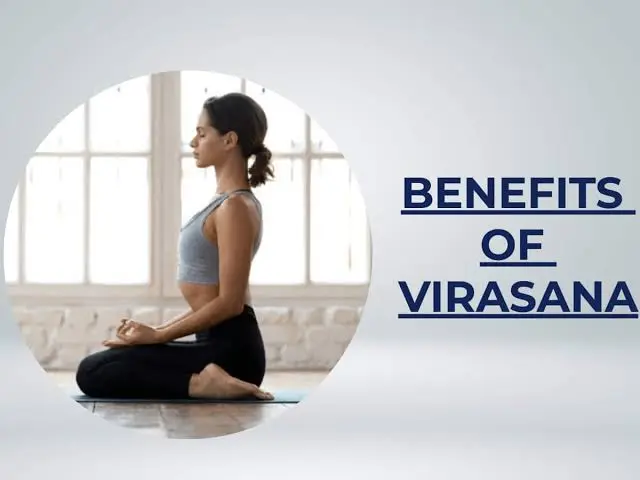
Virasana (Hero Pose): Benefits & Practice Steps
In today's fast-paced life, when we have to sit at our desks for hours, stand in queue lines for hours, or move from one commitment to another without a break, there is a lot of strain on our bodies. Tense thighs, sore feet, and fatigue in the lower back become something so common that we do not even pay attention to them. Through yoga, we learn that healing is not necessarily about physical activity, sometimes, it is all about sitting quietly. The Virasana, or the Hero Pose, is an asana of such a kind.
Although this sitting posture seems simple enough, it can give you a chance to stop, breathe, and find some time for yourself. Not only will you be able to stretch out your legs and maintain proper posture, but you will also get an opportunity to practice mindfulness. In addition to its physical benefits, the Virasana allows you to develop your patience, resilience, and calmness.
Key Takeaways:
-
Enhances Digestive Health: Improves blood flow to pelvic and abdominal organs when practiced post-meals.
-
Stretches Lower Body: Relieves tightness in thighs, knees, ankles, and feet from sitting long hours.
-
Improves Posture: Realigns the spinal column and opens the chest to encourage deep, steady breathing.
What Is Virasana? Understanding Hero Pose
The name ‘Virasana’ is a combination of two Sanskrit words, "Vira," which means "warrior" or "hero," and "Asana," which means "posture." This pose symbolizes the bravery not of a warrior entering the fight but of being calm and centered even when faced with difficult situations.
This pose was traditionally performed as a comfortable way to sit during meditation and breathwork sessions. Sitting in between your heels helps people become more aware of their posture and breathing because it provides an excellent support base for the body and makes the mind feel at ease.
It is one of the most popular poses due to the simplicity of practicing it. No exceptional flexibility or strength is needed to practice Virasana. Instead, what is required is a good posture and some light stretching.
As you do the pose, your chest will open, shoulders will relax, and the spine will elongate, thus giving you more space to breathe.
How to Practice Virasana Mindfully
First, select a serene area where you can be seated in a comfortable position without any disturbance. Yoga mats or folded blankets offer soft padding for the knees and ankles.
Start in a kneeling position with your knees touching each other and your feet slightly apart, about hip-width. Make sure that the top of your feet is grounded on the yoga mat, with your toes facing backwards.
Gradually ease down and allow your hips to settle down between your heels. In case you are not comfortable seating yourself on the floor, keep a yoga block, bolster, or folded blanket under your hips. Rest your hands softly on your thighs while keeping your shoulders loose and spine upright.
If it feels comfortable, then close your eyes. Breathe slowly and deeply. Make each breath expand your spine during inhalation while making the exhalation release stress in your legs and hip joints. Stay in the pose for 30 seconds to one minute at first, and increase the time gradually as you become more flexible.
Wellness Benefits of Virasana
Although simple in appearance, regular practice of Virasana can benefit overall health in many ways.
1. Promotes Better Posture
Working for long periods while seated at a desk or staring at the digital screen can cause your shoulders to curve inwards and result in poor spinal alignment. The Virasana posture promotes an erect posture through spinal elongation and opening of the chest. With time, your body gets used to this alignment, and it will be easier for you to maintain proper posture.
2. Provides Relief to Tension in the Legs and Feet
Your legs and feet are often tight and tired when you spend the entire day walking around. Practicing the Virasana posture helps to stretch your quadriceps, knees, ankles, and tops of the feet, making it effective in alleviating built-up tension. It is thus an ideal posture to adopt after a long day of exercise.
3. Favors Easy Digestion
Many yoga postures should be done while fasting. However, the Virasana can be comfortable even after a light meal. Sitting straight helps promote better posture and, in turn, digestion of the food taken. It does not mean that it acts as a cure, but rather complements a healthy lifestyle.
4. Helps Joint Mobility
If practiced with consciousness, this posture will help you keep joint mobility in your knees, ankles, and hip joints. Proper movement and stretching can lead to increased mobility and make daily actions easier for you. With the use of props, your joints will be in safety while getting used to this posture.
5. Promotes Mental Calmness
One of the advantages of Virasana is its ability to promote mental calmness. The seated pose allows you to breathe slowly and consciously and thus get rid of any racing thoughts and feelings of being stressed out. You may achieve a feeling of inner peace with just a couple of minutes of deep breathing in this pose.
6. Promotes Mindfulness
Nowadays, people tend to do various things at once and move from one action to another. Practicing Hero Pose allows you to take a moment to become aware of your breathing, posture, and thoughts without any evaluation. In this way, you will learn patience and emotional stability.
Precautions and Tips for Safe Practice
Although Virasana is suitable for many practitioners, it should be approached carefully if you have knee injuries, ankle ligament problems, severe arthritis, or recent lower-body surgery. Using a yoga block, folded blanket, or bolster beneath the hips can significantly reduce pressure on the knees and ankles while maintaining proper alignment.
Never ignore sharp pain or force your body into the posture. Every body is different, and comfort should always take priority over achieving the perfect pose.
Concluding Thoughts
Even though Virasana is a good asana for many people, it should be performed with great caution in case of knee injuries, ligament injuries in the ankles, arthritis, and recent operations in the lower body region. It will help if you place the yoga block, folded blanket, or bolster under the hips to alleviate the pressure on the knees and ankles.
Do not force yourself into the asana or try to disregard any sharp pain that you feel. Consistent practice can deliver amazing results that improve your health in the long run.
Frequently Asked Questions
1. Is it safe for a beginner to practice Virasana?
Yes. In order to make the asana more comfortable and to take pressure off the knees and ankles, one may place a yoga block, bolster, or folded blanket under the hips.
2. Is it possible to do Virasana right after a meal?
Yes. Contrary to many other asanas, Virasana feels quite comfortable after a small meal since it involves maintaining an upright position, which is beneficial for digestion.
3. Is Virasana beneficial for tight thighs?
Yes. This asana serves as a good stretching routine for the quads, ankles, and feet.
4. How long do I remain in Hero Pose?
Initially for 30 seconds to one minute, you can then extend the time to three to five minutes as your body gets used to the pose.
Also Read
By Umesh Kumar
.png)

Discussion (0)
No comments yet. Be the first to comment!
Leave a Comment
You need to login to post a comment.