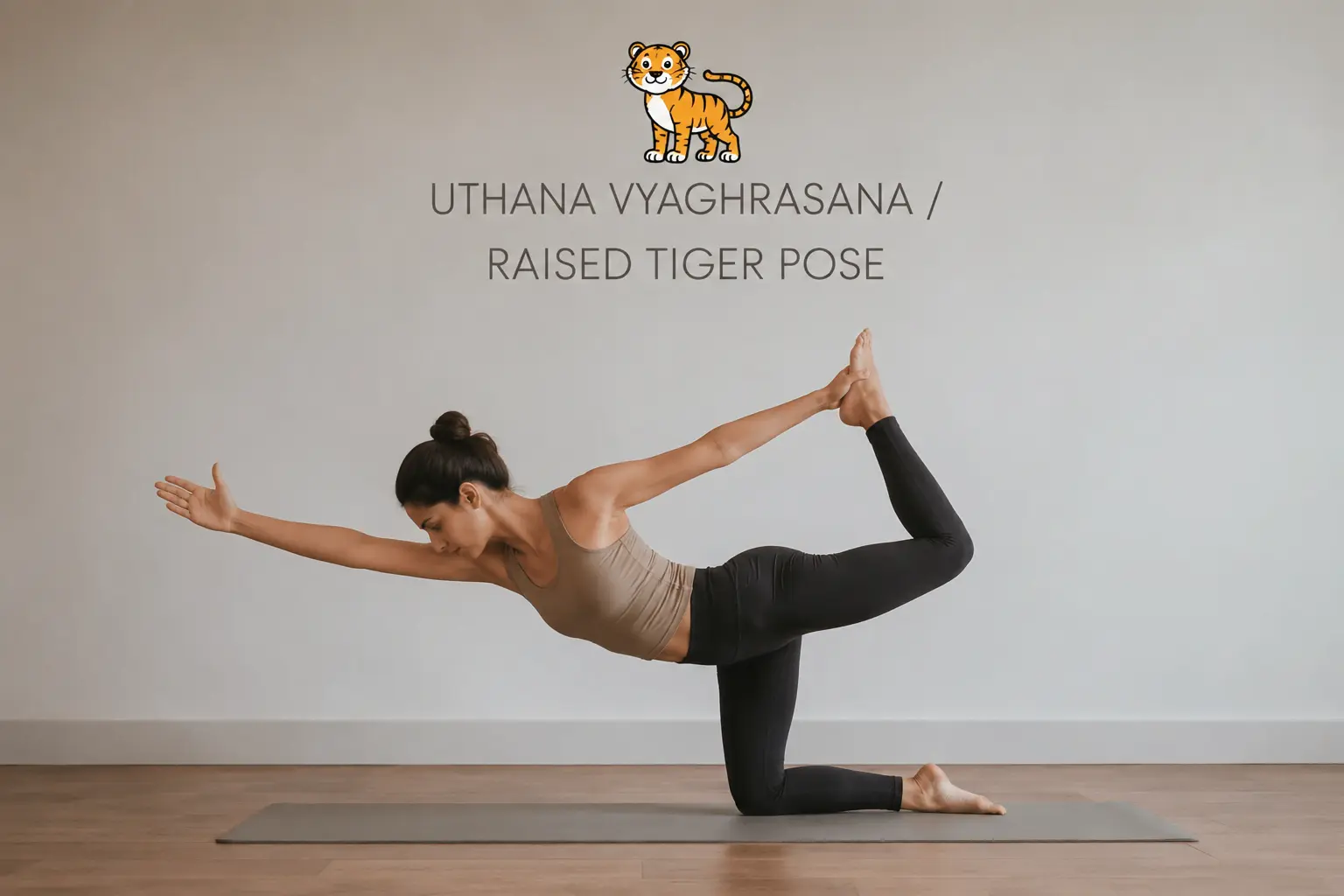
Vyaghrasana (Tiger Pose): Build Strength
Practising Vyaghrasana regularly helps you build strength and improve balance. It is based on the stretch performed by a tiger and gives a great opportunity to develop flexibility and concentration in the body.
Good health requires balance between strength, flexibility, and coordination. But sitting for long periods of time, lack of movement, and daily stresses often leave muscles stiff and restrict their movement. There are yoga poses that provide an easy and efficient solution for awakening the body and enhancing coordination. One of those yoga poses is ‘Vyaghrasana’ or Tiger Pose, which uses movement and breathing to develop the strength and stability of the body.
Key Takeaways
-
Strengthens core: Builds back, leg, and abdominal strength.
-
Improves flexibility: Relieves stiffness from prolonged sitting.
-
Enhances coordination: Connects breath with movement for balance.
What Is Vyaghrasana (Tiger Pose)?
Vyaghrasana comes from the two Sanskrit terms "Vyaghra," which means "tiger," and "Asana," meaning "pose." In this pose, there is an emulation of how tigers stretch their bodies after some period of rest by stretching one of the legs along with the head and the chest.
Vyaghrasana is performed in the hands-and-knees position, where one uses movements that require core engagement while raising one of the legs from behind the body.
This pose differs from other stretches because here one does not perform static stretches; instead, there is a movement performed in a controlled way and coordinated with breathing.
How to Practise Vyaghrasana (Tiger Pose)
Follow the guidelines to perform Vyaghrasana in a safe manner.
- Start in a table-top position with your hands and knees planted firmly on the ground below the shoulders and hips, respectively.
- Keep the spine neutral and look forward.
- Take a breath in as you extend the right leg behind.
- Bring the leg up without lifting the hips.
- Along with it, lift the head up and expand the chest.
- Maintain a smooth breathing process and use abdominal strength.
- Hold the pose for 15–20 seconds.
- Return to the initial position gradually.
- Repeat the asana with the other leg.
Tips for Beginners
- Perform the asana slowly and do not rush.
- Do not concentrate on the height of the leg but on balance.
- Avoid pulling the shoulders towards the ears.
- Use core strength to stabilize.
Wellness Benefits of Vyaghrasana
Although Vyaghrasana (Tiger Pose) is a simple yoga posture, it offers several benefits for both the body and mind.
|
|
|
|
|
|
|
|
|
|
|
|
|
|
|
|
|
|
|
|
|
|
|
|
|
|
|
Tips and Precautions
Mindfully practice Vyaghrasana (Tiger Pose) to prevent unwanted stress.
- Prepare your shoulders, hips, and spine by warming them up.
- Do not bend your back too much.
- Move slowly and gently.
- A folded blanket may be used for extra support underneath your knees.
- Individuals with recently sustained injuries of wrists, knees, shoulders, or spine should discuss their suitability with a medical professional or a certified yoga teacher.
- End the practice at once when experiencing pain instead of stretching.
To Conclude
Vyaghrasana is a graceful yoga pose that is helpful in building strength in the body as well as making the body flexible and balanced. The pose, which is named after the way of walking of the tiger, teaches the practitioner to move slowly and steadily and not to rush. With practice of Vyaghrasana, you can gain stability in life one step at a time.
Frequently Asked Questions
1. Is Vyaghrasana an ideal pose for everyday yoga practice?
Certainly. You can include Vyaghrasana in your regular yoga schedule to enhance flexibility and stability of the body.
2. Should I do Vyaghrasana on both sides?
Yes. It is important to do the pose on both sides so as to achieve equal strength, flexibility, and coordination of the body parts.
3. What should I wear while performing Vyaghrasana?
It is better to wear comfortable and stretchable clothes allowing unhindered movement of the hip joints, shoulders, and legs.
4. Can I perform Vyaghrasana along with other yoga poses?
Certainly. The pose blends well with the Marjariasana pose (Cat Pose), and Bitilasana pose (Cow Pose).
Disclaimer: The content on LifePositive.com, including articles/blogs on yoga, acupuncture, naturopathy, and other alternative healing modalities for holistic wellness, is for informational and educational purposes only. It is not a substitute for professional medical advice, diagnosis, or treatment. Always consult a qualified healthcare provider before starting any new health protocol or making changes to an existing treatment plan.
Also Read: Garbhasana
By Umesh Kumar Khiri



Discussion (0)
No comments yet. Be the first to comment!
Leave a Comment
You need to login to post a comment.