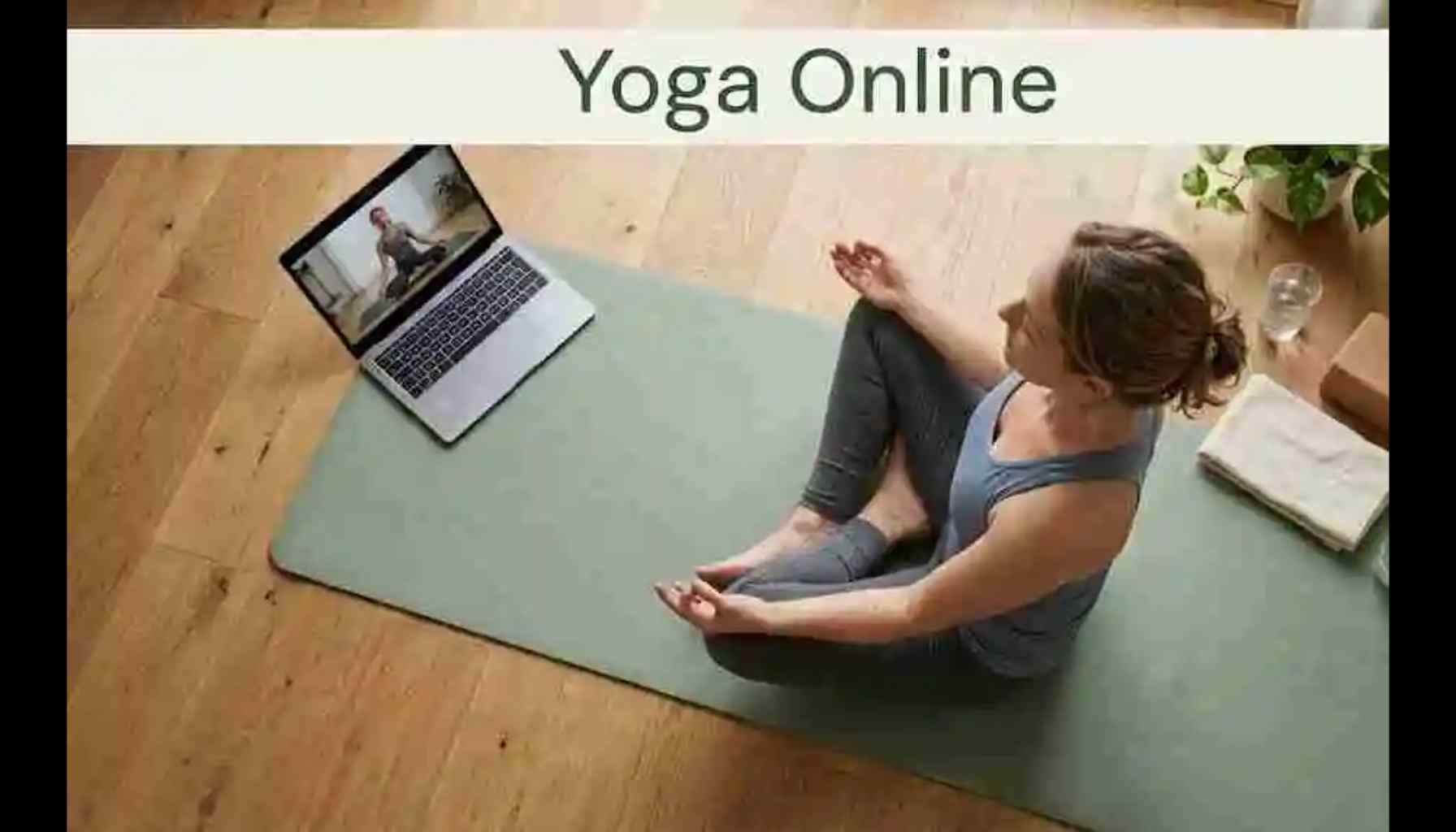
Yoga Online: Proven Tips to Start Safely and Stay Consistent
Yoga online means learning and practicing yoga through live or recorded video classes instead of traveling to a studio. You get the same poses, breathing exercises, and meditation, delivered to your phone, tablet, or laptop. It has grown quickly because it is flexible, often affordable, and open to people who live far from a good teacher.
That freedom is great, but it raises fair questions. Does it really work? Is it safe without a teacher in the room? And how do you pick a class that suits your body and your schedule?
This guide answers all of that in plain language. You will see how it works, what research says about the benefits, how to avoid injury, and how to build a routine you can actually stick with.
Key Takeaways
- Online yoga classes let you learn from qualified teachers without leaving home.
- Live sessions offer feedback, while recorded ones offer flexibility.
- Free classes are fine for starting, but paid ones add structure and personal feedback.
- Research links yoga with better stress control, sleep, and balance.
- Poor form is the biggest injury risk, so start slowly.
- Check a teacher's training and recent reviews before you commit.
- A mat, a quiet corner, and a good screen angle are enough to begin.
- See your doctor first if you are pregnant, injured, or managing a health condition.
What Is Online Yoga and How Does It Work?
Yoga online simply means practicing yoga through a screen instead of inside a studio. The poses, breathing exercises, and meditation are the same. Only the way the teaching reaches you is different.
Most options fall into four formats:
- Live group classes: You join a scheduled session on video and follow the teacher in real time.
- One-on-one sessions: A teacher watches you and corrects your form, which is ideal for beginners.
- On-demand libraries: You pick a recorded class whenever it suits you.
- Free videos and apps: Handy for variety, though nobody checks your form.
Why More People Are Choosing Online Yoga Classes
The biggest draw is convenience. There is no commute, no parking, and no rushing to catch a 6 p.m. class after a long day. You simply unroll a mat and press play.
Access is another reason. Someone in a small town can now learn from an experienced teacher based anywhere in the world, which was rarely possible a decade ago.
Many beginners also like the privacy. Practicing yoga at home removes the worry of being watched, so you can focus on your breath instead of comparing yourself with the person on the next mat.
Cost matters too. Memberships and trial classes are often cheaper than studio packages, and some teachers offer free introductory sessions.
Finally, virtual yoga makes it easy to explore different styles. You can try a gentle restorative class on Monday and a flowing vinyasa class on Thursday without paying for two studios.
Health Benefits: What the Research Actually Says
Yoga combines physical postures, breathing techniques, and meditation. According to the National Center for Complementary and Integrative Health, studies suggest it may help with stress management, mental and emotional health, sleep, and balance.
Those findings are encouraging, but it helps to keep expectations realistic. For low-back pain, a 2022 review of 21 studies found that yoga was slightly better than no exercise, although the difference may be small for many patients.
Weight loss follows a similar pattern. A review of 17 yoga-based weight-control programs found that most led to gradual, moderate reductions, not dramatic ones.
One more point is worth knowing. Most studies look at yoga itself, not at how the class is delivered. It is reasonable to expect similar benefits from yoga at home, as long as you practice correctly and regularly, though research comparing delivery methods is still limited.
Popular Yoga Styles You Can Try Online
Not every style suits every person. Here is a quick guide to the most common ones.
- Hatha: Slow-paced, with basic poses. A good first choice.
- Vinyasa: Flowing sequences that link movement with breath, so expect a warmer, more active class.
- Yin: Long, quiet holds, usually on the floor, for a deep stretch.
- Restorative: Supported poses with props that encourage deep rest.
- Iyengar: Careful attention to alignment, often with props.
- Ashtanga: A set, demanding sequence that is best left until you have a base.
- Kundalini: A mix of breathwork, chanting, and repeated movements.
- Hot yoga: Practiced in a heated room, with real risks of overheating and dehydration. Talk to your doctor before trying it.
If you are new, begin with Hatha or a beginner-level Vinyasa class and see how your body responds.
What to Expect in Your First Live Class
If you have never joined one, online yoga classes follow a familiar rhythm. The teacher usually opens with a short check-in and some slow breathing. A gentle warm-up comes next, then the main sequence of poses. Most sessions end with a cool-down and a few minutes of quiet rest.
Length matters more than people expect. Short sessions of 10 to 20 minutes suit busy days, while 45 to 60 minutes leave room for a fuller flow. Many libraries label each class by level, length, and style, so you can filter before you press play.
For your first live session, log in a few minutes early, keep your mat ready, and tell the teacher it is your first time.
Free vs Paid Yoga Online: Which Should You Choose?
Both options have a place. The right one depends on your goals, your budget, and how much guidance you want.
|
Option |
Best for |
Watch out for |
|
Free videos |
Trying styles, short practice, tight budgets |
No personal feedback and uneven quality |
|
Subscription libraries |
Variety and multi-week programs |
Monthly fees that are easy to forget |
|
Live group classes |
Routine, accountability, real-time cues |
Fixed times and less personal attention |
|
One-on-one lessons |
Beginners, injuries, personal goals |
Usually the highest cost |
A sensible path for many beginners is to start with free videos for a couple of weeks, then try one or two paid trial classes. Prices vary widely by country and provider, so compare current rates before you commit.
Free videos are perfectly good for building a habit. What you mostly pay for is structure and feedback, not better poses.
How to Choose a Good Teacher or Platform
Quality varies a lot, so spend a little time on research. If you are choosing yoga online for the first time, look for teachers with recognized training, such as a 200-hour certification, and ideally some experience with beginners.
Read recent reviews, not just the testimonials on the home page. Check whether classes are clearly labeled by level and whether the teacher gives personal feedback.
Smaller live classes or one-on-one sessions are worth considering if you are new, because the teacher can actually see you. Most good virtual yoga platforms offer a free trial, so use it before you pay.
Be wary of anyone who promises to cure a disease, pushes extreme poses, or brushes off safety questions. A good teacher will always tell you it is fine to skip a pose.
When comparing platforms, run through this short checklist:
- Classes labeled clearly by level, length, and style.
- A free trial or a money-back window.
- Simple, no-fuss cancellation.
- Downloads for offline use or casting to a TV.
- Teachers who share their training openly.
- A mix of beginner programs and single classes.
Best Online Yoga Classes: What Sets Them Apart
No single list of the best online yoga classes fits everyone, because the right choice depends on you. A class that suits a fit runner may be a poor match for someone recovering from an injury.
Still, good classes share a few traits. The teacher explains each pose clearly and offers easier options. The pace is calm enough to follow, and safety cues come before showy moves. Above all, you finish feeling better, not strained.
Try two or three before you settle. Notice whether the teacher's voice, pace, and style make you want to come back tomorrow.
Is Yoga Online Safe?
For healthy people, yoga is generally considered a safe form of physical activity when practiced appropriately. Still, you can get hurt, just as with any exercise.
Online yoga adds one challenge. Your teacher cannot step over and adjust your posture, so small mistakes may go unnoticed. Learning entirely on your own, without any guidance, has been linked with a higher risk of injury.
Reported yoga injuries most often involve headstands, shoulder stands, the lotus position, and forceful breathing exercises. Leave these for later, and only try them with in-person guidance.
Some people need extra care. Anyone with glaucoma should avoid inverted poses, and people with weak bones should avoid forceful practices. Pregnant women may need to modify certain poses, such as avoiding long periods lying on the back.
These habits keep your practice safer:
- Start with beginner-level classes.
- Tell your teacher about injuries or health conditions.
- Use blocks, straps, or cushions instead of forcing a pose.
- Stop if you feel sharp pain, dizziness, or numbness.
- Skip advanced poses until a teacher has checked your basics.
- Talk to your doctor first if you have a medical condition.
Yoga Online for Different Needs and Goals
- Older adults: Gentle and chair-based classes are easy to find. Newer studies suggest yoga may support balance in older adults, but check with your doctor first.
- Pregnancy: Yoga can be safe with the right precautions, once your health provider agrees. Some poses will need changes, and prenatal classes are designed with that in mind.
- Children and teens: Short, playful sessions work best, ideally with an adult nearby.
- Desk workers: Five to ten minutes of stretching is an easy way to move after long hours of sitting.
- Stiff back: Slow, gentle classes are a sensible start. Because the benefit over no exercise is small, treat yoga as one tool among several, and see a doctor if pain lingers.
- Stress and sleep: Restorative classes and calm breathing are popular in the evening, and studies suggest yoga may help with both.
Health conditions call for extra thought. If you have high blood pressure, dizziness or balance problems, recent surgery, bone loss, or an eye condition such as glaucoma, ask your doctor which poses to avoid.
How to Set Up Your Space for Yoga at Home
You do not need a studio-style setup. A little planning is enough.
- A non-slip mat on a flat, clear floor.
- A screen at eye level, placed far enough back to show your full body.
- A wall nearby for balance support.
- Basic props, such as two blocks, a strap, a folded blanket, or a firm cushion.
- Comfortable clothing that stretches.
- A steady internet connection and your phone on silent.
Pick a regular corner and keep your mat nearby. Seeing it every day is a surprisingly effective reminder.
Live Class Etiquette and Tech Tips
- Join five minutes early so you can test your sound and video.
- Mute your microphone unless the teacher invites you to speak.
- Keep your camera on if you want corrections, and angle it to show your whole body.
- Sit close to the router, or use a wired connection, if the stream tends to lag.
- Plug in your device so the battery does not die mid-class.
- If the video freezes, rejoin quietly instead of rushing to catch up.
Breathing and Meditation Online
Breathing and meditation are part of yoga, not optional extras. Many classes include a short breathing exercise at the start or end, and some platforms offer stand-alone meditation sessions.
Keep breathing practice gentle while you are learning. Forceful or very fast techniques are better left until a qualified teacher has shown you how, since they appear among the practices linked to reported problems. If you feel lightheaded, return to normal breathing and rest.
Five quiet minutes of slow breathing at the end of a session is a good place to begin.
A Simple 20-Minute Yoga Online Routine for Beginners
Here is a gentle sequence you can follow alongside any beginner video. Move slowly and keep your breathing steady.
- Easy seated pose with slow breathing (2 minutes)
- Cat-cow stretch (2 minutes)
- Child's pose (2 minutes)
- Downward-facing dog, with bent knees if needed (1 minute)
- Cobra pose, low and gentle, three rounds (2 minutes)
- Bridge pose, three rounds (3 minutes)
- Supine twist, one minute on each side (2 minutes)
- Final rest lying on your back (6 minutes)
Try this three or four days a week for your first month. Add more time only when it feels comfortable.
Common Mistakes to Avoid
- Pushing for the full pose on day one.
- Skipping the warm-up and the final rest.
- Comparing yourself with the teacher or other students.
- Practicing right after a heavy meal.
- Placing the camera where the teacher cannot see your alignment.
- Switching styles every week and never building a base.
How to Stay Consistent With Virtual Yoga
Starting is easy. Continuing is the hard part.
- Pick a time of day you can protect. Early morning, a lunch break, or an evening wind-down all work.
- Begin with 10 to 15 minutes, then build up slowly.
- Book one live class a week for accountability.
- Mark each session on a calendar so you can see your progress.
- Mix live and recorded classes to keep things fresh.
If you miss a day, simply carry on the next day. One missed session does not undo your progress.
Yoga Online vs. Studio Classes
|
Factor |
Online |
Studio |
|
Convenience |
Practice anywhere, any time |
Fixed schedule and travel time |
|
Cost |
Usually lower, with free options |
Usually higher, with memberships |
|
Feedback |
Limited, best in live or one-on-one classes |
Hands-on adjustments possible |
|
Variety |
Many styles and teachers |
Limited to local offerings |
|
Community |
Smaller and mostly virtual |
Face-to-face connection |
Many people combine both. They practice online yoga for convenience and attend an occasional in-person workshop to have their form checked.
Thinking About Online Yoga Teacher Training?
Some people start with yoga online and later want to teach. Many schools now run teacher training over live video, and 200-hour programs are the usual starting point.
Before you enroll, find out who accredits the course, how many hours are live, whether you get supervised teaching practice, and whether the registry you hope to join accepts online hours. You do not need any certificate just to practice at home.
Frequently Asked Questions
Is yoga online as effective as in-person classes?
It can be, if you choose a qualified teacher and practice with good form. Research mostly looks at yoga itself, not the delivery method, so results depend more on consistency and technique than on location. In-person classes do offer hands-on correction, which is why many people use both.
Can beginners learn yoga online safely?
Yes, with sensible precautions. Choose beginner-level classes or one-on-one sessions, keep poses simple, use props, and tell the teacher about any health concerns. Avoid advanced poses until someone has checked your basics.
How often should I do yoga online?
Three or four sessions a week of 20 to 30 minutes is a realistic start for most beginners. Even 10 minutes a day is worth it. Regular short sessions usually beat one long session now and then.
What do I need to start yoga online at home?
A mat, a clear patch of floor, a phone, tablet, or laptop, and a stable internet connection. Blocks, a strap, and a blanket are useful extras, but you can begin without them.
Is free yoga online good enough for beginners?
Yes, for building a habit and learning basic poses, free classes are a fine start. Look for sources with clear beginner labels and trained teachers. Move to a paid or live option if you want personal feedback, structured programs, or have a health concern.
Bottom Line
Yoga online is a practical, affordable way to build strength, calm, and flexibility without rearranging your life. It works best when you choose a trained teacher, begin with beginner-level classes, and respect your body's limits.
Start small. Set up a quiet corner, try a free class this week, and add a live session once you want feedback. Give yourself a month before judging the results. If you have a health condition or are pregnant, check with your doctor first. With a little patience, your living room can become a very good yoga studio.
Discussion (0)
No comments yet. Be the first to comment!
Leave a Comment
You need to login to post a comment.