Yoga for Runners: Strengthen and Recover Faster
Yoga for runners is one of the simplest ways to keep tight hips, hamstrings, and calves from slowing you down. Running repeats the same forward motion thousands of times, which can leave muscles stiff and uneven. A short, regular yoga routine adds mobility, balance, and calm focus without piling more stress on your legs.
Key Takeaways
- Light, dynamic yoga suits pre-run warm-ups, while deeper stretches work best after a run.
- Two or three short sessions a week of 10 to 20 minutes are enough to start.
- Focus on hips, hamstrings, calves, and glutes, and never push into sharp pain.
Why Yoga for Runners Works
Running builds endurance, but it rarely builds body awareness. Yoga fills those gaps.
- Mobility: Gentle stretching keeps your hips, knees, and ankles moving through a full range of motion.
- Strength and stability: Lunges, squats, and balance poses wake up the small stabilizing muscles that support each stride.
- Balance: Standing on one leg trains the coordination you need while running on uneven sidewalks and trails.
- Recovery: Slow, easy movement encourages circulation. Yoga helps you wind down after a hard session.
- Breathing and focus: Smooth nasal breathing teaches you to stay calm when your run gets tough.
Before or After a Run?
This is the most common question, and the answer depends on the type of yoga practised.
Before a run: Keep it light and dynamic. A few minutes of cat-cow, gentle lunges, and leg swings warms the body. Avoid long and deep holds right before doing races, since muscles may feel less springy afterward.
After a run: This is the best time for deeper stretches. Your muscles are warm, and holding poses helps you to release tension.
On rest days: Choose restorative or slow-flow classes to recover without adding load.
Yoga for Runners - Best Poses
Move slowly, keep your breathing smooth, and never push into sharp pain. Use blocks or a folded blanket for support.
1. Downward Facing Dog (Adho Mukha Svanasana): From plank pose, extend your hips up into an inverted V-shape. Keep your knees bent as much as needed and alternate foot positions to stretch the calves and hamstrings.
2. Low Lunge (Anjaneyasana): Step one foot forward, bend your back knee and extend your arms overhead. It stretches the front part of your hip, which might feel tight from all those miles of running.
3. Garland Pose (Malasana): Squat down and widen your feet more than hip distance apart while your hands are at heart center. It helps with inner thigh, buttocks, and ankle release. If your heels come off the ground, use a block for support.
4. One-Legged Pigeon (Eka Pada Rajakapotasana): From table position, bring one knee towards your wrist and move the other leg back. Bend forward if that feels good. It is meant to help open your hips and glutes, but be careful if your knees are sensitive.
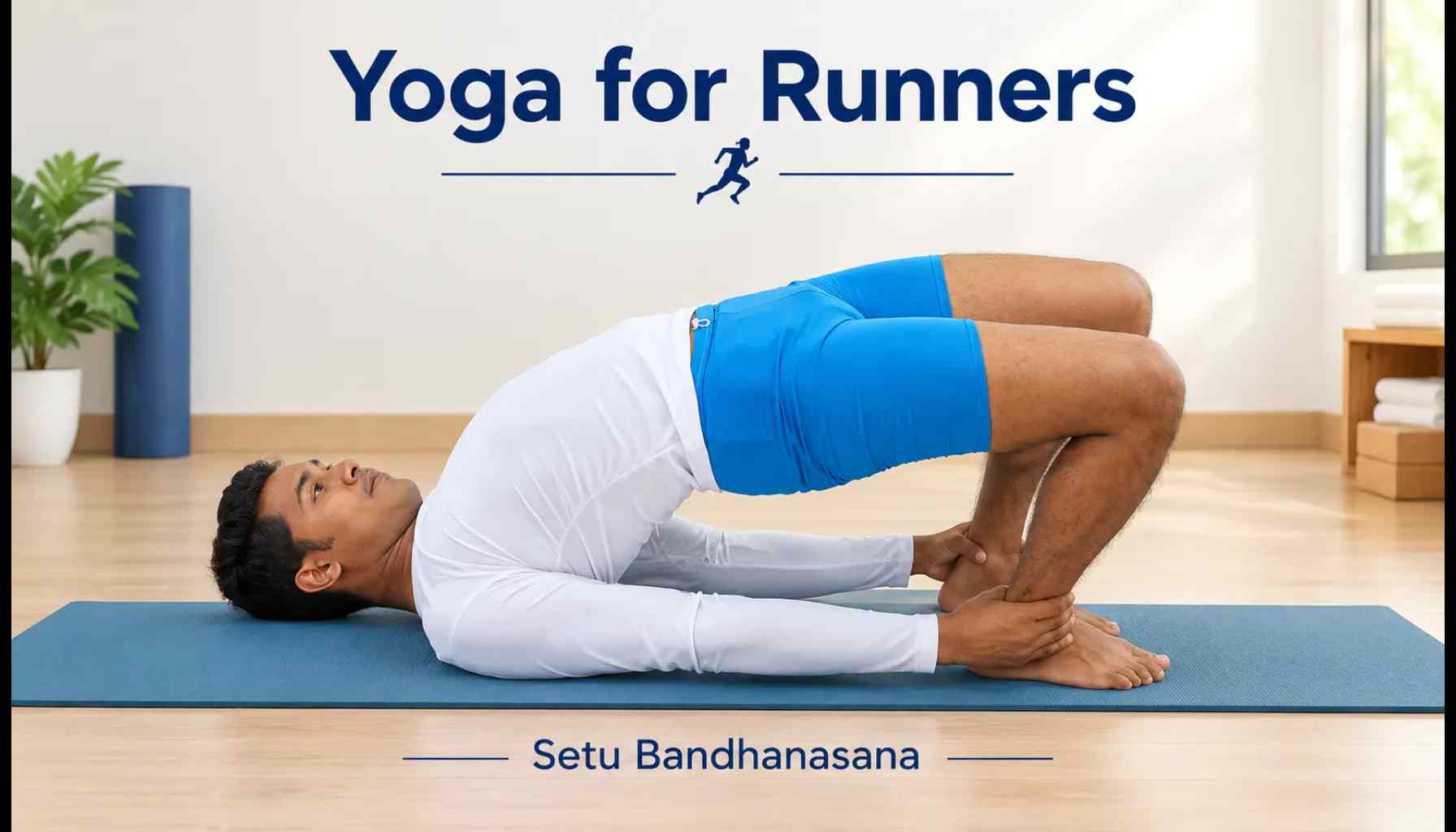
5. Bridge Pose (Setu Bandhasana): Lie on your back, plant your feet, and lift your hips. It wakes up sleepy glutes and strengthens the backs of your legs, which helps your stride.
6. Reclined Twist (Supta Matsyendrasana): Lie on your back and drop both knees to one side, arms wide. It unwinds the spine and lower back after repetitive forward motion. Do both sides.
A 15-Minute Post-Run Routine
Do this after an easy or moderate run, while your muscles are still warm.
- Downward-Facing Dog: Reset and stretch the back of your legs.
- Low Lunge: Both sides.
- Garland Pose: Open hips and ankles.
- Half Pigeon: Both sides.
- Bridge Pose: A few slow lifts.
- Reclined Twist: Both sides.
- Legs-Up-the-Wall (Viparita Karani): Rest with your legs against a wall to finish.
How Often Should Runners Do Yoga?
Begin by taking just one or two classes per week ranging between 10 and 20 minutes in duration. Some runners find their comfortable routine in two or three classes per week.
Tailor your yoga practices to your training:
- Weeks with heavy training: Opt for calming, recuperative yoga.
- Light weeks or offseason: Practice flow and power yoga for additional strength and flexibility.
- Race week: Perform light classes and do not engage in any activities that will make you sore afterwards.
Common Mistakes to Avoid
- Stretching when muscles are cold: Always warm up first, or perform yoga after your run.
- Overdoing it: Stretch until there is a mild pull, not pain.
- Performing vigorous yoga on tough running days: Practice vigorous yoga on easier days.
- Not using props: Yoga blocks and straps will help you maintain proper form.
- Disregarding pain: Pain during yoga means resting and contacting a professional.
Final Thoughts
Yoga for runners can be very beneficial as a cross-training programme. A few focused poses after your run, a gentle session on rest days, and a willingness to listen to your body can keep you moving comfortably for the miles ahead.
Frequently Asked Questions
1. Will yoga help runners' knees?
Yoga may help by strengthening and stretching the muscles around the knees, but it isn't a cure, so see a professional for ongoing knee pain.
2. Should runners do yoga before or after a run?
Do light, dynamic movements before a run and deeper stretches afterward. Post-run yoga is ideal for cooling down, while rest-day yoga supports recovery.
3. How often should runners do yoga?
Aim for one to three sessions a week of 10 to 20 minutes. Adjust based on your training load and how your body feels.
4. Which yoga increases stamina?
Flowing styles like vinyasa and power yoga build stamina best, while holding poses such as Warrior and Chair Pose adds strength and endurance.
Also Read: Yoga for strength
By Umesh Kumar Khiri

Discussion (0)
No comments yet. Be the first to comment!
Leave a Comment
You need to login to post a comment.