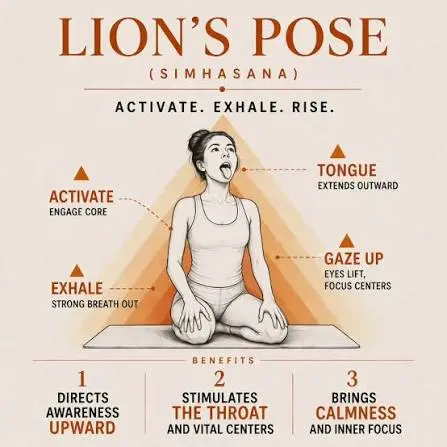
Simhasana (Lion Pose): Benefits
Stress does not only occur in the mind, but it can manifest itself in the body as well. Tightness in the jaw, neck, breath, and tension in the face are some of the most common manifestations of emotional stress. In a hectic, highly stressful environment like the one we currently live in, we tend to stretch our backs and do other exercises to strengthen our muscles. But very little attention is paid to releasing our faces and necks from the stress and tension they have accumulated. Here comes Simhasana, or the Lion Pose.
With its funny look and strong breathing techniques, this yoga position helps you to let go of all the stress and be true to yourself while also bringing back energy in your body. Although it might seem weird, this position is really easy and beneficial for your health, vocal cords, and self-confidence. Besides, it can teach you how to release what you no longer need.
Key Takeaways
-
Relieves Facial & Throat Tension: Stretches facial muscles, jaw, and tongue to release physical stress.
-
Supports Vocal Health: Tones the throat muscles and improves voice clarity and lung power.
-
Reduces Internal Anxiety: The powerful exhale (Lion's Roar) releases trapped emotional tension and frustration.
What Is Simhasana? Understanding the Lion Pose
Simhasana is a combination of two Sanskrit words: Simha which means lion, and Asana, which means posture. From its name, it is clear that Simhasana mimics the roar of a lion by adopting the seated posture together with an open mouth and extended tongue accompanied by breathing out.
In classical yoga practice, Simhasana is said to help in fostering courage and confidence in the practitioners. In yoga practices, the pose does not depend much on exerting physical energy. Rather, it helps the practitioners to relax their muscles emotionally through breathing.
This pose differs from other yoga poses that depend more on flexibility or balance because it focuses mainly on the face, throat, neck, and breath.
The pose is normally part of other practices in yoga for revitalizing the body through relaxation of the nervous system.
How to Practice Simhasana Mindfully
Look for a place where you will be able to practice comfortably without feeling conscious about yourself. A yoga mat or blanket can serve as your comfort zone.
Start with the seating posture. You can either adopt Vajrasana or any other easy-seated posture. Keep your hands on your knees with fingers widely stretched.
Inhale slowly and deeply through your nose. When you exhale, open your mouth as wide as possible and extend your tongue towards your chin. Simultaneously, open your eyes wide and gaze towards the space between the eyebrows or the tip of your nose.
Let out the air steadily by making a "ha" sound through your throat, feeling as if you are letting out the tensions, frustrations, and stresses. When you finish with your exhalation, let your facial muscles relax and breathe normally.
Practice the asana three to five times and make sure not to force anything. Breathing smoothly is more important than producing the loud noise.
Wellness Benefits of Simhasana
While the Simhasana seems to be an entertaining one, there are many health benefits that come out of it if you practice it regularly.
1. Helps in Easing Stress and Emotional Tension
Many individuals tend to clench their jaw or face muscles, or even the muscles around their throats during times of stress. Through Simhasana, it helps in relaxing the muscles entirely and gives a feeling of releasing any emotional tension. This is done in conjunction with deep breathing and helps in easing up any feeling of fatigue mentally.
2. Fosters Conscious and Deep Breathing
The way breathing is practiced during this exercise helps the individual to become aware of their breathing process. The practice of deep breathing helps in activating the body's relaxation response.
3. Face, Jaw, and Neck Relaxation
With the increasing time that we spend on computers and smartphones, it often leads to stiffness of the neck and jaw. Simhasana helps in relaxing the muscles of the face, jaw, and throat.
4. Facilitates Clarity of Communication and Expression
The throat is essential for communication and expression. Although this pose is not meant for treating any condition in relation to speech or voice, this pose makes one feel more open and confident. It is frequently practiced by individuals whose profession requires them to speak out, like teachers, singers, and speakers.
5. Helps Develop Body-Mind Awareness
The practice of the pose makes one more mindful of the places in the body where one stores stress. Increased awareness leads to developing better coping skills for the challenges of daily life rather than holding unnecessary stress throughout the day.
6. Increases One’s Vitality and Good Mood
As opposed to relaxation through meditative sitting, this particular pose provides much more energy due to its combined aspects of movement, breathing, and expression. Many yogis report feeling energised, refreshed, and more positive after the practice of the pose.
In the end, it is crucial to note that health and wellness are not only about stretching the body but also about creating the room for deep breathing, free expression, and releasing emotions.
Precautions and Tips for Safe Practice
This pose can be performed by most people, barring certain exceptions. In case you have a recently injured jaw or severe infection in your throat or neck, perform the posture carefully or take the help of an experienced yoga teacher before performing the pose. Do not strain your neck muscles and do not force your tongue beyond its comfort zone.
Remember that the main aim of the Simhasana pose is relaxation, and not strain.
To Sum It Up
Simhasana shows us how, at times, the best way to deal with our stress is by letting it out. Through controlled breathing, facial relaxation, and movements in this pose, we will learn to relieve tension, boost our confidence, and balance our emotions.
Including just a few rounds of Simhasana in your everyday schedule will bring some light moments into your life, which is otherwise packed with activities. Practice with openness and deep breathing to help you realize that wellness starts from the point where body and mind get relaxed.
Frequently Asked Questions
1. Can Simhasana be practised regularly?
Yes. This is a beginner's yoga pose which doesn’t require any flexibility and can be practised as a part of your wellness routine.
2. Does Simhasana reduce stress?
Yes. Through breathing deeply and relieving the tension in your face and neck, Simhasana will help you relax and relieve your daily stresses.
3. Is Simhasana good for the voice?
Through stretching your throat and encouraging you to breathe deeply, Simhasana will help you to feel better about your voice.
4. How often do I need to practise Lion Pose?
Lion Pose can be practised daily. Doing three to five rounds in combination with breathing will be sufficient for you.
Disclaimer: The content on LifePositive.com, including articles/blogs on yoga, acupuncture, naturopathy, and other alternative healing modalities for holistic wellness, is for informational and educational purposes only. It is not a substitute for professional medical advice, diagnosis, or treatment. Always consult a qualified healthcare provider before starting any new health protocol or making changes to an existing treatment plan.
By Umesh Kumar

.jpg)

Discussion (0)
No comments yet. Be the first to comment!
Leave a Comment
You need to login to post a comment.