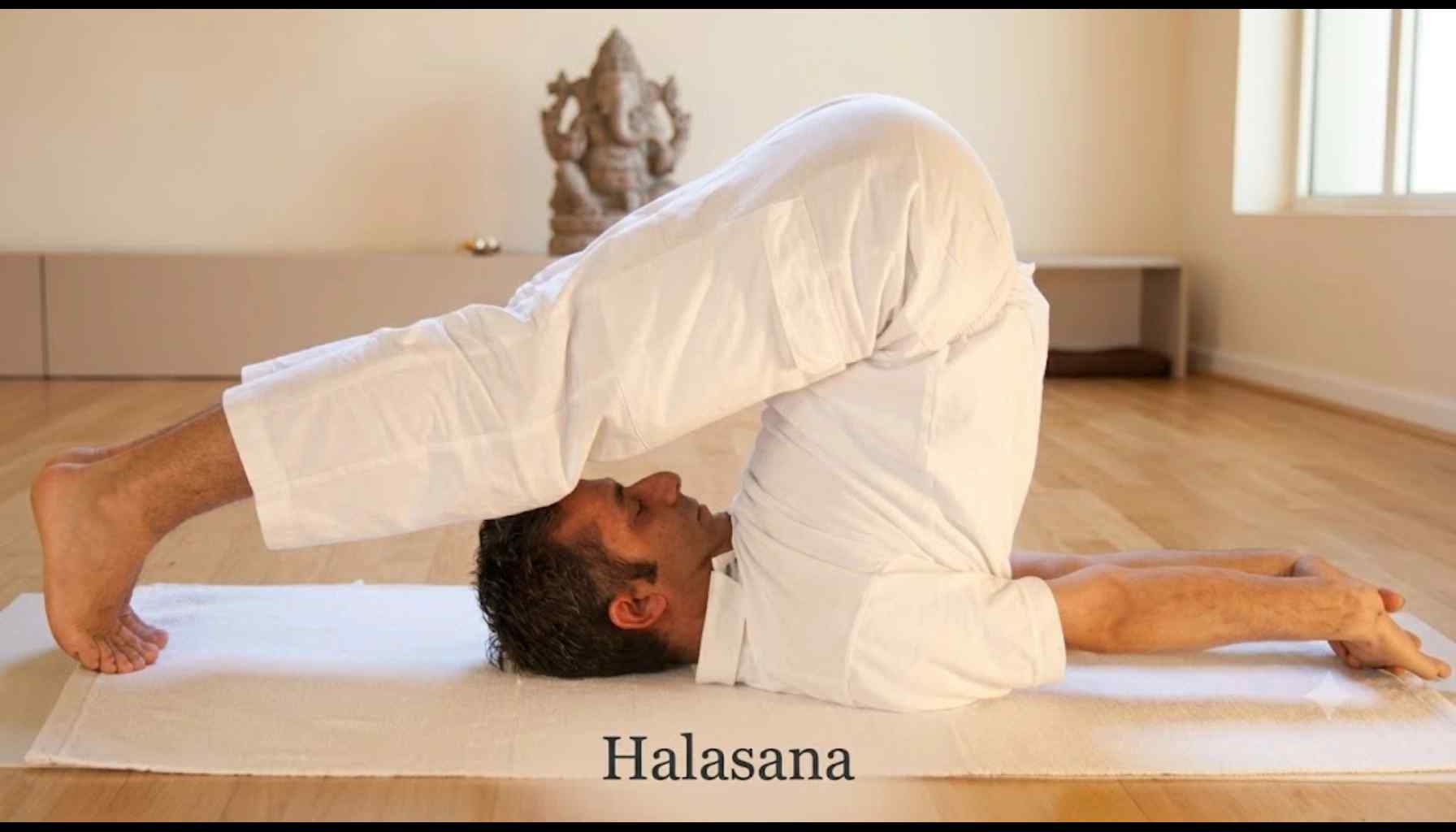
Halasana (Plough Pose): Benefits
Halasana is a traditional yoga posture also known as Plow Pose or Plough Pose. The asana has been named after the Sanskrit words Hala, which means a plough, and Asana which means a posture. The body attains a form that looks like that of a plough as the legs go above the head towards the floor. Halasana is mostly performed as a final posture. It is a pose meant to stretch the back, shoulders and the spine.
Halasana may appear to be an easy pose to practice, but it needs you to be flexible and to have control over your body. Legs do not necessarily need to be forcefully lifted up to touch the floor all the time.
Key Takeaways
- Halasana is an advanced-feeling inversion: Even though the movement looks straightforward, it requires careful control of the spine, shoulders and neck.
- Progress gradually: Your feet do not need to touch the floor for the posture to be useful. Supported versions can be more appropriate for beginners.
- Safety comes first: People with neck, back, shoulder or certain eye conditions should seek professional advice before practising Halasana.
What Is Halasana (Plough Pose)?
Halasana is a folded inversion performed while lying on the back. The practitioner lifts the legs upward and then gradually moves them behind the head. Depending on flexibility, the toes may rest on the floor, a block or another suitable support.
The posture is commonly practised after or alongside Shoulder Stand, although it can also be approached with appropriate preparation. Because the neck remains flexed in the position, proper technique is particularly important.
Variations of Halasana
- Ardha Halasana: A beginner-friendly variation that keeps the legs elevated without taking them overhead.
- Karnapidasana: A deeper variation where the knees move toward the ears for greater compression.
- Parsva Halasana: A side variation that adds controlled spinal rotation while maintaining the inverted position.
Preparatory Poses
- Setu Bandhasana: Warms the spine, shoulders and legs before attempting Halasana.
- Sarvangasana: Builds familiarity with the shoulder-supported alignment used during Halasana.
- Supta Padangusthasana: Prepares the hamstrings and hips for controlled leg movement.
Counter Poses
- Ardha Matsyendrasana: Gently opens the chest and extends the spine after Halasana.
- Setu Bandhasana: Provides controlled spinal movement following the deep forward fold.
- Balasana: Relaxes the back and helps restore comfortable breathing after practice.
How to Perform Halasana (Plough Pose)
Perform the following instructions gradually while keeping a steady breath:
1. Lie down on your back: Keep your legs straight while placing your hands to the sides of your body with palms resting on the floor.
2. Elevate the legs: Tighten the abdominal muscles to lift both legs upward. Make sure to raise your lower back and hips gradually and carefully.
3. Shift the legs above your head: Gently lift your straight legs over your head. Your toes can touch the floor if you feel comfortable doing so.
4. Hold the pose and come out of it: Breathe normally and stay in the position for as long as it feels comfortable. Roll back your spine gradually onto the floor to return from the pose.
Benefits of Halasana for the Body
Some commonly discussed benefits include:
|
|
|
|
|
|
|
|
|
|
|
|
|
|
|
|
|
|
|
|
|
Health Conditions Yoga May Support
Yoga may be used as a complementary wellness practice for certain health concerns, but people with medical conditions should follow advice from their healthcare professionals.
|
|
|
|
|
|
|
|
|
|
|
|
|
|
|
|
|
|
Precautions and Contraindications of Halasana
Safety is more important than achieving the textbook shape. Do not pull your feet toward the floor or use your hands to force your spine deeper into the posture.
Who Should Avoid or Modify Halasana?
- People with significant neck or shoulder injuries
- Individuals with serious back problems or sciatica
- People with glaucoma or certain eye conditions
- Those with a hernia unless cleared by a healthcare professional
- Anyone who experiences pain, dizziness, breathing difficulty or eye pressure during the pose
Halasana and Its Place in a Yoga Routine
The halasana is normally done at the end of a yoga session since its slow and inward-focused nature allows the person to move into a relaxed state through breathing or meditation.
After the posture, practitioners may use an appropriate counterpose rather than immediately moving into another demanding position.
Frequently Asked Questions
1. What are the benefits of Halasana?
Halasana can stretch the spine, shoulders and legs while encouraging controlled core engagement. It is also traditionally used as a calming, finishing posture in yoga sequences.
2. Is Halasana good for reducing belly fat?
Halasana can engage the abdominal muscles and contribute to an active yoga routine, but it cannot selectively burn belly fat. Halasana is better viewed as a posture for flexibility, mobility and core control rather than a spot-fat-reduction exercise.
3. How long should I hold Halasana?
Beginners should focus on technique and comfortable breathing rather than trying to hold the pose for a specific long duration. If you experience pain, dizziness, breathing difficulty or pressure in the eyes or neck, come out of the pose.
4. What are the contraindications for Halasana?
Halasana may be unsuitable for people with serious neck or back injuries, sciatica, hernia, glaucoma or other eye problems. Inversions can increase pressure inside the eyes, which may be problematic for people with glaucoma.
Also Read: Dandasana
By Umesh Kumar Khiri


Discussion (0)
No comments yet. Be the first to comment!
Leave a Comment
You need to login to post a comment.