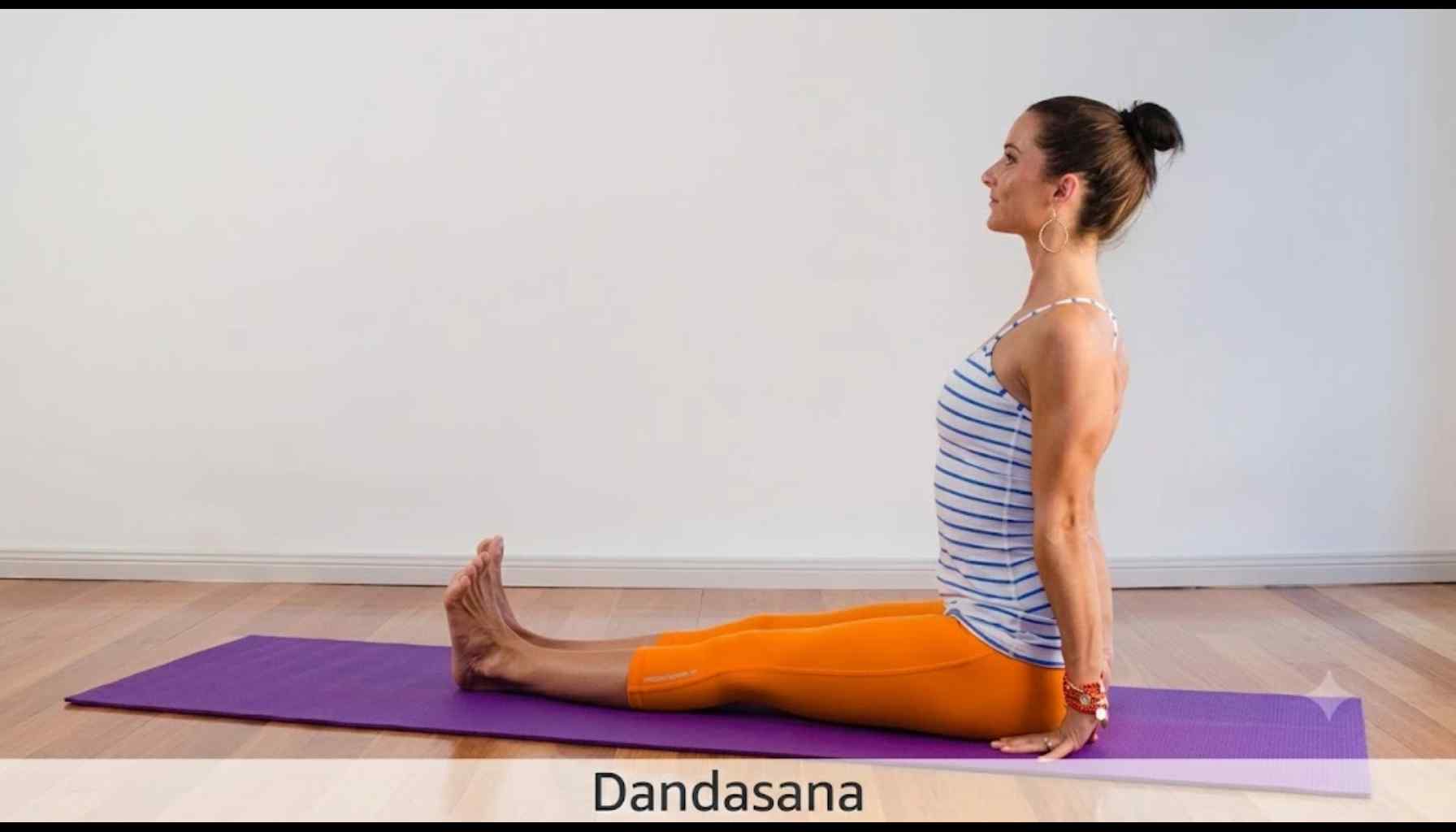
Dandasana (Staff Pose): Benefits
Dandasana, commonly known as the Staff Pose, derives its name from the Sanskrit words Danda (meaning stick or staff) and Asana (meaning posture). Though it appears simple on the surface, this fundamental seated posture serves as the structural foundation for almost all seated forward bends, twists, and arm balances in classical yoga practice. By training the body to maintain an upright vertical spine against the pull of gravity, Dandasana cultivates deep postural awareness, core engagement, and functional stability throughout the entire torso.
Key Takeaways
- Postural Foundation: Trains the spinal column to maintain a neutral alignment, counteracting the habit of daily slouching.
- Deep Core Activation: Strengthens the deep abdominal wall, lower back muscles, and hip flexors to support an upright posture.
- Lower Body Lengthening: Stretches the hamstrings, calves, and ankles while grounding the pelvis into the floor.
Mastering Dandasana Alignment: Technique & Modifications
Achieving steady posture in Dandasana requires active muscular participation rather than passive sitting. Grounding evenly through the sit bones allows the spine to extend skyward while keeping the shoulders relaxed and away from the ears.
Variations and Preparatory Steps for Dandasana
Some of the common variations of Dandasana are as follows:
|
|
|
|
|
|
|
|
|
|
|
|
|
|
|
|
|
|
|
|
|
|
|
|
|
How to Perform Dandasana
Follow these steps to practise Dandasana:
1. Set Up the Foundation: Start by sitting upright on your yoga mat with your legs stretched out straight ahead, making sure that your feet are kept close to each other.
2. Ground Your Pelvis: Sit firmly on your sit bones, point your feet towards your shinbones, and gently push your thighbones into the ground.
3. Position the Hands: Put your palms flat on the ground next to your hips with your fingers facing forward towards your toes.
4. Straighten the Spine: Take deep inhalations in order to elongate the spine, pull your shoulder blades away from each other and downwards, and align your ears over your shoulders.
5. Hold the Pose and Breathe: Draw your abs in, focus your gaze straight ahead of you, and hold this position for 30 to 60 seconds.
Health Conditions Managed by Dandasana
Some of the health conditions and diseases that can be managed by performing Dandasana regularly are as follows:
- Poor Posture & Slouching: Helps correct postural tendencies through developing the muscles of the erector spinae and shoulders.
- Sciatica & Lower Back Stiffness: Loosens tight hamstrings and stretches the lumbar region for sciatic pain relief.
- Sluggish Digestion: Actively engages the abdominal muscles to gently compress and stimulate internal organ function.
- Mental Fatigue & Stress: Grounding the lower body while breathing deeply helps quiet mental chatter and enhance focus.
Key Precautions
Follow these measures while practising Dandasana:
- Lower Back Injuries: Avoid sitting fully upright if you have acute lower back pain or disc herniation; bend the knees slightly or use wall support.
- Tight Hamstrings: Avoid rounding the lumbar spine; sit elevated on a yoga block or folded blanket to maintain neutral spine alignment.
- Wrist Strain: If pressing palms flat causes wrist discomfort, rest your hands on fingertips or make light fists next to your hips.
- Hyper-extended Knees: Avoid forcing the backs of the knees aggressively into the mat; keep a micro-bend in the knees if necessary.
Summing Up
The Dandasana is an essential measure of structural alignment, balance, and breathing control in yoga. The practice of grounding the pelvis and stretching out the spine vertically helps you to develop the necessary strength and flexibility of hamstrings required to perform difficult poses. Paying attention to your limitations and using blankets as props will help you to do the pose effectively and safely. In the end, learning the pose will give you an invincible foundation in yoga.
Frequently Asked Questions
1. What are the benefits of doing Dandasana?
Dandasana improves spinal alignment, strengthens the deep core and back muscles, and stretches the hamstrings and calves. It also promotes mindfulness and serves as the structural base for all seated yoga postures.
2. What is Shiva Dandasana?
Shiva Dandasana is an advanced hip-opening posture where one leg is hooked behind the shoulder while balancing. Named after Lord Shiva, it requires extreme leg flexibility, hip mobility, and core control.
3. Who should not do Dandasana?
Individuals with acute lower back injuries, spinal disc issues, or severe wrist pain should avoid practising full Dandasana. Those with tight hamstrings should modify the pose by sitting on a folded blanket or micro-bending their knees.
4. What is the difference between Chaturanga Dandasana and Dandasana?
Dandasana is a seated posture performed upright on the floor with legs extended forward. In contrast, Chaturanga Dandasana is a prone, low-plank transition pose where the body hovers horizontally above the mat supported by the hands and toes.
Disclaimer: The content on LifePositive.com, including articles/blogs on yoga, acupuncture, naturopathy, and other alternative healing modalities for holistic wellness, is for informational and educational purposes only. It is not a substitute for professional medical advice, diagnosis, or treatment. Always consult a qualified healthcare provider before starting any new health protocol or making changes to an existing treatment plan.
Also Read
By Umesh Kumar

Discussion (0)
No comments yet. Be the first to comment!
Leave a Comment
You need to login to post a comment.