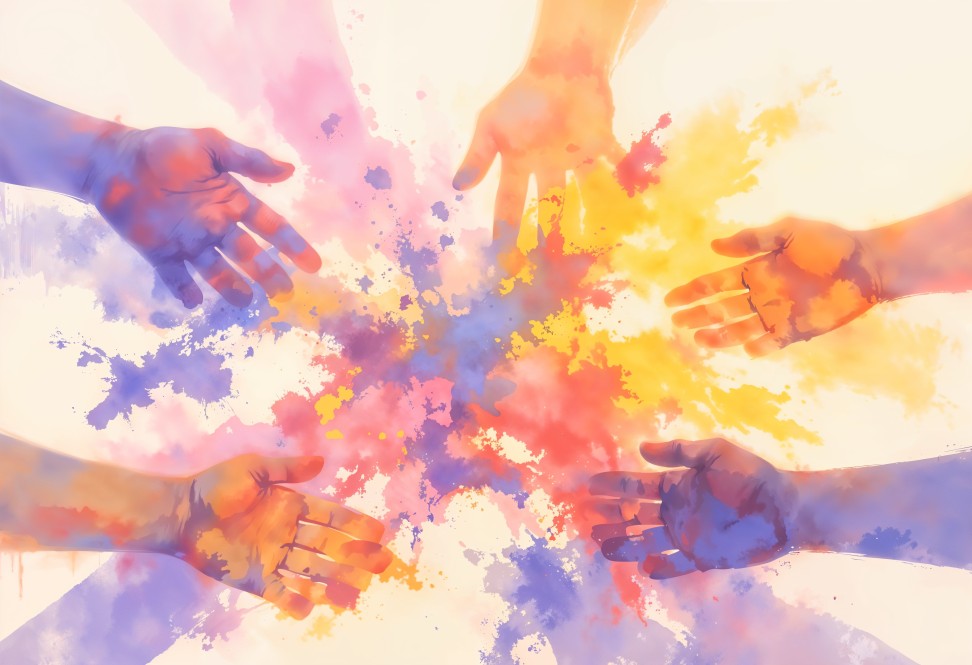
Creativity unites
Creativity is one of humanity’s most profound and universal connectors because it transcends boundaries that often divide us—language, politics, culture, and history. Here’s how it unites us:
1. A Universal Language Beyond Words
Creativity speaks in forms that don’t require translation: music, visual art, dance, cinema, cuisine, and design.
A piece of music can move someone in Tokyo, Nairobi, or Buenos Aires in similar ways. A painting’s emotion can be felt across centuries. When words fail or languages differ, creative expression becomes a shared medium of understanding.
2. Shared Stories and Archetypes
Human creativity often revolves around storytelling, and many core narratives—love, loss, heroism, struggle, wonder—are universal. Myths, folktales, and modern films like The Lion King (inspired by Hamlet and African storytelling) show how creative narratives recycle and reconnect across cultures, reminding us of our common emotional and psychological landscape.
3. Collective Problem-Solving
Creativity isn’t just art—it’s innovation. Humanity’s greatest challenges (climate change, pandemics, poverty) require creative collaboration across borders. Scientists, engineers, and thinkers from different backgrounds unite to devise solutions. This shared inventive process highlights our interdependence and common goals.
4. Cultural Exchange and Fusion
Creativity thrives on cross-pollination. Music genres like jazz, reggae, or hip-hop emerged from cultural mixing and are now global languages. Cuisine constantly evolves through fusion, blending techniques and ingredients from different parts of the world. This creates hybrid identities and celebrates diversity rather than fearing it.
5. Creating Empathy and Perspective
Engaging with someone else’s creative work—reading a novel from another country, watching a foreign film, listening to indigenous music—allows us to “step into their world.” This builds empathy and dissolves stereotypes. Creativity makes the unfamiliar familiar, and the distant relatable.
6. Ritual, Celebration, and Shared Experience
From ancient cave paintings and religious rituals to modern global events like the Olympics opening ceremony or worldwide concerts (e.g., Live Aid), creativity provides a framework for collective experience. It helps mark what it means to be human through celebration, mourning, worship, or festivity.
7. Reclaiming and Healing Collective Wounds
Creativity can be a tool for processing shared trauma and advocating for justice. Songs like "We Are the World", murals in post-conflict zones, or memorial architecture (like the 9/11 Memorial) create spaces for collective mourning, reflection, and hope. They affirm that suffering and resilience are universal.
8. The Digital Creative Commons
The internet has amplified creativity’s uniting power. Platforms like YouTube, TikTok, and open-source software communities allow people from anywhere to co-create, remix, and share. A dance trend can sweep the globe in days; open-source projects like Wikipedia are built by volunteers worldwide. This creates a sense of global collaboration and shared knowledge.
9. A Reflection of Our Shared Humanity
Creativity ultimately reminds us that imagination, curiosity, and the desire to express and make meaning are intrinsic to all people, regardless of background. Every culture creates—it is a defining human trait. Recognizing this fosters a sense of kinship: we are all makers, dreamers, and storytellers.
In essence, creativity unites humanity by revealing our common inner world while celebrating our diverse outer expressions. It builds bridges where politics or ideology build walls, and it continuously renews the dialogue about what it means to be human—together.
By Jamuna Rangachari
See this article on youtube at https://youtu.be/VJTVEOfHjJQ


.png)
Discussion (0)
No comments yet. Be the first to comment!
Leave a Comment
You need to login to post a comment.