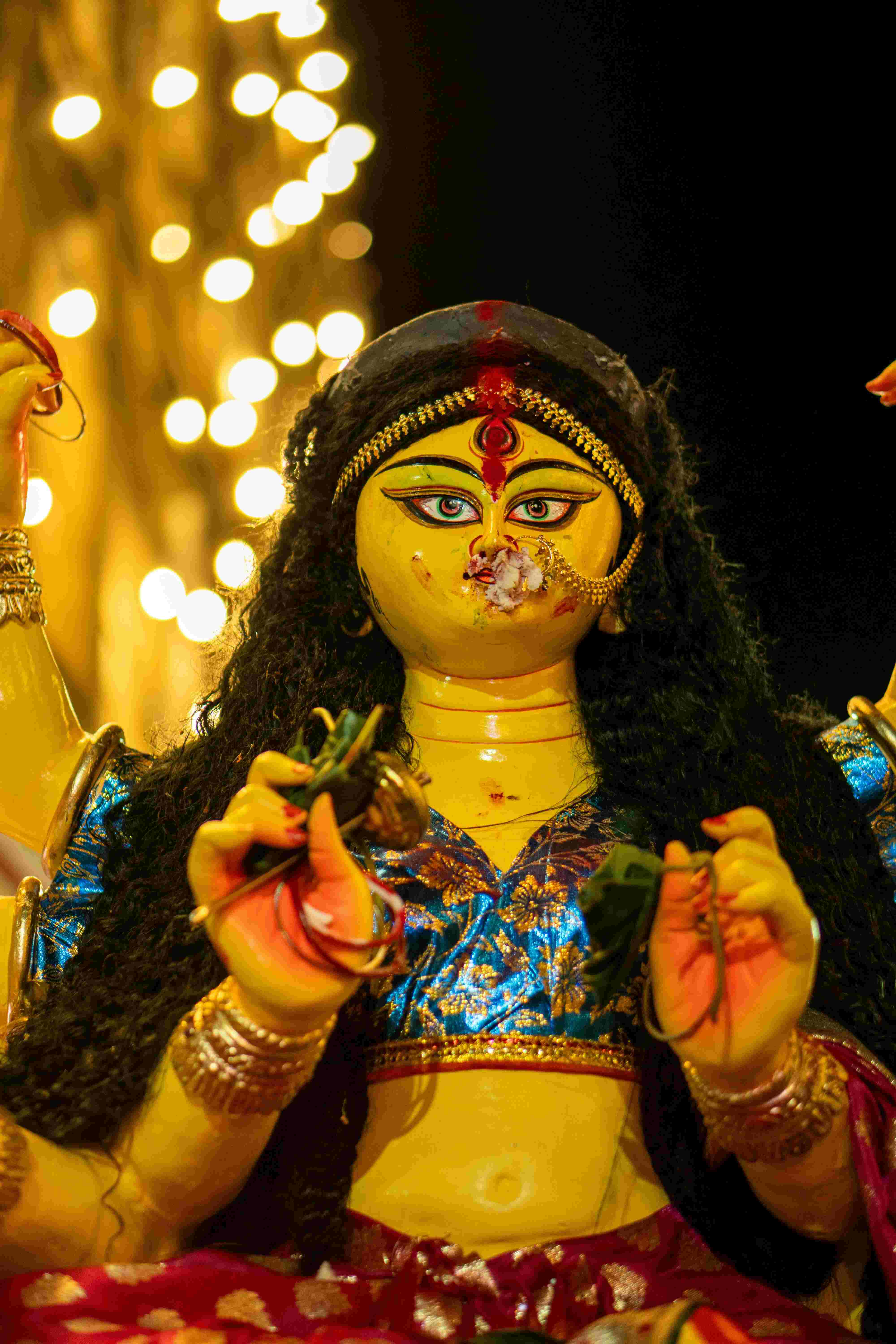
Relationship of Navaratri and Navarasas
The relationship between Navaratri and the Navarasas is a profound and beautiful aspect of Hindu philosophy, where a major festival is interpreted as an inner, spiritual journey through the entire spectrum of human emotions.
In essence, Navaratri is the external celebration, while the Navarasas represent the internal, emotional, and spiritual transformation that the devotee is meant to undergo during these nine nights.
Let's break down this relationship.
What are Navaratri and Navarasas?
-
Navaratri ("Nine Nights"): is dedicated to the worship of the Divine Feminine in her three primary forms:
-
Goddess Durga: The embodiment of power, courage, and the destruction of evil.
-
Goddess Lakshmi: The bestower of wealth, prosperity, and well-being.
-
Goddess Saraswati: The goddess of knowledge, wisdom, music, and art.
The festival symbolizes the victory of good over evil (the slaying of the buffalo demon Mahishasura by Durga) and the journey from material pursuit to spiritual enlightenment.
-
-
Navarasas ("Nine Essences" or "Nine Emotions"): In Indian aesthetic theory (Natya Shastra), these are the nine fundamental emotions or flavors that art (especially dance and drama) evokes in a human being. They are:
-
Shringara (Love, Beauty)
-
Hasya (Laughter, Joy)
-
Karuna (Compassion, Sorrow)
-
Raudra (Anger, Fury)
-
Veera (Courage, Heroism)
-
Bhayanaka (Fear, Terror)
-
Bibhatsa (Disgust, Aversion)
-
Adbhuta (Wonder, Amazement)
-
Shanta (Peace, Tranquility)
-
The Connection: A Spiritual Journey Through Emotions
The nine nights of Navaratri can be seen as a sequential process of confronting, experiencing, mastering, and transcending each of these emotions to reach a state of pure peace (Shanta) and self-realization.
Here is a common interpretation of how the days of Navaratri align with the Navarasas:
Days 1-3: Goddess Durga - The Confrontation (Destroying Inner Demons)
This phase is about destroying negative tendencies. The rasas here are often those we must face and overcome.
-
Day 1 - Shanta (Peace): The journey begins with a calm and peaceful mind, preparing for the inner battle. This is the quiet determination before the storm.
-
Day 2 - Bhayanaka (Fear): We confront our deepest fears and insecurities. Worshipping Durga gives us the strength to face them.
-
Day 3 - Bibhatsa (Disgust): We develop vairagya (dispassion) or disgust towards our negative habits, ego, and material attachments that bind us.
Days 4-6: Goddess Lakshmi - The Cultivation (Nurturing Positive Qualities)
After destroying the negative, we cultivate the positive. The rasas here are more sattvic (pure) and nourishing.
-
Day 4 - Raudra (Anger): Not anger in a negative sense, but the righteous indignation and fierce determination required to protect the goodness we are cultivating and to destroy any remaining negativity.
-
Day 5 - Veera (Courage): We build the courage and inner strength needed to walk the path of dharma (righteousness) and sustain our spiritual practice.
-
Day 6 - Karuna (Compassion): With strength and courage established, the heart opens. We cultivate compassion for all beings, realizing the interconnectedness of life.
Days 7-9: Goddess Saraswati - The Realization (Attaining Wisdom and Bliss)
This final phase leads to wisdom and ultimate bliss. The rasas here are those of higher consciousness.
-
Day 7 - Adbhuta (Wonder): As knowledge (Saraswati) dawns, we see the divine play (leela) in everything. The world becomes a source of wonder and amazement.
-
Day 8 - Hasya (Joy): This is not mere laughter, but the bliss (Ananda) that arises from spiritual wisdom and the realization of the divine within. It is a state of pure, unadulterated joy.
-
Day 9 - Shringara (Love): The final rasa is the ultimate love—not worldly, but the divine love and devotion for the Supreme. It is the complete surrender to the Goddess, the embodiment of all that is beautiful and sacred. This day is also known as Maha Navami, the culmination.
Vijayadashami (The 10th Day): The Final State
The tenth day, Vijayadashami or Dussehra, marks the victory. Having successfully navigated the entire spectrum of Navarasas, the devotee transcends them all. The final state is Mouna (silence) or Shanta Rasa in its highest form—a state of perfect peace, balance, and self-realization, having conquered the inner demon of the ego.
Summary in a Table:
| Navaratri Phase | Goddess | Focus | Associated Navarasas (Example) |
|---|---|---|---|
| Days 1-3 | Durga | Destruction of Evil (Tamas) | Bhayanaka (Fear), Bibhatsa (Disgust), Raudra (Anger as force) |
| Days 4-6 | Lakshmi | Cultivation of Goodness (Rajas) | Veera (Courage), Karuna (Compassion) |
| Days 7-9 | Saraswati | Acquisition of Wisdom (Sattva) | Adbhuta (Wonder), Hasya (Joy), Shringara (Divine Love) |
| Day 10 | Victory | Transcendence | Shanta (Perfect Peace) - The ultimate goal. |
Conclusion
The relationship between Navaratri and Navarasas teaches us that spirituality is not about suppressing emotions, but about consciously experiencing, understanding, and mastering them. The festival provides a structured framework for this inner purification. By worshiping the Divine Mother through these nine forms/nights, we are essentially praying for the grace to navigate the ocean of our own emotions and emerge victorious, pure, and at peace.
This is why classical Indian dance performances during Navaratri often depict the Navarasas, as they are seen as a sacred offering and a reflection of this deep spiritual process.
By Jamuna Rangachari



Discussion (0)
No comments yet. Be the first to comment!
Leave a Comment
You need to login to post a comment.