
Embrace mother earth
February 2024
Embrace Mother Earth
Let’s not forego the environmentally friendly practices that we adopted during the pandemic and continue to embrace them for the sake of a healthier and more livable planet, says Sujatha Rao
As the lockdowns across the globe in 2020 and 2021 negatively impacted the way human beings live and work, paradoxically, the air pollution decreased in cities, and global emissions went down by 7 per cent (as per Global Carbon Budget 2020). But without systemic changes, and with the economic recovery, these emissions are bouncing back.
If there’s anything positive that we learned from the tragedy of COVID-19, it is the reality of how little we actually need in our lives.
With the non-lockdown period opening only for a few hours in the morning, and with only essential things to sustain us, we discovered with renewed eyes, how small that essential list is. We realised with a start that for a great part of our lives our “wants” lists have been ruling over our much simpler “needs” list.
With the perils of overuse of ‘steroids,’ ‘antibiotics,’ ‘Zinc supplements,’ overindulgence in ‘junk food,’ excessive sitting, overdrinking, in fact, over-anything, constantly hitting us from the news around us, we woke up to the reality of the adage ‘less is more’ like never before.
As we enter 2024 lets not forget what we learned in the pandemic hit times and continue to practice them to avoid another similar catastrophe.
What the pandemic taught us about minimalistic sustainability
“You have consumed 1,44,000 litres of oxygen to recover. Now please plant ten trees after going home” was an appeal made to a 41 year old woman who had just recovered from Covid in Nagpur by the doctor who treated her. A doctor in Ahmednagar of Maharashtra urged his patients to plant a sapling on his prescription paper through a rubber stamped message.
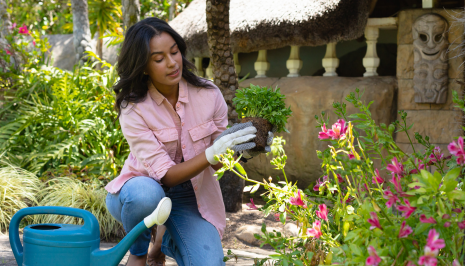
It’s heartening to note that, a lot of people took up gardening within their small houses and apartments to avoid purchasing vegetables from outside for fear of contracting the disease. Having gotten used to growing their own vegetables, these people then continued with this sustainable practice beyond the periods of lockdown.
Bicycles got a new lease of life with roads getting less crowded and with people wanting to do some kind of exercise.
Due to the fear of contracting covid, many people took to stairs, instead of using the elevator.
Quite a few people came up with their own innovative solutions through homemade hand sanitizers and handmade reusable cloth masks. Across a lot of houses, the old sewing machine was put to good use in an attempt to repurpose their old clothes.
People went paperless by adapting to the digital practices – be it for fund
Morgan Stanley reported that after the pandemic, a good number of investors started rewarding the shift of inflows into funds screened for environmental, social and governance (ESG) from the traditional funds, which is indeed a welcome trend.
transfers or cashless transactions. A lot of people started the sustainable practice of digital subscriptions for newspapers and magazines.
Companies woke up to the possibility of Working From Home, saving a lot of avoidable usage of valuable resources such as electricity, stationery and space.
Thanks to the lockdowns, a lot of youngsters learned to cook at home and found what a necessary life skill cooking happens to be. Quite a few enthusiasts amongst them went further ahead and tried their hand at baking, grilling, wine making or coming up with their own cocktail of an original dish.
Sustainability practices in business Morgan Stanley reported that after the pandemic, a good number of investors started rewarding the shift of inflows into funds screened for environmental, social and governance (ESG) from the traditional funds, which is indeed a welcome trend.
Gen Z veered towards products and processes that are more sustainable, being more
concerned about environmental changes. Naturally, the brands which relied heavily on the future generations fell in line by evolving strategies around sustainability in their narrative.
Beam Suntory, the third largest producer of distilled beverages committing US$1 billion towards making positive impact on the environment, and Eleven Madison Park, one of the most famous three Michelin Star restaurants in New York going vegan as its renowned Chef Daniel Humm opined, “We’re not saying anti meat, but we’re saying pro-planet,” are two such cases in point.
Sustainability practices at an individual level The following Five Rs are significant in living with minimalistic sustainability practices in the future.
1. Refuse
When Samyukta, a Vegan by choice, refused to wear the conventional pattu silk sari for her wedding, quoting the PETA study which highlighted that around 3000 silk worms are killed to generate 1 pound of silk, it didn’t go well with her orthodox extended family members. However, with the support of her vegan life partner, it wasn’t difficult for her to enforce her choice of apparel at her own wedding.
Learning to identify and refusing unsustainable waste may take conscious practice. But this ensures the best way to nip the unrecyclable products such as plastic covers from entering our lives, in the bud.
2. Reduce
Sowmya is a hoarder. Over the years, she has stuffed so much into the cupboards of her house that they have started to spill over. Though their house is quite big, they are already running out of space, as new stuff keeps on getting added year on year. The idea of sorting things out overwhelms Sowmya.
A onetime exercise of sorting things, out and arriving at those that need to be donated, thrown away can make the family breathe easy. One can access online help groups such as “free your stuff ” for ideas in this regard.
Remember – the less you have, the less you have to lose.
3. Reuse
Leela is quite innovative when it comes to ideas for reusing stuff. Her house is full of artifacts generated out of items to be discarded, be it from broken glass or torn cloth. She even has her own tasty recipes dished out of peels and skins of vegetables for that healthy fiber quotient in the diet.
Not everything that is broken or old needs to be discarded. Unlike the Western countries, India is well known for getting the household items repaired, reused and repurposed. Be it a mixer grinder in the kitchen, or even the footwear that gets repaired on the road by a cobbler, our penchant for getting the maximum juice out of a product is well known the world over. This practice, we find is quite a healthy practice for sustainability, as it extends the life of the products at use, thereby being environment friendly in its own way.
Thankfully, sustainability is woven into India’s textile culture. Our unstitched apparel Sari is the epitome of sustainability. It defies the concept of “one size doesn’t fit all,” making it a perfect example for reuse.
We also have countless examples of not letting the fabric go waste in our design practices, such as borders being cut and reused elsewhere, old saris converted into blouses, ghaghras and lehangas, with patchwork being a recurrent fashionable theme.
4. Repurpose
Revanth has designated a particular area in his office as “up-cycle ideas station” for his employees to drop new ideas for repurposing the existing items. He feels it is serving the interests of his newly found start-up very well.
For items that can’t be refused, reduced or reused, one can try repurposing it. For instance, one can use the wasted printer paper for scrap paper, cardboard boxes for storing items, binder clips to hold power cords in place, extra coffee mugs for holding stationery items such as, pens, pencils and staplers.
5. Recycle
What can’t be dealt with any of the above ‘R’s, finally need to get recycled. Recycling is one of the most important green initiatives. The garbage bins separation in to blue and green is a healthy initiative aimed at this practice. Newspapers, card board pieces, tins, bottles, jars, tetra packs etc are recyclable items go into the blue bins, whereas wastes of plants and animals and other biodegradable items go into the green ones.
In India, certain municipalities penalise the residents for non compliance with the waste segregation, which is an environment friendly move.
Conclusion
Sustainability and minimalistic approach towards life is no longer a ‘good to have’
practice. It’s imperative that we practice these for the very survival of our human race.
After the disaster the world witnessed in Chernobyl, it is worth noting that nature is reclaiming its space in those ruins, even as it wears a deserted look, due to its being still uninhabitable for human beings. The lesson from the nature is loud and clear, as it is beautifully expressed by Sir David Attenborough in the following words.
“This is not about saving our planet, it’s about saving ourselves. The truth is, with or without us, the natural world will rebuild.”
Sujatha Rao is a retired banker. She has been contributing articles to various newspapers and magazines over the last two decades. Two of her short stories were placed third in Times of India’s national level Write India contest (Seasons 1 and 2). Her first book titled In the Company of Stories was published recently. Her other interests include reading, traveling, practising yoga, and mindfulness.

Discussion (0)
No comments yet. Be the first to comment!
Leave a Comment
You need to login to post a comment.