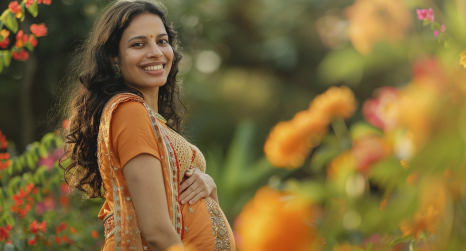
Garba sanskar
Nurturing
Souls Through Garbh Sanskar
By embracing Garbh Sanskar, expectant mothers can foster holistic well-being and imbue their unborn child with love, intelligence, and harmony, creating a legacy of positivity and connection for generations to come, says Navni Chawla
Considering the global scenario, we wonder what can be done to rectify the problem of humanity being embroiled
in wars and exploiting Mother Nature and fellow human beings. Attempts to instil values through schools and sermons have yielded limited results. But can shaping their minds and affecting their consciousness while they are in the foetal stage change the game?
It can, in all probability, but the conditions for engendering such positive attributes must be created by the families of pregnant women. They must realise that they are not just welcoming their progeny but laying the foundation for a better tomorrow, thereby undertaking a sacred responsibility.
Once they accept the role they have been entrusted with, they should take recourse to the process of Garbh Sanskar. For centuries, Indian traditions have emphasised the holistic well-being of the mother and child, even before conception. ‘Garbh Sanskar,’ which translates to ‘foetal impression’ in Sanskrit, is a comprehensive approach to prenatal care that goes beyond the physical. It encompasses a range of practices aimed at engendering the physical, emotional, and spiritual development of the unborn child.
This article delves into the world of Garbh Sanskar, exploring its roots in ancient wisdom, the experiences of women who embraced it, expert advice from ayurvedic practitioners and modern medical professionals, and the potential benefits of this unique approach to pregnancy.
What is Garbh Sanskar?
“Garbh Sanskar offers a profound way to prepare for parenthood, going beyond the physical aspects of pregnancy. By cultivating a sense of mindfulness, positive affirmations, and a connection with the developing baby, Garbh Sanskar practices can create a potent prenatal environment. This not only benefits the mother’s well-being but also has the potential to influence the child’s emotional and spiritual development from the very beginning,” says Dr Deepak Chopra, a renowned author.
Before delving into the profound practice of Garbh Sanskar, it is essential to understand the concept of ‘sanskar.’ practices that shape a person’s character, values, and beliefs from birth to death. Each stage of life is marked by specific sanskars. While ancient Hindu texts like the Gautam Smriti Shastr mention 40 sanskars, the Maharishi Ved Vyas Smriti Shastra highlights 16 popular sanskars known as Shodash Sanskars. Among these, Garbh Sanskar is one of the most intriguing and impactful.
So, Garbh Sanskar is the process of instilling qualities and eliminating defects in a child during pregnancy.
The Essence of Garbh Sanskar
Garbh Sanskar is a profound and ancient practice focussed on nurturing and educating the unborn child within the mother’s womb. This holistic approach to prenatal care emphasises the importance of creating an ideal physical and emotional environment for the baby’s development. The underlying belief of Garbh Sanskar is that the mental and emotional state of the mother significantly influences the baby’s overall well-being, including intellect, temperament, personality, and physical health.
In ancient Hindu philosophy, the transient nature of the world, termed ‘aniitya’ by Shri Krishna in the Bhagavad Gita, underscores the diversity we see around us. This transience leads to variations in personalities, learning abilities, and temperaments. These differences arise from two governing factors of human life: Prarabdha and sanskars.
1. Prarabdha: The part of a collection of past karma, which is ready to be experienced through the present body (incarnation). 2. Sanskars: The qualities acquired from upbringing and the surrounding environment that shape our personality.
While we cannot alter our Prarabdha, we can influence sanskars. During pregnancy, practising Garbh Sanskar is a crucial effort to nurture the mind, intellect, and personality of the child. Both scriptures and modern science agree that the environment and surroundings significantly impact the child’s development in the womb.
Scriptural Examples and Modern Insights As mentioned above, the concept of Garbh Sanskar finds its roots in the Vedas, ancient Hindu scriptures, and ayurvedic texts. These texts emphasise the critical role of the first trimester when the foetus is most susceptible to external influences.
Scriptural stories highlight the sensitivity of the unborn child to their environment: • Abhimanyu in the Mahabharata: At 16, Abhimanyu broke the Chakravyuh because he learned the technique while in his mother Subhadra’s womb when Arjun explained it to her.
• Sati Madalsa in the Markandeya Purana: Madalsa declared the qualities, actions, and nature of her child in advance and adopted a specific lifestyle, diet, and behaviour as well as specific thoughts and actions to ensure her child embodied these qualities.
• Prahlad in the Vishnu Purana: Despite being born into a demonic family, Prahlad’s mother stayed in the ashram of Devrishi Narad during her pregnancy, where she listened to stories of Lord Vishnu. As a result, Prahlad became a devoted follower of Vishnu, embodying goodness and rejecting evil.
EXPERIENCE YOUR AURA’S POWER

Ever wondered how your aura looks?
Discover surprising anecdotes about yourself and understand how WATER can correct and enhance your well-being.
These stories from the Puranas and scriptures highlight the importance and impact of Garbh Sanskar. Modern scientific research also supports these ancient beliefs, showing data that favour Garbh Sanskar practices.
Cultivating Lifelong Mother-Child Bonding “A mother holds her children in her heart” could be more than a saying, reflecting the deep connection between a mother and her baby since conception. Engaging in Garbh Sanskar during pregnancy can strengthen this bond significantly.
Modern science reveals that maternal cells interact with the baby through the placenta, which performs several essential functions for the baby’s development:
• Protection: Shields the baby from harmful substances
• Nutrition: Provides oxygen and essential nutrients
• Immunity: Transfers the mother’s immunity to the baby
• Waste Removal: Eliminates harmful substances and carbon dioxide from the baby’s system
Additionally, the placenta secretes serotonin, which is crucial for foetal brain development. When serotonin levels are normal, it stabilises emotions, promoting happiness and calmness. However, excessive serotonin can inhibit neuron production in the baby’s brain, while insufficient levels also have adverse effects.
To maintain optimal serotonin production, a positive mindset is essential. Ancient Garbh Sanskar practices can help expectant mothers stay positive, supporting the baby’s mental development.
Research indicates that only about half of our brain development is determined by genes, with the surrounding environment stimulating the other half. Therefore, a mother’s positivity is vital. Garbh Sanskar activities nurturing physical, emotional, mental, and spiritual health can significantly influence the baby’s development in the womb, promoting calmness, virtue, and overall health.
How Does Garbh Sanskar Work?
“Garbh Sanskar is an invaluable practice embedded in the wisdom of ayurveda. It emphasises the critical role of the mother’s physical, mental, and emotional well being during pregnancy, which profoundly influences the developing child. Through proper diet, yoga, and self-care practices, Garbh Sanskar empowers mothers to nurture not just the physical body of their baby but also their prana (life force) and consciousness. This holistic approach lays the foundation for a healthy and happy life for the child,” says Dr Vasant Lad, Author of Ayurveda: The Science of Self-Healing.
Understanding the profound connection between mother and child, one might wonder how Garbh Sanskar works. While it might seem magical, it is rooted in science. A study published in the International Journal of Medical Research and Review found that Garbh Sanskar effectively reduces maternal stress, anxiety, medical complications, and the incidence of operative deliveries, resulting in better neonatal outcomes in terms of growth, birth weight, and Apgar scores. Achieving these benefits requires a mother’s commitment to providing the best possible environment for her baby and taking specific actions, the details of which we shall shortly explore.
Womb Wisdom for Baby’s Growth Here are some Garbh Sanskar activities that support both the mother and the baby during
This shloka from the Brahma Sutra explains ‘sanskar’ as the process of instilling qualities in a person. More broadly, sanskars are deeply ingrained cultural and spiritual imprints that guide an individual’s life journey. These imprints encompass rituals, traditions, and the pregnancy period. Each activity offers a unique approach and serves a special purpose. • Navigating pregnancy’s highs and lows A mother’s mental state during pregnancy can significantly influence her baby’s neurological and behavioural development. Babies exposed to high levels of stress hormones in the womb are more likely to develop anxiety-related disorders later in life.
It’s a well-known fact that pregnant women often experience a wide range of emotional highs and lows. Learning how to effectively manage these emotional fluctuations is crucial for safeguarding your baby’s future well-being. Pregnant mothers can even consult expert life trainers who can teach effective strategies to cope with unpleasant emotions and the stress of pregnancy.
A study published in the International Journal of Medical Research and Review found that Garbh Sanskar effectively reduces maternal stress, anxiety, medical complications, and the incidence of operative deliveries, resulting in better neonatal outcomes in terms of growth, birth weight, and Apgar scores.
• The healing power of melody
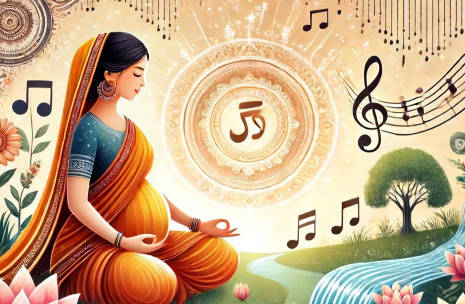
Engaging with music meaningfully can have numerous positive effects on both the expectant mother and the baby. Music is a vital element of Garbh Sanskar, and research suggests that listening to instruments like the veena and flute can benefit the health of both mother and child.
Indian ragas, in particular, play a significant role in this practice. The pitches of these ragas work on the body’s tridosha (the three body constitutions)—Vata (air and space), Kapha (earth and water), and Pitta (fire and water). These doshas are balanced according to their specific place (sthana), time (kala), and characteristics (samanya), promoting overall health and well-being.
Listening to music during pregnancy can be crucial for a baby’s healthy neurological development. Babies exposed to music in the womb often exhibit:
• Faster learning abilities
• Improved stress-coping capabilities • Higher levels of Intelligence Quotient (IQ) and Emotional Quotient (EQ)
A study published in the US National Library of Medicine found that babies whose mothers listened to Kalyani Raga during pregnancy showed better reflexes, responsiveness, and mental stimulation. This underscores the significant role of music in prenatal development.
• Staying happy and positive during pregnancy Pregnancy is a phased journey where the entire development of the baby occurs step by step. Maintaining a positive and pleasant state during this time can help welcome a wise, virtuous, and healthy baby. The involvement of family members can also be beneficial, reducing maternal stress and encouraging positive behaviour.
Lead story 31
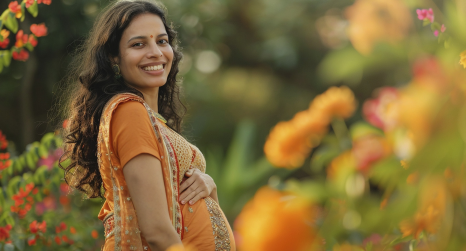
Here are some tips for staying happy and positive during pregnancy:
• Connect with nature: Spend time outdoors, breathe fresh air, and soak in natural sunlight. Nature has a calming effect on the mind and can help uplift your mood.
• Stay active: Engage in gentle physical activities like walking, swimming, or prenatal yoga. Regular exercise releases endorphins, which are natural mood boosters.
• Stay connected: Surround yourself with supportive and positive people, whether it’s your partner, family, or friends. Share your thoughts and feelings with them to receive encouragement and emotional support.
• Building a strong bond with your baby Garbh Samvad, or communication with the unborn baby, helps establish a harmonious bond between the mother and the child. While the baby may not understand words yet, they can certainly sense the emotions behind them. This practice, advocated by ancient Indian sages, can start as early as the first month of
32 LifePositive | AUGUST 2024
pregnancy, promoting the mother’s physical, mental, and emotional well-being.
A mother may use positive words or affirmations to talk to the baby in the womb.
• Harnessing divine influence for mother and baby
Vedic mantras, derived from the Rigveda, Yajurveda, Samaveda, and Atharvaveda, create a highly positive environment for pregnant women. Babies in the womb are sensitive to external stimuli and absorb both positive and negative vibrations. Listening to mantras chanted by expert Vedic Brahmins can engrain beneficial qualities in the baby. These mantras, recited following strict rules of pronunciation and rhythm, can aid in foetal growth, improve maternal health, enhance the mother-baby bond, and increase the production of feel-good hormones.
Reciting the Gayatri Mantra to the baby has excellent effects on both the mother and the developing baby.
• Expert medical guidance
The role of a doctor during pregnancy extends beyond routine checkups. They should offer guidance akin to a trusted friend or elder. A family must involve a doctor addressing various physical and mental concerns that arise during pregnancy. With their extensive experience, including high-risk pregnancies, expert doctors provide valuable advice and support to ensure a healthy pregnancy journey.
• Personalised spiritual support
The fifth house in a person’s janam kundli (birth chart) is associated with education, children, and the Isht Dev (personal deity). The Isht Mantra is the mantra dedicated to this deity, based on the couple’s horoscope. Chanting this personalised Isht Mantra 108 times a day can bestow special blessings on the baby. If chanting 108 times is not feasible, even 51 or 11 repetitions can be beneficial. One can consult their own spiritual traditions and gurus for the same.
• Stress relief for inner peace
Pregnancy brings numerous physical changes, affecting diet, fitness routines, and sleep patterns. As pregnancy progresses, sleep loss becomes more common, affecting both the mother and the baby. Scientific research indicates that 44 per cent of pregnant women experience sleep disturbances in the first trimester, increasing to 46 per cent in the second trimester and 64 per cent in the third trimester. Poor sleep can reduce the production of growth hormones, potentially leading to developmental or growth issues in the baby.
To counter these effects, guided Yog Nidra sessions can provide significant relief. Within 20–25 minutes, these sessions can help mothers feel calmer and refreshed, promoting better sleep and overall well-being for both mother and child.
• Inducing positivity through prayer for your baby’s health
Garbh Kalyan Prarthna involves praying to God for the health, intelligence, and virtues of your baby. It is believed that sincere prayers made with a pure heart are always heard. Praying helps maintain an optimistic and stress-free mindset which, in turn, promotes better health for both the mother and the baby, aiding in the baby’s development.
• Nutrition consultations
A balanced diet is crucial during pregnancy as the foetus’s growth and development depend on the mother’s health and nutrition. Ayurveda emphasises that a nutritious diet provides nourishment to both the mother and the baby. One must consult a good dietician or even listen to wise grandmothers and experienced mothers for appropriate nutrition, recommended foods, and those to avoid during pregnancy. Expert dietitians with extensive experience guide expectant mothers, answering any questions related to diet.
• The optimal time to begin Garbh Sanskar The ideal time to start Garbh Sanskar is as early as possible, preferably from the first month of pregnancy. However, it is never too late to begin. The essence of Garbh Sanskar lies in starting early to maximise its benefits for the baby’s development.
Baby development according to Garbha Upanishad
• First Trimester: From conception, the embryo evolves from a semi-fluid state to a solid mass within a month. By the end of two months, the head is formed, and the feet appear after three months.
• Second Trimester: The fourth month sees the formation of the belly and hips, while the backbone fully develops by the fifth month. The nose, eyes, and ears develop in the sixth month.
Lead story 33
Indian ragas, in particular, play a
significant role in this practice.
The pitches of these ragas work
on the body’s tridosha (the three
body constitutions)—Vata (air and space), Kapha (earth and water),
and Pitta (fire and water). These
doshas are balanced according
to their specific place (sthana),
time (kala), and characteristics
(samanya), promoting overall
health and well-being.
• Third Trimester: The baby gains consciousness in the seventh month and completes its development by the eighth month. The ninth month marks the baby’s readiness for birth, influenced by memories of past lives and karmic imprints.
Practising Garbh Sanskar during these stages aids in the baby’s smooth adaptation to the outside world and supports healthy brain development.
Importance of ancient rituals in Garbh Sanskar
Indian scriptures prescribe 16 sanskars (rituals) for every human, including Garbh Sanskar, which involves three significant sanskars during pregnancy:
34 LifePositive | AUGUST 2024
• Garbhadhan Sanskar: Performed before conception, this ritual involves mental and physical preparation for welcoming the baby. It includes identifying auspicious dates for conception, personalised Isht Mantra, special meditation sessions, evening prayers, and Garbh Sanskar music and mantras.
• Punsavan Sanskar: Conducted in the third month of pregnancy, this ritual aims to enhance the baby’s mental strength, intelligence, and virtues. It emphasises maintaining a positive environment for the baby’s development.
• Simantonnayana Sanskar: Performed during the seventh month, this sanskar prevents miscarriage and ensures the baby’s safety. It helps the mother stay mentally calm and positive, impacting the baby’s behaviour and development.
Benefits of Garbh Sanskar During Pregnancy • Developing virtues and values in the child: Activities like chanting mantras, listening to Garbh Sanskar music, and engaging in meditation create a positive atmosphere, embedding quality values in the baby. • Establishing a strong bond between mother and baby: Communication through Garbh Samvad helps build a lifelong bond, enhancing the baby’s language development, memory, and hearing ability.
• Minimising mother’s stress and anxiety: Meditation and other Garbh Sanskar practices help reduce stress and anxiety, promoting mental peace for the mother.
• Improving baby’s brain development: Garbh Sanskar stimulates the release of endorphins, boosting the mother’s mood and enhancing the baby’s intellectual development.
• Making pregnancy more comfortable: Yoga sessions reduce common pregnancy discomforts, support normal delivery, and improve overall physical and mental health.
Performing Garbh Sanskar at home With proper guidance, Garbh Sanskar can be effectively performed at home, ensuring a nurturing environment for the unborn child.
Many women who have embraced Garbh Sanskar practices report positive experiences: • Nidhi Kumar, 35, a working mother: “I
found incorporating short mindfulness exercises throughout my workday helped me manage stress and stay connected with my baby. Even a few minutes of deep breathing made a difference.”
• Priya Seth, 28, a first-time mother: “Practising yoga and meditation during pregnancy helped me stay calm and centred. I believe it also helped me connect with my baby on a deeper level.”
• Anjali Pradhan, 42, mother of two: “Listening to calming music and reading
positive affirmations had a significant impact on my mental well-being during pregnancy. I felt more prepared for childbirth.”
Expert Insights
Dr Seema Sharma, an ayurvedic practitioner, explains, “Garbh Sanskar practices, such as following a balanced diet, yoga postures specifically designed for pregnancy, and engaging in mindfulness techniques can promote a healthy pregnancy for the mother and contribute to the well-being of the developing baby.”
Dr Maya Kapoor, a modern obstetrician, adds, “While there is limited scientific research on the direct impact of Garbh Sanskar practices on foetal development, there is evidence that these practices can benefit the mother’s mental and
36 LifePositive | AUGUST 2024
physical health, which can indirectly benefit the baby. Additionally, some practices, like prenatal yoga, have shown benefits in reducing stress and anxiety during pregnancy.”
Considerations and Integration
It’s important to remember that Garbh Sanskar practices are complementary to modern prenatal care. Consulting a healthcare professional before starting any new practice during pregnancy is crucial.
Additionally, Garbh Sanskar practices can be adapted to fit individual needs and lifestyles. Not all practices may resonate with everyone. The key is to find practices that promote a sense of well-being and connection with the developing baby.
A Deeper Look into Ayurvedic Principles Ayurveda forms the foundation of Garbh Sanskar practices and emphasises the balance of the three doshas: Vata, Pitta, and Kapha. • Doshic considerations: During pregnancy,
a woman’s doshic balance can fluctuate. Garbh Sanskar practices aim to support a healthy pregnancy by recommending specific dietary and lifestyle choices based on the dominant dosha. For example, a woman with a Vata dosha might be advised to consume grounding foods like root vegetables and nuts to balance excess air and space elements.
• Herbal Remedies: Ayurvedic herbs like shatavari and ashwagandha are sometimes recommended during pregnancy to address specific needs. However, it’s crucial to consult an ayurvedic practitioner before consuming any herbal remedies during pregnancy.
The Role of the Father
Garbh Sanskar emphasises the importance of the father’s role in creating a nurturing
Garbh Sanskar practices can be adapted to fit individual needs and lifestyles. Not
all practices may resonate
with everyone. The key is to find practices that promote a sense of well-being
and connection with the
developing baby.
environment for the mother and baby. Here are some ways fathers can be involved:
• Emotional support: Offering emotional support and reassurance to the mother during pregnancy can significantly impact her well-being.
• Active participation: Participating in prenatal yoga classes or attending birthing workshops to gain knowledge and feel more prepared for childbirth.
• Creating a positive atmosphere: Cultivating a positive and loving environment at home by minimising stress and engaging in activities that bring joy to the mother.
Challenges and Adaptations
A modern lifestyle can pose challenges in
Lead story 37
adopting some Garbh Sanskar practices. Here are some adaptations to consider:
• Time constraints: Busy schedules might make it difficult to dedicate time for elaborate yoga routines or lengthy meditation sessions. Adapting these practices to fit individual time constraints is key.
• Accessibility: Qualified ayurvedic practitioners or prenatal yoga classes might not be readily available at all locations. Exploring online resources or alternative practices that align with the core principles of Garbh Sanskar can be helpful.
• Cultural integration: For some women, integrating Garbh Sanskar practices into their existing cultural and religious beliefs might require adjustments.
The Science Behind the Practices While conclusive scientific evidence directly linking Garbh Sanskar practices to foetal development is limited, research on the mind-body connection in pregnancy suggests potential benefits:
• Stress reduction: Practices like meditation and yoga have been shown to reduce stress and anxiety during pregnancy, which can benefit both mother and baby.
• Epigenetics: Emerging research in epigenetics explores how environmental factors like stress can influence gene
expression. Garbh Sanskar practices aimed at creating a positive environment might contribute to positive epigenetic changes in the developing baby.
• The power of belief: The positive affirmations and visualisations encouraged in Garbh Sanskar could promote a sense of well-being and optimism in the mother, which can indirectly benefit the baby.
In embracing the timeless wisdom of Garbh Sanskar, expectant mothers embark on a journey that transcends physical nourishment, reaching into the realms of emotional and spiritual growth. By fostering a serene and positive environment, they not only nurture their own well-being but also plant the seeds of love, intelligence, and harmony in their unborn children. This holistic approach, steeped in tradition, yet profoundly relevant today, reminds us of the incredible power of positivity and connection. As we honour these practices, we cultivate a new generation imbued with the virtues of peace, resilience, and compassion, creating a legacy of wellness and joy that spans lifetimes.
Akhil Vishwa Gayatri Pariwaar in Delhi educates women on the entire process of following Garbha Sanskar and even trains teachers who can impart this knowledge to the to-be mothers.
Navni Chawla, a Delhi based writer has a heart brimming with paassion for life and loves capturing the beauty of the world through words.


Discussion (0)
No comments yet. Be the first to comment!
Leave a Comment
You need to login to post a comment.