
Ancestors
January 2024
Heal Your ANCESTORS
We cannot deny the importance of revisiting our past and healing the stuck energies of pain and dysfunctional patterns acquired from our ancestors if we want to move forward on the path of greater felicity and freedom, says Navni Chawla
Have you heard the saying that hurt people, hurt people? Often, trauma or stored hurt is passed on from one generation to another.
The question arises as to what is trauma.
Gerald Fromm, PhD, director of the Erikson Institute for Education and Research, defines trauma as something that short circuits a person’s capacity to use their mind to process things.
It is the experience of being so overwhelmed emotionally that it shuts down the processing apparatus of the mind. It invokes a sense of helplessness, which causes the traumatised person to have difficulty regulating their emotions as well as stress.
Dr Sumaira Joshi, a psychologist at Rewire Clinic, West Delhi, explains, “The term generational trauma came out of the Holocaust. The impact of certain traumatising events that happen to a community gets passed down from one generation to another. The term intergenerational trauma refers to the transmission of traumatic effects from the directly traumatised generation to their offspring. Whereas, transgenerational trauma travels down the family tree to those who have not been exposed to the original traumatic event, like the grandchildren and the great grandchildren. The primary reason for them to exist is that the trauma was never really properly dealt with.”
However, there could be many reasons for transgenerational trauma to exist other than just horrific incidents like genocides. Also, it can be expressed in many different ways. Let’s explore this further.
How does transgenerational trauma look like or feel like?
Trauma is experienced by different people in different forms. How it is expressed also depends on the cause of the trauma. It is also important to understand that transgenerational trauma can feel different in the same person at different life stages. For example, the impact of a traumatic incident will be felt differently in a person’s childhood and adulthood.
Transgenerational trauma manifests itself through various signs and symptoms, such as the ones mentioned below:
Anxiety or mood issues
Depression
Chronic pain
Insomnia
Low self-esteem
Fear of death
Difficulty in trusting others
No hope for the future
Panic attacks
Post-traumatic stress disorder (PTSD) • Addiction
Eating disorders
Anger issues
Fearfulness
Insecurity and frustration
Hypervigilance
Unhealthy attachment styles
Mental health conditions
Codependency
Mini Chakraborty, 21, a psychology student at Delhi University, says, “There are three ways in which childhood trauma shows up in adulthood:
Dissociation and disconnection from yourself: One learns to dissociate early on from their inner self when they grow up in a chaotic environment where they need some sort of disconnection to survive.
Struggle with a lack of identity: One doesn’t know much about themself as their developmental years were focussed on survival rather than getting to know the world and their self.
Difficulty being on your own or hyper independence: Either one does not learn to trust themself or learns that the only person they can depend on is themself. Both of them are unhealthy beliefs.
Lack of trust: One of the main challenges of experiencing any sort of childhood or transgenerational trauma is that it becomes very difficult for the victim to trust others. As their primary relationships did not feel safe to them, the pattern extends to all other relationships. Therefore, such a person will avoid confiding in people or getting close to others.
Not feeling good enough: People suffering 
Aishwarya Chauhan, 25, shares, “After struggling with polycystic ovary syndrome (PCOS) for many years and working with a physiotherapist and psychotherapist, I realised that it was caused by childhood and generational trauma. The stress I was experiencing due to my trauma was constantly keeping my nervous system and body in the fight-or-flight mode. As a result, my hormones struggled to find a balance, leading to some severe PCOS symptoms.”
When one becomes aware of the symptoms, the instinct is to uncover the reasons behind the occurrence of transgenerational trauma.
What causes transgenerational trauma: Medical research shows that trauma is passed down from one generation to another through genetics. The experience of trauma causes a change at the genetic level and is called an epigenetic phenomenon. This creates some shifts in the DNA because of which some proteins are more likely to be made as compared to others. This, in turn, affects the neurochemistry of the brain and even the chemistry of some cells in the body (where trauma gets stored). Studies also confirm that post-traumatic stress PTSD lingers in the body chemistry of future generations.
Given below are some of the many causes of transgenerational trauma:
Physical or sexual abuse
Neglect
Racism or minority stress
Genocides
Wars
Poverty
Oppression
Natural disasters or famines
Unhealthy and complex family dynamics
Narcissistic abuse
Starvation
Forced migration or displacement
Slavery
Transgenerational trauma travelling deep down in a family or community is often attributed to it being left unresolved. Difficult circumstances like cultural dislocation (when people are forced to leave their homeland) or financially tough situations also leave a deep traumatic impact on one’s being. These wounds move down to the next generations, especially when our parents or grandparents have mostly lived in survival mode and could never address their own or their children’s emotional needs. This is also a form of trauma.
“Even things like scarcity mindset, unresolved grief, or untreated mental illnesses of a great grandmother or great grandfather can be passed down to you. You would feel unhappy for no reason. Often, the third generation experiences habits of hoarding things or food, people-pleasing, constantly seeking validation, dysregulated nervous system, having intrusive thoughts, and depending on the approval of others. And those are the times that one can be thinking the thoughts of their ancestors and feeling the feelings that do not originally belong to them,” says Mehak Bakshi, PhD, psychology, Punjab University.
Healing and treatment
Once we have the ability to notice some patterns and examine them, we also become capable of changing them. The first step is to recognise these patterns and acknowledge them. That is the place to begin any kind of healing. The next step is to process all that information and do a lot of self-reflection. This way, one can identify their underlying negative beliefs about the world and themself that shape their unhealthy behaviours.
Kiara Opara, a licensed therapist, has created a concise manual that contains many points proven to be very helpful in healing generational trauma:
Having boundaries with people to unlearn some unhealthy characteristics like people pleasing.
Having tough conversations with loved ones or a professional who can help with all the uncomfortable things you could be experiencing.
Not sweeping things under the rug. • Holding yourself and others accountable for the patterns that were passed on to you. It’s important to not feel like a victim or to hold bitterness against your parents or ancestors as that will make it hard for you to release the patterns and be free of them. Acknowledging what’s happening and taking ownership to heal is the best thing to do.
Spending time in nature will heal you. Nature is an alchemist and a healer.
Sunbathing will give you that dose of natural Vitamin D.
Resting more deeply by regulating your sleep cycle and, maybe, learning Yoga Nidra (conscious sleeping), and other relaxing practices will benefit your nervous system.
Getting a nutrient-rich diet.
Seeking support and going to therapy. • Practising self-compassion.
Accepting things as they are.
Filling your cup first.
aking up space.
Being authentic to who you are.
Prioritising yourself, your happiness, and your mental health.
Intentional physical movements and exercises.
Allowing yourself to grieve.
Taking the healing process slow and not overworking yourself.
Not shaming your pain or story.
Challenging unhealthy beliefs and making an effort to change them.
Cultivating compassion for your family story.
All ancestral carryforwards are not bad Teal Swan, an American author and spiritual influencer, explains why it is so important to heal from ancestral trauma. Having done some phenomenal work in this area, she says it’s hard to believe that ancestors play a big role regarding who we are in this life and, sometimes, that may leave us powerless. “It might make us think that our fate has already been decided for us based on which family we ended up in. But, the truth is that there are both good and bad qualities that run in any family line. And like in the game of cards, we may be given both good and bad cards. Now it is up to us as to how to play them to our maximum benefit. Our genetic codes not only pass down physical features but a whole lot of things like knowledge, desires, needs, affinities, preferences, aversions, phobias, aptitudes, beliefs, feelings, states, and memories. Based on what has happened before us as well as our struggles in this life, some of those things are active and some are inactive. And so, deep down within us, we carry the downloads of our ancestors,” she says.
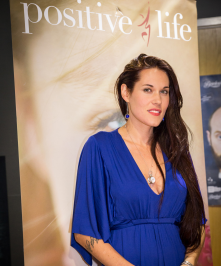
For example, going back long ago, if you had nomadic ancestors then maybe you will inherit the inclination towards stepping out of your comfort zone and living in new places. There have been many studies done on both animals and humans that prove the inheritance of trauma and memory across generations. But what’s worth remembering is that the ancestral impact can manifest in both positive and negative ways. It is important to accept that both live within us—the gift of all the positive things and also the challenge of all the negative things running through our family lines.
he task that we have taken on by being born is the task of resolving that inherited trauma. Indeed, so many of the traumas that we experience in our lifetime are a byproduct of ancestral trauma,” shared Ms Swan.
The question when it comes to ancestral healing is, Can you consciously take advantage of those gifts and can you consciously master those challenges?
Breaking the cycle
Clearing ancestral trauma is about changing the detrimental patterns that have been running rampant in our family lines into new improved states. Today, humanity is at the crossroads. We are seeing many detrimental patterns on a mass scale. They are threatening our existence as well as that of those who share this planet with us.
This change cannot be engendered by disowning one’s ancestors or walking away from the path of healing and restoration. When you reject your parents or ancestors, you also reject yourself as you are an outcome of your lineage.
Our progress as a species depends on the detrimental patterns that have been travelling from one generation to another. Since the collective is made up of individuals, when they dive deep into the journey of healing ancestral pains and traumas, the whole of the collective gets healed. This massive movement will continue to be a recurring theme in the coming years as the world cracks under the weight of wars and bloody conflicts.
To heal and balance ancestral karma, one should identify the actions that brought about bad results to the family in the past. Consciously making different choices, taking different actions, and pulling the family line in the corrective direction sets new and beautiful patterns in it.
To practically heal transgenerational trauma, one should try to get as much information as possible about one’s ancestors and the patterns running in the family line. Then one can consciously choose what to release and what to retain, re-own, or rewire in terms of their lineage. A very important part of breaking the cycle of transgenerational trauma is to consciously integrate the good and the bad parts of one’s lineage rather than only focussing on the negative as every family lineage will have good things running in it too.
True and complete healing can only happen when one embraces one’s lineage completely. This involves celebrating and embodying family legacies like certain recipes, traditions, folk songs, and rituals practised by our predecessors. It is in our interest to understand ancestral karma, which is the sum of all the behaviours, choices, mental and physical traits or characteristics, habits, actions, and emotional states that bring about good or bad results in life.
To heal and balance ancestral karma, one should identify the actions that brought about bad results to the family in the past. Consciously making different choices, taking different actions, and pulling the family line in the corrective direction sets new and beautiful patterns in it. For example, if one’s ancestors exploited forests then one must donate to organisations that plant trees or save the environment. If one’s family lineage has a history of bad addictions or anger issues, then one must choose to stay away from substance abuse and practise meditation.
At a subconscious level, we want to maintain our belongingness and loyalty towards our ancestors. But that does not mean that we should have allegiance to their negative loyalties and patterns as well. We must dissolve them by replacing poor patterns with positive ones. We can practise forgiveness on behalf of our ancestors to dissolve karmic patterns and help the family line become free and prosperous. It could be in the form of forgiving ourselves, our ancestors, or someone who might have caused harm to our ancestors. Letting go of something we or our ancestors are still holding onto helps the healing process immensely.
Another powerful method to free ourselves of ancestral trauma is to hold a safe space for them in our heart by keeping in touch with our roots. Visiting our ancestral land and drinking water from it helps the healing process, as water holds memories and vibrations of the time when previous generations lived and thrived. Another way of reconnecting with them is making and eating the food they ate, speaking their language, or keeping their culture, music, skills, arts, and crafts alive in some form. Keeping an altar of our ancestors like many Indian households do is also good. These practices reset our connection with our ancestors and restore the lost touch.
Building such a powerful connection with our ancestry will bring improvement in our lives and will add an increasing sense of depth and richness to our existence. Our family line is not out in the world, it is inside us. When we reject our family line, we reject ourselves. It creates splits within our consciousness, resulting in internal separation and suffering.
We are the combination of our ancestors. Our ancestry is very much alive within us, and it matters. Just as their memories and trauma become our memories and trauma, our joy becomes their joy.
“The circles of transgenerational trauma break open when we have resolved to end that pain here and now within us.” That one resolute and conscious decision of not passing on the baton of pain and wounds to the next generation in the relay race of life makes all the difference.
Navni Chawla, a Delhi-based writer has a heart brimming with passion for life and loves capturing the beauty of the world through words.
Discussion (0)
No comments yet. Be the first to comment!
Leave a Comment
You need to login to post a comment.