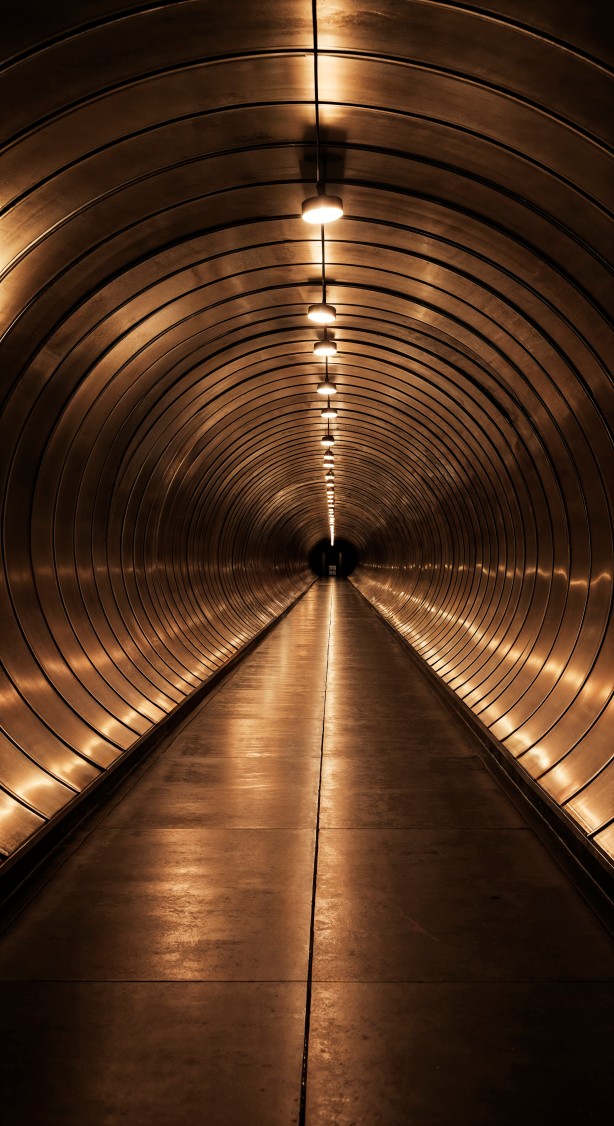
Norway on the verge of completing the longest underwater tunnel
The country plans to open this tunnel in 2033, cutting down travel time immenselv.
Undersea tunnels offer a unique set of advantages over bridges and ferries, making them a compelling solution for crossing waterways. Their primary benefits lie in providing reliable, high-capacity transport links that are unaffected by weather or shipping, while also offering significant environmental and economic advantages.
Uninterrupted Connection and Superior Reliability
A core benefit of an undersea tunnel is its ability to create a fixed and dependable link that overcomes the limitations of both bridges and ferries.
Weather-Proof and Always Open: Unlike bridges, which can be closed due to high winds, or ferries, which are frequently disrupted by storms, fog, and sea ice, tunnels provide a continuous, all-weather crossing . This reliability is vital for both commuters and the supply chain. For example, the Channel Tunnel allows for fast travel "in all weathers" .
Uninterrupted Shipping Lanes: Tunnels are built deep below the seabed, leaving the surface entirely clear for shipping. This eliminates the need for high-level bridges, which can be unsightly, or movable bridges that cause traffic congestion, thereby ensuring both maritime and land-based traffic can flow freely .
Dramatically Faster Travel Times
Tunnels provide a massive leap in travel speed compared to traditional ferry services, transforming regional connectivity.
Example - The Channel Tunnel: The Eurostar service through the Channel Tunnel cut the travel time between London and Paris from approximately 6-7 hours by rail and ferry to just 2.5 hours .
Regional Transformation: In the Faroe Islands, a network of tunnels, including the world's only undersea roundabout, has halved driving times between key towns, effectively shrinking the archipelago and boosting its economy .
? Environmental and Economic Advantages
Undersea tunnels are often a more sustainable and economically potent option than ferries, which rely heavily on fossil fuels .
Lower Emissions (Rail Tunnels): Long undersea tunnels, like the Channel Tunnel, are typically electrified railway tunnels. This makes them a more environmentally friendly option compared to ferries that continuously burn fossil fuels for propulsion .
Economic Integration and Growth: By providing fast, reliable links, tunnels can integrate regional economies, creating unified markets and accelerating industrial growth. The Øresund Bridge-Tunnel in Scandinavia is cited as having delivered an "economic boom" not possible with the previous ferry links . Similarly, the Mumbai-Ahmedabad bullet train project aims to unite major commercial centers into a single economic corridor .
Land Reclamation: The excavation of tunnel routes creates large quantities of rock and soil, which can be repurposed for land reclamation. The rock dug out for the Channel Tunnel, for instance, was used to create Samphire Hoe, a new nature reserve in the UK .
Unique Benefits for Specific Situations
For certain geographical challenges, tunnels offer solutions that other methods cannot.
Deep-Water Crossings: Submerged floating tunnels (SFTs) are being developed as a promising solution for crossing very deep and wide bodies of
Wewater, such as fjords and straits, where traditional bridges or immersed tunnels are technically difficult or economically unviable . These structures use buoyancy to support themselves, potentially leading to material savings compared to bridges .
Regional Integration and "Island-Hopping": Tunnels enable the connection of isolated island communities, allowing people to live in smaller settlements while still participating fully in the central labor market. This has significant social and demographic benefits, allowing communities to "live and thrive" .
However, it's important to acknowledge that constructing and maintaining undersea tunnels is a complex and costly endeavor. They face significant challenges, including high construction costs, vulnerability to earthquakes, demanding fire safety requirements, and the logistical difficulties of emergency response in a confined underwater space . Despite these challenges, the long-term benefits of a reliable, high-speed, and environmentally friendly link often make undersea tunnels the superior infrastructure choice.
We hope the entire world follows Norway in adopting this environmental, efficient option.
By Jamuna Rangachari


.jpg)
Discussion (0)
No comments yet. Be the first to comment!
Leave a Comment
You need to login to post a comment.