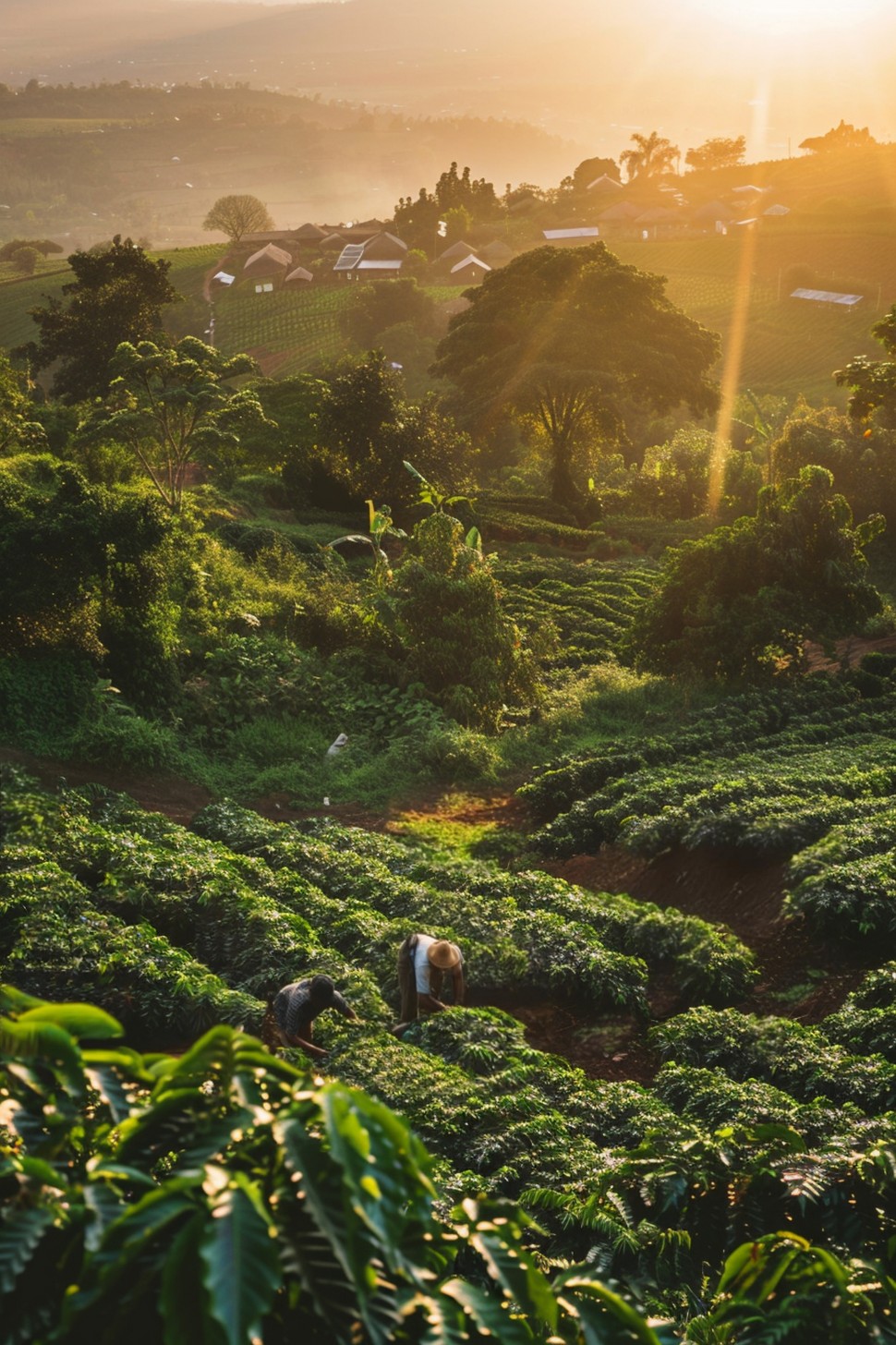
Planting Coffee staves off drought in Uganda
Growing coffee has stopped the drought in Uganda. This is the miracle of regenerative agriculture.
Regenerative agriculture helps by actively restoring and enhancing farm ecosystems, rather than just sustaining them . Its main benefits are focused on improving soil health, fighting climate change, and strengthening farm resilience.
Here are the key ways it helps:
? Restores Soil Health and Biodiversity
The core of regenerative agriculture is rebuilding the soil. It uses practices like no-till farming, cover crops, and diverse crop rotations to increase organic matter, improve soil structure, and boost water retention . This creates a healthy, living soil full of beneficial microbes and larger organisms like earthworms and arthropods . A five-year study showed that these methods can increase soil moisture and organic matter, as well as the activity of nutrient-cycling enzymes .
?? Mitigates Climate Change
This approach turns farmland into a tool for fighting climate change. By building up soil organic matter, regenerative practices pull carbon dioxide from the atmosphere and store it in the ground through carbon sequestration . They also significantly lower greenhouse gas emissions. For example, research shows no-till farming can cut CO? emissions by up to 47%, while crop rotations can reduce nitrous oxide emissions by 23-57% . A case study on tea cultivation found that these practices led to a 65-70% lower carbon footprint .
? Creates Resilient Farms and Healthier Food
Healthy soils act like a sponge, absorbing and holding water much better, which makes farms more resistant to both droughts and floods . The improved soil health and biodiversity can even lead to higher yields over time. One study on a tea farm noted an increase in crop productivity of 78 kg per hectare, with a 52-77% reduction in pesticide toxicity .
While the benefits are clear, it's important to know that the transition can be challenging. Soil communities often take time to recover, and farmers may face a difficult transition period before the full benefits are realized .
Regenerative agriculture is a holistic shift from harming the land to healing it, making our food system more sustainable and resilient for the future .
We all can certainly learn from Uganda
By Jamuna Rangachari

.png)

Discussion (0)
No comments yet. Be the first to comment!
Leave a Comment
You need to login to post a comment.