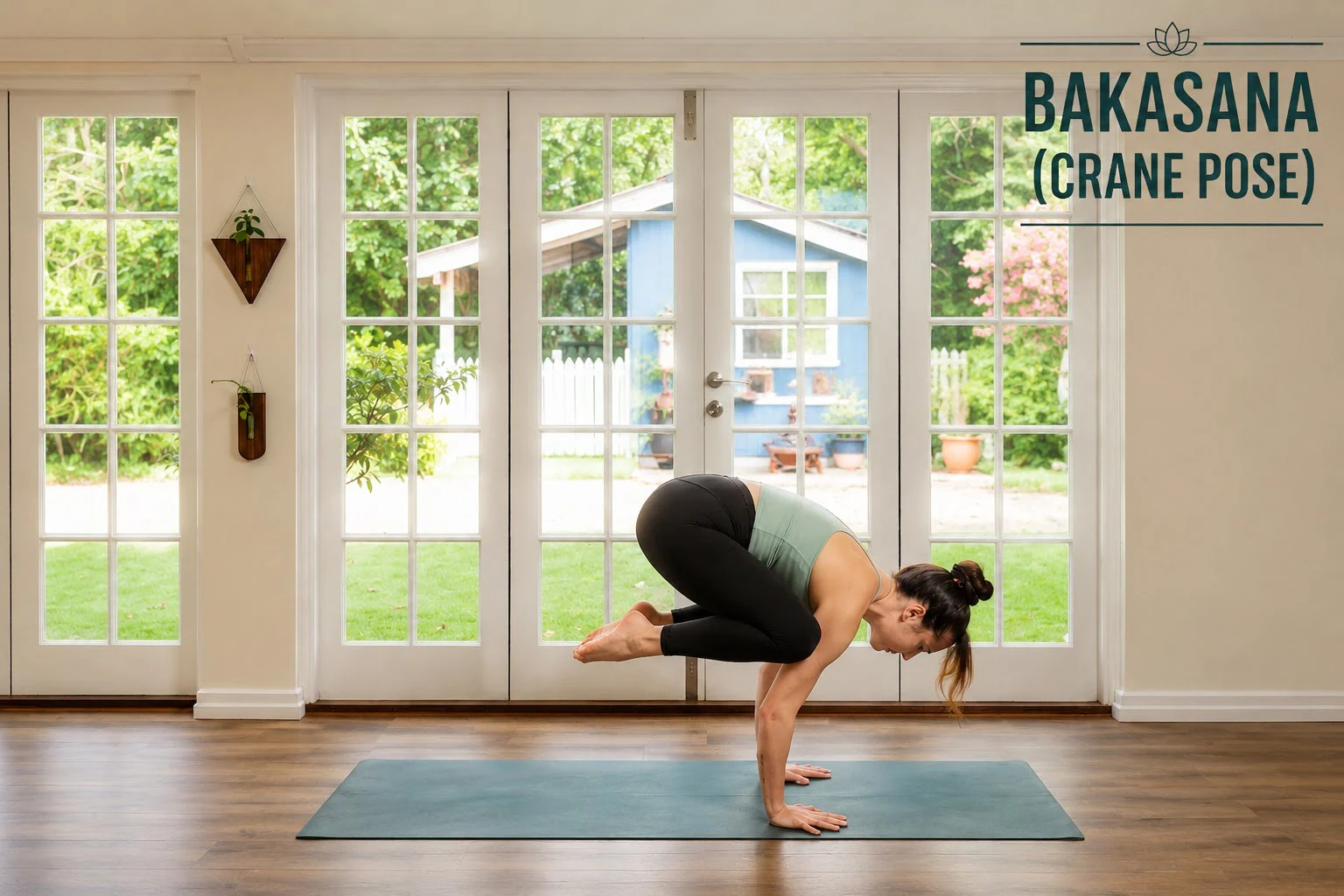
Master Bakasana: Core & Arm Strength Crane Pose
Bakasana, otherwise known as Crane Pose, is one of the most famous yoga arm balancing poses. This pose involves all of your body parts working together to create arm balance and control.
Yoga is not only about stretching but also about gaining strength, coordination, balance, and concentration of the mind. Arm balancing poses are good examples that not only put your body through challenges but also your mind, to help you gain confidence by practicing.Even though Bakasana looks complicated to execute initially, it becomes easier with constant practice. This pose is not about perfection, but rather patience and mindfulness.
Key Takeaways:
- Builds significant strength in the wrists, arms, shoulders, and core muscles.
- Improves overall body balance, focus, and mental concentration.
- Tones abdominal organs and opens the upper back and inner thighs.
What Is Bakasana (Crane Pose)?
In terms of origin, the term Bakasana originates from the two Sanskrit words: Baka, which means 'crane,' and Asana, which means 'pose.' In contemporary yoga classes, Bakasana is known as the Crow Pose, even though there are yoga disciplines that differentiate between Bakasana, which refers to Crane Pose, and Kagasana, which refers to Crow Pose.
Crane Pose is an arm balance that involves supporting the weight of your body using your hands while your knees are near your upper arms. This yoga posture builds strength and balance, as well as encouraging focus and breathing.
Even though it is classified as an intermediate yoga pose, newbies can practice Bakasana with time.
How to Perform Bakasana (Crane Pose)
Here are some tips for practicing Bakasana safely.
- Start in a squat position with your feet touching each other.
- Press your palms firmly onto the mat with a shoulder-width distance between them.
- Open your fingers as wide as possible.
- Slightly bend your elbows and raise your hips.
- Move your knees to your upper arms as much as possible.
- Move your weight forward while gazing slightly ahead.
- Contract your core muscles and raise one foot at a time.
- Stand on your hands while keeping your breath calm.
- Maintain the pose for 10 to 20 seconds.
- Return to the starting position carefully.
Tips for Beginners
- Use a folded blanket or cushion in front of you if you are concerned about falling forward.
- Remember that it is important to move your weight slowly rather than jumping to the pose.
- Keep your fingers open to stabilize yourself better.
- Work out your wrists and core muscles beforehand.
- Do the exercise under the supervision of an experienced yoga teacher if you are a beginner.
Wellness Benefits of Bakasana
Regular practice of Bakasana contributes to improved strength, balance, and body awareness.
|
|
|
|
|
|
|
|
|
|
|
|
|
|
|
|
|
|
|
|
|
|
|
|
|
|
|
Tips and Precautions
The Crane pose should be practised with caution to minimize the risks of sustaining an injury.
- It is essential to warm up the wrists, shoulders, and hips before attempting Bakasana.
- Move your weight slowly rather than jumping into the pose.
- Use your core muscles while performing the asana.
- Use a good non-slip yoga mat when practising the asana.
- The pose should be avoided in cases where you have just recovered from an injury to the wrists, shoulders, elbows, or hands unless instructed otherwise by a health practitioner.
- Discontinue practising in the case where pain and dizziness occur.
Final Thoughts
Bakasana is an effective yoga pose that will make your body strong, balanced, and focused due to the mind-body connection. Though it takes time and effort to achieve success, each practice session will help you become more aware of your body and more confident. Honor where your body is today, and trust that strength will follow your consistency.
Frequently Asked Questions
1. How do I get over the fear of falling in Bakasana?
Do Bakasana over a folded blanket or cushion and concentrate on slowly moving forward into the pose.
2. What are the main preparations that should be made before trying Bakasana?
Some main preparations that should be made before trying Bakasana include preparing the wrists, waking up the core muscles, and opening up the hips through open hip poses such as Malasana (Garland Pose).
3. How long should I remain in Bakasana?
Most people usually start practicing Bakasana by staying in the pose for about 10-20 seconds before gradually increasing the time spent in the pose as strength and balance improve.
4. Which yoga poses will assist me to be ready for Bakasana?
Poses like Malasana (Garland Pose), Plank Pose, Chaturanga Dandasana, and Adho Mukha Svanasana (Downward Facing Dog) will assist you in being ready for Bakasana.
Disclaimer: The content on LifePositive.com, including articles/blogs on yoga, acupuncture, naturopathy, and other alternative healing modalities for holistic wellness, is for informational and educational purposes only. It is not a substitute for professional medical advice, diagnosis, or treatment. Always consult a qualified healthcare provider before starting any new health protocol or making changes to an existing treatment plan.
Also Read: Chakrasana
By Umesh Kumar Khiri

Discussion (0)
No comments yet. Be the first to comment!
Leave a Comment
You need to login to post a comment.