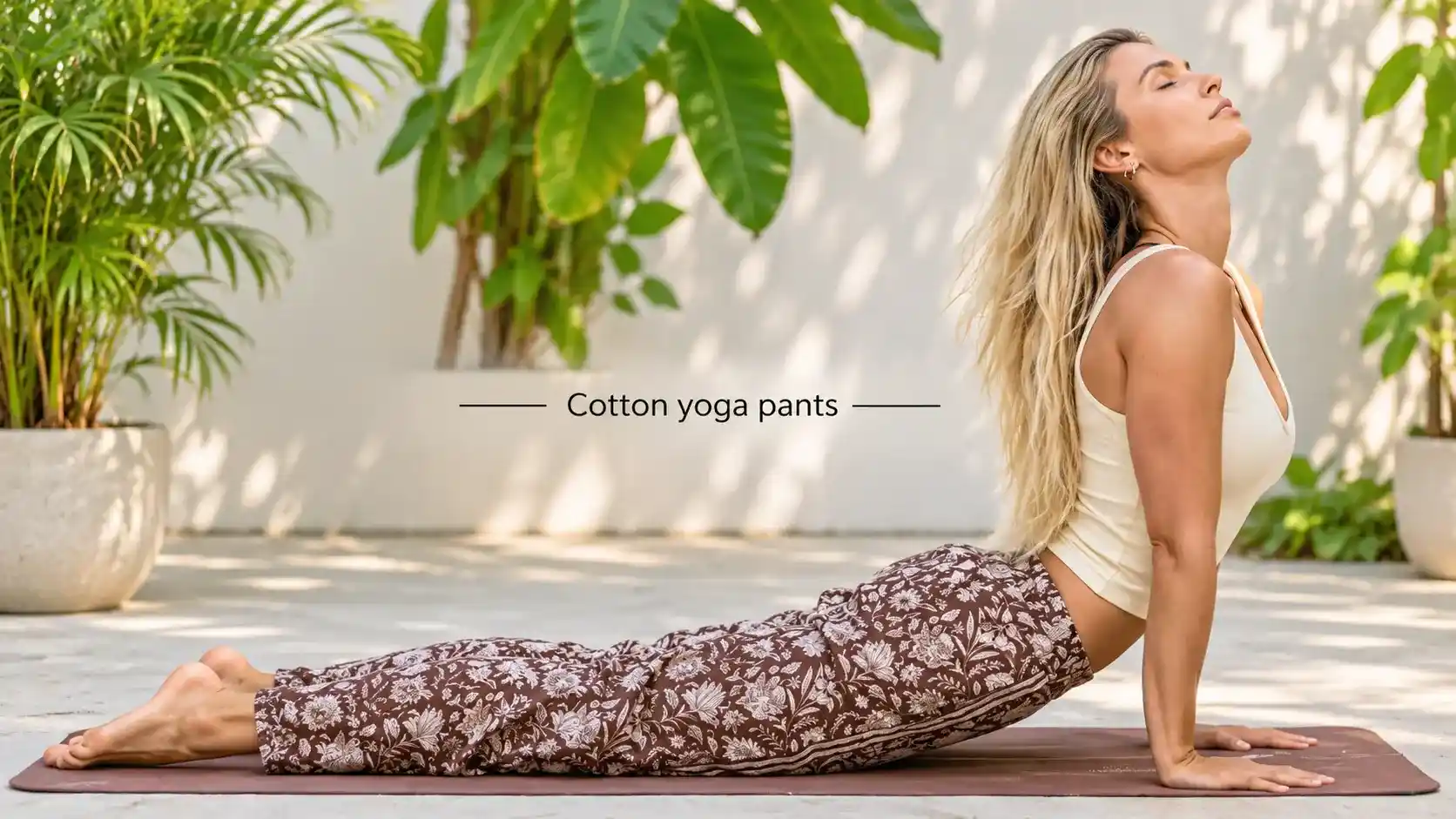
Cotton Yoga Pants: Supportive and Squat-Proof
Cotton yoga pants appeal for a simple reason: they feel good. The fabric is soft, it lets air through, and it doesn't leave the clammy, plastic feel some synthetics do. But "cotton" on a label covers a wide range of quality, stretch and weight. This guide explains how to tell a pair you'll live in from one that bags at the knees after three washes.
Key Takeaways
- Choose the right blend: Look for quality cotton with about 5–10% elastane, so the pants stretch with you and don’t bag at the knees.
- Check weight and opacity: A mid-weight knit (around 200–280 GSM) stays opaque during squats and folds. Do a mirror test before you buy.
- Match them to your practice: Cotton suits gentle yoga, Pilates and everyday wear best. For hot or high-sweat sessions, a blend that dries faster may be more comfortable.
Why Choose Cotton Yoga Pants?
Cotton is a natural fabric, which takes in moisture and releases heat. Therefore, it is perfect for meditative practices, stretching, Pilates, and staying home for long periods. Besides, it can be used in hot weather where it gets hard to bear the stuffy fabrics. This fabric is also gentle on sensitive skin since it is less likely to accumulate sweat and irritate your skin. However, the downside is that it takes in sweat and does not release it, thus making it take longer to dry.
Types of Cotton Used in Yoga Pants
The variety of cotton and knitting techniques make a huge difference in the comfort and durability of the clothing.
- Combed cotton: Short and rough fibres are taken out resulting in smooth fabric resistant to pilling.
- Pima and Supima cotton: Longer fibers result in a more silky texture and durability.
- Organic cotton: No chemical pesticides are used in its production. It is a good choice if sustainability and skin sensitivity are your top priorities.
- Single jersey: Light, soft, and comfortable fabric.
- French terry: Looped inside for a cosy, structured feel, better for cooler days.
- Interlock: A denser, smoother knit that is more opaque and holds its shape well.
Look at Stretch, Not Just Softness
Pure cotton has very little stretch and tends to stay stretched out after you bend. That is why most good cotton yoga pants include a small share of elastane. Around 5–10% gives enough give for lunges and forward folds while keeping the natural feel. Without it, the knees and seat tend to bag out. With too much, you lose the cotton character you were after. A quick test in the shop is to stretch the fabric and see whether it snaps back. If it stays loose, put it back.
Check the Weight and Opacity
Fabric weight matters more than most shoppers realise. Very thin cotton jersey can turn sheer when stretched, especially in light colours. Look for a mid-weight knit, often listed around 200–280 GSM (grams per square metre). Do a squat in front of a mirror in bright light before committing. If you can see skin tone or underwear lines, the pair is too thin for fitted wear. Darker shades and denser knits are safer if you prefer a close fit.
Pick the Right Fit for Your Practice
Make sure the cut is appropriate for how you practice.
- Fitted/Slender or taper: Keeps the fabric from rubbing against your limbs when doing flow movements, balancing and mat work.
- Straight and wide-legged: More airy and flexible cut; suits restorative, meditative practices as well as daily wear.
- Flared/Boot-cut: Narrow at the thigh, flaring out after that. These cuts pair well with both sandals and boots.
- Capri/Cropped: Better in summer and more comfortable to wear and move in.
- Dhoti-style: Loose in the hips and gather in the ankles. This style allows for more comfort on hot, muggy days.
The waistband is important as well. Wide and flat or fold-over elastic doesn’t shift while wearing and doesn’t dig into skin. If there’s a drawstring – it gives an option to adjust fit in case your waist changes in different times of the day.
Best Exercises Performed Wearing Cotton Yoga Pants
Cotton is particularly suitable for hatha, restorative, yin, vinyasa, Pilates, stretching, walking and general daily wear. If you practice fast-paced cardio or hot yoga, then cotton with some synthetic fibers will be better because it dries quicker. No wrong choices, just better one for certain situations.
Styling Cotton Yoga Pants Off the Mat
Because cotton has a matte, natural look, it pairs easily with everyday pieces.
- Relaxed weekend: An oversized linen shirt, canvas shoes and a tote.
- Casual work day: Straight-cut cotton pants with a blazer or a fitted knit top and loafers.
- Travel outfit: Soft joggers with a light jacket and a scarf that doubles as a wrap.
- Smart-casual evening: Wide-leg dark pants with a short kurta and flat sandals.
How to Care for Cotton Yoga Pants
Cotton needs a little more care than synthetics, but it rewards you with years of wear.
- Pre-empt shrinkage: Wash in cold or lukewarm water the first time, and buy a size that suits your preference once you know the fabric may tighten slightly.
- Turn them inside out: This protects the colour and reduces surface pilling.
- Skip fabric softener: It coats fibres and reduces absorbency and stretch recovery.
- Dry gently: Line-dry in the shade, or use a low-heat dryer. High heat damages elastane and shrinks cotton.
- Rotate your pairs: Giving elastic fibres a rest between wears helps them recover.
A Quick Buying Checklist
- Check the label for the cotton type and elastane share.
- Choose mid-weight fabric if you want to wear them fitted.
- Squat in the mirror to check for sheerness.
- Look at the seams and waistband stitching for reinforcement.
- Pick a colour you will actually wear. Neutrals like black, charcoal, sand and olive go with everything.
Final Thoughts
The best cotton yoga pants balance softness with structure: a quality yarn, a small amount of stretch, a dense enough knit to stay opaque, and a cut that suits how you move. Choose with those four points in mind, wash them gently, and they will become the pair you reach for first.
FAQs
1. Are cotton yoga pants good for yoga?
Yes, particularly for gentle, slow-paced or restorative styles. Choose a blend with a little elastane for flexibility, and consider a moisture-wicking pair for intense or heated classes.
2. Is cotton or polyester better for yoga pants?
It depends on your priorities. Cotton is softer and more breathable, while polyester dries faster and handles heavy sweating better. Many people keep one of each for different sessions.
3. Do cotton yoga pants shrink?
They can, especially after hot washes or high-heat drying. Wash in cold water, air-dry and check the care label to keep the fit steady.
4. Are cotton leggings good for working out?
For low-impact activity, yes. For high-sweat workouts, they may feel heavy as they absorb moisture.
Also Read: Yoga pants with pockets
By Umesh Kumar Khiri


Discussion (0)
No comments yet. Be the first to comment!
Leave a Comment
You need to login to post a comment.