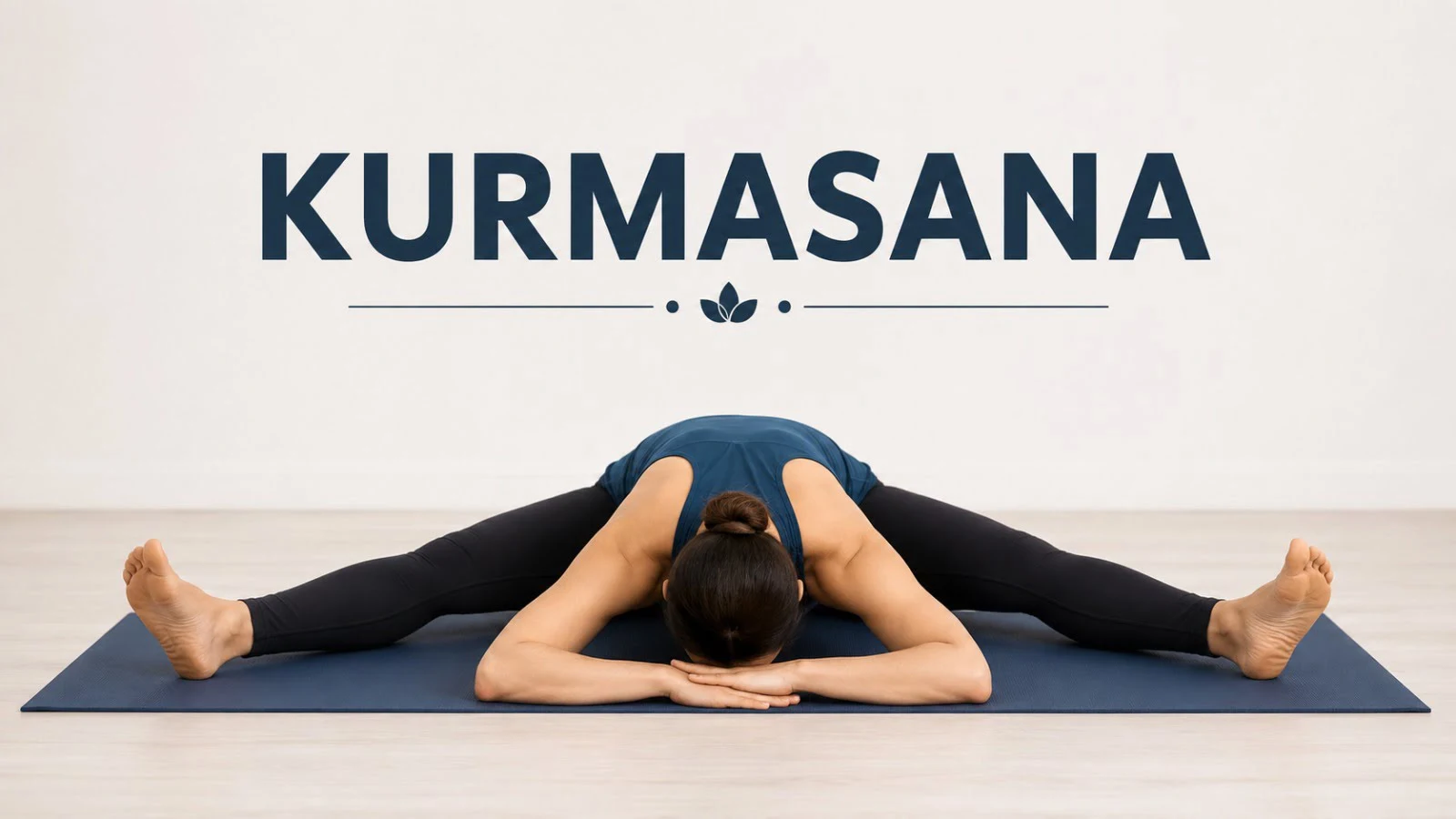
Kurmasana (Tortoise Pose): Deepen Flexibility, Improve Focus, and Embrace Stillness
In the world we live in now, it becomes increasingly important to take time out of our lives and slow down. Yoga provides an abundance of poses which, on top of being beneficial to physical health, allow for stillness and increased awareness of oneself. One such pose is called ‘Kurmasana’, which means Tortoise Pose. Just like its name suggests, Kurmasana is meant to resemble a tortoise hiding inside its shell. Kurmasana is an advanced forward bend that involves patience, flexibility, and controlled breathing. While it is a challenging pose that needs some preparation, regular practice is sure to enhance flexibility and concentration.
What Is Kurmasana?
Kurmasana is derived from two Sanskrit terms – Kurma, which means “tortoise,” and Asana, which means “pose.” The pose is symbolic of the tortoise pulling itself into its shell and represents serenity, stability, and inward reflection.
In Kurmasana, the legs are held open while the upper part of the body bends forward. In this posture, the spine is elongated, and the hip joint, hamstring muscles, shoulders, and back are stretched gently.
As opposed to active yoga poses, Kurmasana allows you to hold the position without movement while breathing normally. It is usually regarded as an intermediate or advanced pose.
How to Practise Kurmasana
Here are the instructions to practice Kurmasana safely.
- Sit down in an easy position on a yoga mat with both legs straight ahead of you.
- The legs need to be spread more than hip-width apart with them comfortably straight.
- Inhale and elongate your spine.
- With an exhale, slowly fold forward from the hips.
- Bring your hands between your thighs in such a way that the palms face the floor.
- Gently extend your arms sideways as much as you can.
- Keep your shoulders relaxed and the neck comfortable.
- Hold the pose for 15 to 30 seconds while breathing slowly.
- With an inhalation, slowly raise your torso to come back to the initial position.
Tips for Beginners
- Before practicing the pose, warm up your hips and hamstrings.
- Keep your knees slightly bent if needed.
- Avoid forcefully folding yourself forward.
- Focus on elongating the spine rather than touching the ground.
Wellness Benefits of Kurmasana
Regular practice of Kurmasana supports both physical flexibility and mental relaxation.
|
|
|
|
|
|
|
|
|
|
|
|
|
|
|
|
|
|
|
|
|
|
|
|
|
|
|
Tips and Precautions
Practice Kurmasana with patience and adequate preparation.
- Always prepare yourself by warming up your hips, hamstrings, and lower back before practicing the pose.
- Never try to bounce into or force the forward bend.
- Keep breathing smoothly throughout the asana practice.
- Place a folded blanket under your hips, if required.
- Those with recent back, shoulder injury, or hip trouble should not attempt the pose without consulting an experienced healthcare provider/yoga teacher.
- If you feel any pain or discomfort during the pose, stop right away.
Final Thoughts
Kurmasana is a well-thought-out yoga asana that includes flexibility, patience, and mindfulness. Though it demands preparation in a gradual process, regular practice will help to increase flexibility, proper posture, and bodily awareness, as well as instill a calm inner focus. Through practicing Kurmasana using proper breathing and alignment techniques, one can derive many benefits from this pose.
Frequently Asked Questions
1. Why is Kurmasana named the Tortoise Pose?
This is due to the resemblance of the pose to a tortoise withdrawing into its shell.
2. Which yoga poses are beneficial for preparing the body for Kurmasana?
Hip openers and gentle forward-bending poses, like Baddha Konasana, Paschimottanasana, and Upavistha Konasana, may help develop the necessary flexibility to perform Kurmasana easily.
3. Is it advisable to practise Kurmasana after a meal?
It is not recommended to practise Kurmasana immediately after a meal. For better performance, you must either fast before Kurmasana or practise it 2-3 hours after eating to avoid discomfort in the abdominal area while bending forwards.
4. How can I enhance my flexibility for Kurmasana?
Flexibility is something that needs regular and consistent effort and cannot be gained overnight. Gaining some hip-opening flexibility, hamstring flexibility, and performing regular forward bends will gradually prepare you for Kurmasana.



Discussion (0)
No comments yet. Be the first to comment!
Leave a Comment
You need to login to post a comment.