Yoga for Period Cramps: Gentle Poses & Relief
Dealing with monthly tightness in your abdomen and lower back can be tough, but yoga for period cramps can be the solution to this problem. "Dysmenorrhea," the name given to this condition in medical terms, is the process of uterine contractions to remove the uterine lining. Using yoga for period cramps can help you relax your muscles, increase blood flow in your pelvic area, and relax your nervous system.
Key Takeaways
- Natural Pain Relief: Gentle yoga poses ease abdominal tension, improve pelvic blood flow, and release endorphins to soothe menstrual discomfort naturally.
- Nervous System Calming: Focused breathwork and restorative posture reduce stress hormones like cortisol that often intensify painful uterine contractions.
- Holistic Balance: Combining gentle movement with warm thermal care and Ayurvedic self-care supports overall hormonal and menstrual balance.
How Yoga for Period Cramps Delivers Relief
Performing yoga, which is not intense or high-impact, during your period is beneficial in both physical and energy-related ways, as it helps ease pain without straining your body. Practicing gentle yoga for period cramps helps relax the uterine muscles and improve circulation in the pelvic area.
Primary Pain Relief Process:
- Reduces Muscle Tension: Easy stretches of the pelvic area and lower back help relieve muscle tension from the abdominal wall and lower back.
- Improves Pelvic Blood Flow: The gentle stretching of the hips helps promote good blood circulation to the pelvic organs, reducing ischemic pain from tense contractions.
- Increases Endorphin Production: Physical activity activates the production of endorphins, which are natural hormones that work as pain killers.
- Reduces Stress Response: Conscious breathing reduces stress by relaxing the body through activating the parasympathetic nervous system.
Best Yoga Poses for Menstrual Discomfort
Slow, mindful sessions of yoga for period cramps calm the nervous system and help lower stress-induced inflammation.
Some of the common yoga poses are as follows:
|
|
|
|
|
|
|
|
|
|
|
|
|
|
|
|
|
|
|
|
|
|
|
|
|
|
|
|
|
|
|
|
|
|
|
Here are the step-by-step instructions for each pose in the Yoga for Period Cramps routine, broken down into quick, one-liner steps:
1. Child’s Pose (Balasana)
- Step 1 (Setup): Kneel on the floor with big toes touching and knees spread wide apart.
- Step 2 (Fold): Exhale and fold your torso forward between your thighs, resting your forehead on the mat.
- Step 3 (Extend): Stretch your arms forward on the floor or rest them alongside your body with palms up.
- Step 4 (Hold): Take deep, slow breaths into your lower back and belly for 1–3 minutes.
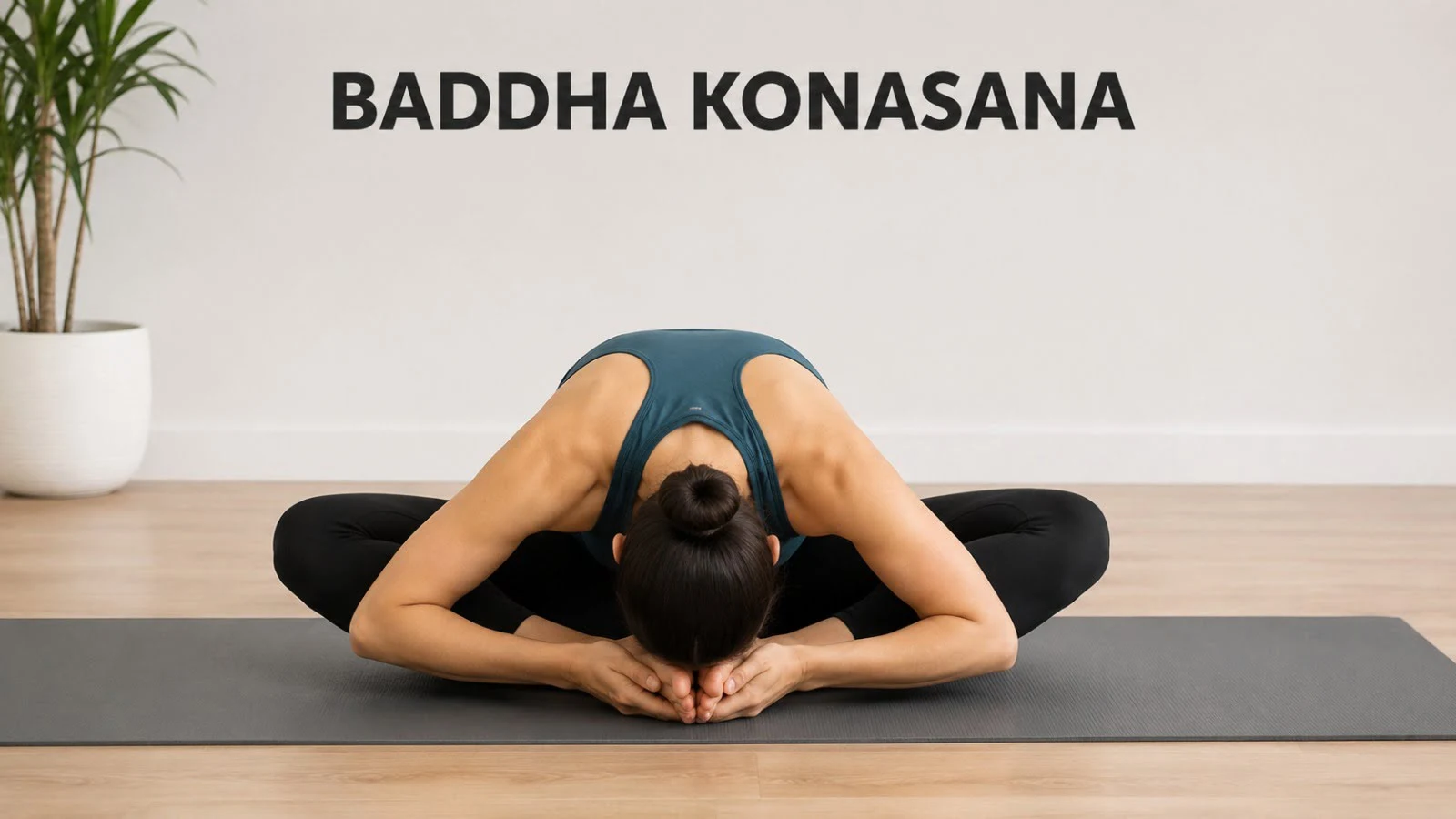
2. Bound Angle Pose (Baddha Konasana)
- Step 1 (Setup): Sit tall on the floor with your legs extended in front of you.
- Step 2 (Position): Bend your knees, pull your heels toward your pelvis, and drop your knees open to the sides.
- Step 3 (Join Feet): Press the soles of your feet together and hold your ankles or feet with your hands.
- Step 4 (Hold): Lengthen your spine upward, soften your hips, and hold while breathing deeply for 1–2 minutes.
3. Cat-Cow Stretch (Marjaryasana-Bitilasana)
- Step 1 (Setup): Start on all fours with wrists under your shoulders and knees under your hips.
- Step 2 (Cow): Inhale, drop your belly toward the mat, lift your tailbone, and gaze gently forward.
- Step 3 (Cat): Exhale, arch your back up toward the ceiling, draw your belly in, and tuck your chin.
- Step 4 (Flow): Move slowly between Cow on inhales and Cat on exhales for 5–10 breath cycles.
4. Reclined Butterfly (Supta Baddha Konasana)
- Step 1 (Setup): Sit on the mat and slowly lie down flat onto your back.
- Step 2 (Position): Bend your knees, press the soles of your feet together, and let your knees fall open wide.
- Step 3 (Rest Hands): Place your hands gently on your lower abdomen or extend them out to the sides.
- Step 4 (Hold): Close your eyes, relax your pelvic muscles completely, and hold for 3–5 minutes.
5. Head-to-Knee Pose (Janu Sirsasana)
- Step 1 (Setup): Sit upright with your right leg extended straight and your left leg bent, sole against your right inner thigh.
- Step 2 (Align): Turn your torso to face toward your extended right leg.
- Step 3 (Fold): Exhale and hinge gently at your hips to fold forward over your right leg, resting your hands on your knee, shin, or foot.
- Step 4 (Switch): Hold for 5 deep breaths, inhale to rise back up, and repeat on the other side.
6. Legs-Up-the-Wall (Viparita Karani)
- Step 1 (Setup): Sit sideways next to a wall with your hip touching the baseboard.
- Step 2 (Pivot): Swing your legs up against the wall as you gently lie back flat onto the floor.
- Step 3 (Position): Adjust so your buttocks are close to the wall and your legs extend comfortably upward.
- Step 4 (Hold): Rest your arms by your sides, close your eyes, and stay here for 5–10 minutes breathing softly.
Precautions & Guidelines for Safe Practice
- No Inversions: Do not go into full handstand, head stand or shoulder stand poses during the days of peak flow as it is natural for the body to take an energetically downward approach (Apana Vayu).
- Take Comfort Positions: Place bolsters, cushions and folded blankets underneath the knees, spine and chest for ultimate comfort while performing the exercises.
- No Force or Strain: Do not strain yourself by going into hard and forceful twisting and core-building exercises.
- Pay Attention to How You Feel: If you do not feel comfortable in any position and there is an increase in pain, exit the exercise and go into a relaxation position.
- Use Heat Therapy: To intensify the effects of yoga, use a heating pad on your lower abdomen or drink herbal tea.
Final Thoughts
Dealing with your menstrual cycle does not have to be synonymous with enduring pain all the time or resorting only to temporary measures. Utilizing yoga poses for period cramps can be a compassionate method that helps you address the underlying causes of menstrual cramps through releasing tension in your muscles, improving blood flow in the pelvic area, and calming the overly sensitive nervous system.
Incorporating restorative yoga for period cramps into your monthly routine provides a natural alternative to reliance on painkillers. Giving yourself space to perform restorative yoga poses, deep breathing exercises, and take care of yourself during your period allows you to work with your body, not against it.
Frequently Asked Questions
1. Can I practice yoga when I have lots of period flow?
Yes, provided that you only do easy, nurturing, and grounding poses. Stay away from vigorous power yoga, intense exercises, and heavy inversions on those days.
2. What is the 7-2-1 rule for menstruation?
It is a health guideline for heavy bleeding: bleeding lasting over 7 days, changing pads/tampons every 2 hours or less, or passing clots larger than 1 inch.
3. Which yoga to avoid during periods?
Avoid full inversions (like Headstands), intense power yoga, deep backbends, and heavy core-crunching poses that put pressure on the uterus.
4. How to lessen period cramps immediately?
Apply a heating pad to your lower belly, rest in Child's Pose, and sip warm ginger or chamomile tea to relax uterine muscles quickly.
5. What position calms period cramps?
Balasana or lying on your side in a fetal position with a pillow between your knees best relieves abdominal and lower back tension.
Disclaimer: The content on LifePositive.com; including articles/blogs on yoga, acupuncture, naturopathy, and other alternative healing modalities for holistic wellness, is for informational and educational purposes only. It is not a substitute for professional medical advice, diagnosis, or treatment. Always consult a qualified healthcare provider before starting any new health protocol or making changes to an existing treatment plan.
Also Read Here
By Umesh Kumar



Discussion (0)
No comments yet. Be the first to comment!
Leave a Comment
You need to login to post a comment.