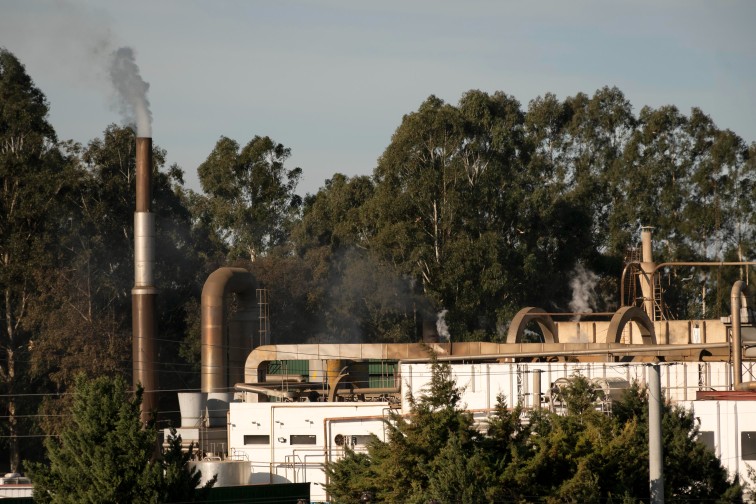
Cement kilns become carbon negative
The idea of cement kilns becoming carbon negative is a promising vision, but based on current technology, it's more accurate to say the industry is actively developing the tools to approach and eventually achieve net-zero or carbon-negative production . It's a challenging goal because cement production has two unavoidable sources of CO2: the immense energy needed to heat kilns, and the chemical process itself, which releases CO2 when limestone (calcium carbonate) is turned into clinker .
Key Pathways to Carbon-Negative Cement
Several major technological pathways are being explored to capture or eliminate CO2 from cement production:
Carbon Capture, Utilization, and Storage (CCUS): This is the most direct approach. It involves capturing the CO2 emitted from cement kiln flue gas and either storing it permanently underground or using it to create other products. Heidelberg Materials is a leader here with projects like:
The Brevik plant in Norway, capturing 400,000 tonnes of CO? annually .
The GeZero project in Germany, targeting 700,000 tonnes .
The Mitchell plant in the US, designed for 2 million tonnes .
These projects are industrial-scale proof that the technology works, even if widespread adoption is still a major economic and logistical challenge .
Innovative Production Processes: Instead of just capturing emissions, some companies are redesigning the production process itself.
Calix's Leilac technology uses a unique reactor design to heat limestone, which separates the CO2 released, making it easier to capture. A project with Ambuja Cements in India aims to capture more than one million tonnes of CO? annually while using renewable electricity to reduce fossil fuel use .
Electrodeposition is a lab-scale breakthrough. Researchers at Northwestern University have developed a process using seawater and electricity to create cement-like materials that are more than half CO? by weight, effectively turning the material into a carbon sink . This is a true carbon-negative concept, though it's still far from industrial-scale production .
Turning CO? into a Resource: Startups like Paebbl are mimicking natural mineralization to speed up the process of turning captured CO? into stable carbonates that can be used as construction materials. This permanently locks the carbon away .
? The Hurdles: Cost and Scale
While these innovations are promising, they face significant obstacles. The primary barrier is cost—new technologies are often much more expensive than traditional methods, requiring substantial investment and policy support . Additionally, the sheer scale of the global cement industry (which produces over 8% of global CO? emissions) means scaling these solutions to a meaningful level is a monumental task .
Essentially, we are not yet at a point where cement kilns are carbon-negative as a standard. We are, however, in a period of industrial transformation, where carbon capture and entirely new production methods are moving from research labs and pilot plants into real-world commercial projects .
We hope this happens soon.
By Jamuna Rangachari



Discussion (0)
No comments yet. Be the first to comment!
Leave a Comment
You need to login to post a comment.