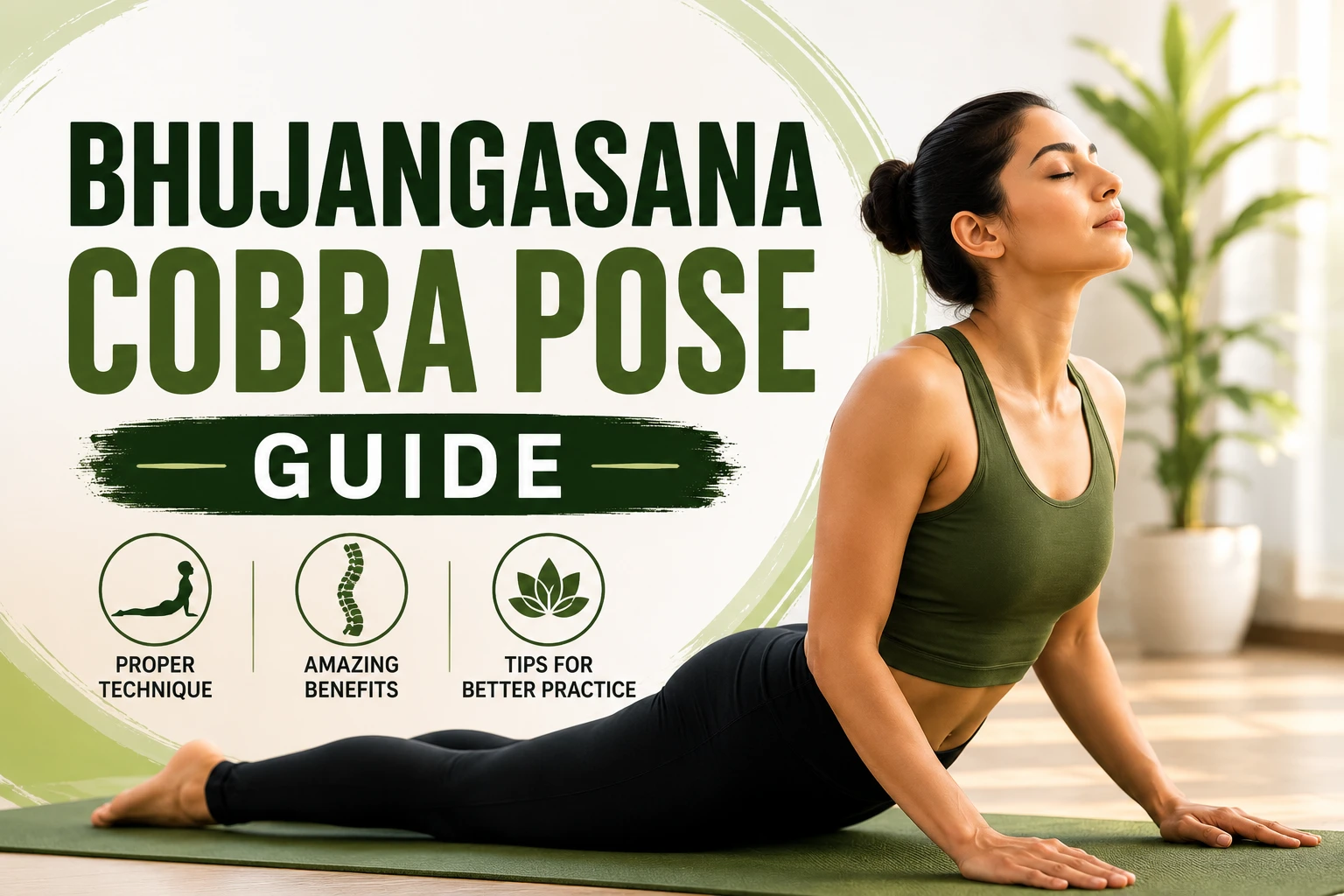
Bhujangasana (Cobra Pose): 7 Proven Benefits, Alignment Steps, and Mastery Guide
Bhujangasana, commonly known as Cobra Pose, is a foundational backbend in yoga designed to lengthen the spine and open the chest. Regular practice enhances posture, relieves back stiffness, and stimulates abdominal organs. It is ideal for practitioners of all experience levels seeking better movement, core integration, and back strength.
What Is Bhujangasana and Why Does It Matter?
Bhujangasana gets its name from two Sanskrit roots: bhujanga, meaning cobra, and asana, meaning posture or seat. When you move into this classic backbend, your upper body rises like a cobra raising its hood. I find this posture essential for breaking up the rigidity that comes from staring at screens all day.
How often do you catch yourself hunched over a laptop or steering wheel? That forward fold shortens your chest muscles and strains your lower back. I rely on this movement to re-awaken the spinal extensors, broaden the collarbones, and re-establish natural lumbar alignment. Rather than forcing your body into a deep backbend right away, the posture trains your back to support itself organicall
How Do You Perform Cobra Pose Step by Step?
Executing Cobra Pose with precision prevents lower back compression and keeps your shoulders happy. Follow this simple progression on your yoga mat:
1.Establish Your Foundation:Starting posture.
Lie face down on your mat. Extend your legs straight behind you with the tops of your feet pressing firmly into the floor. Keep your feet hip-width apart to protect your lower back.
2.Set Your Hands:Upper body alignment.
Place your palms flat under your shoulders. Hug your elbows close to your ribcage rather than letting them flare outward like chicken wings.
3.Engage Your Lower Body:Anchoring.
Press your thighs, hips, and the tops of your feet down. This grounding action stabilizes your pelvis before you attempt any lifting.
4.Inhale and Raise Your Chest:The main lift.
As you draw a deep breath in, gently peel your chest off the mat. Lift using your back strength first—keep weight in your hands minimal so you do not push up prematurely.
5.Hold and Breathe:3 to 5 breaths.
Keep your neck long by keeping your gaze forward or slightly down. Soften your shoulders away from your ears. Hold for 15 to 30 seconds while maintaining smooth breathing.
What Are the Core Health Benefits of Bhujangasana?
Regular practice delivers noticeable benefits across your entire body:
Spinal Mobilization: Unlocks stiffness along the lumbar and thoracic spine by encouraging extension.
Chest and Lung Expansion: Stretches the pectoral muscles, creating room for your diaphragm to expand fully.
Abdominal Organ Stimulation: The gentle pressure against the mat massages your stomach and intestines, aiding digestion.
Posture Correction: Counteracts forward-head posture and rounded shoulders by strengthening the upper back muscles.
Stress Relief: Opening the chest releases muscular tension stored around the shoulders and neck during stressful workdays.
How Does Bhujangasana Compare to Upward-Facing Dog?
People frequently confuse these two foundational backbends during dynamic yoga flows. Here is how they differ:
Attribute Bhujangasana (Cobra Pose) Urdhva Mukha Svanasana (Upward Dog)
Floor Grounding Thighs, hips, and feet remain on the mat Only palms and tops of feet touch the mat
Elbow Position Softly bent, kept close to ribs Fully straight arms with shoulders stacked over wrists
Primary Muscle Engagement Deep back extensors and core support Triceps, shoulders, quads, and glutes
Lower Back Pressure Gentle to moderate Higher intensity extension
Best For Beginners to advanced practitioners Intermediate to advanced flows
What Alignment Mistakes Cause Back Pain in Cobra Pose?
Even simple backbends can trigger back discomfort if done with incorrect mechanics. Are you falling into these common trapdoors?
Warning: Pushing up too fast with arm power before your back muscles engage can pinch the vertebrae in your lumbar spine.
Forcing Depth with Arm Power: Shoving your torso upward with straight arms dumps weight straight into your lower back. Keep a slight bend in your elbows and let your back muscles do the work.
Crunching the Back of the Neck: Throwing your head back tilts your neck too far and compresses your cervical spine. Keep your gaze neutral.
Flaring the Elbows: Letting your elbows drift out to the sides places unnecessary strain on your shoulder joints. Keep them pinned against your ribs.
Forgetting the Lower Body: Loose, limp legs leave your pelvis unstable. Press the tops of your feet into the floor to keep your legs active.
Who Should Avoid or Modify Cobra Pose?
While Cobra Pose offers broad physical rewards, certain health conditions call for modifications:
Pregnancy: Avoid lying flat on your stomach after the first trimester. Opt for seated or standing chest openers instead.
Wrist Issues or Carpal Tunnel: Reduce wrist strain by taking Sphinx Pose—forearms flat on the floor with elbows stacked under shoulders.
Acute Herniated Discs: Deep spinal extension can agitate active disc injuries. Consult a physical therapist before practicing backbends.
Recent Abdominal Surgery: Allow abdominal incisions and deep tissue layers time to heal completely before extending your midsection.
FAQ Section
Is Bhujangasana safe for beginners?
Yes, beginners can practice gentle variations like Low Cobra or Sphinx Pose to build spinal strength without straining their back.
How long should I hold Cobra Pose during practice?
Holding Cobra Pose for 15 to 30 seconds (roughly 3 to 5 slow, deep breaths) provides effective stretching without fatiguing your muscles.
Can Bhujangasana help relieve lower back pain?
Yes, gentle practice strengthens the muscle support around your lower spine, provided you lift using core and back strength rather than forcing height with your arms.
What is the difference between Low Cobra and High Cobra?
Low Cobra keeps your chest barely lifted off the mat with almost no weight in your hands, while High Cobra lifts the chest higher while keeping your pelvis grounded.
Should I squeeze my glutes during Cobra Pose?
Keep your glutes softly engaged to support your pelvis, but avoid clenching them tightly, as excessive squeezing locks your lower back.
Key Takeaways
Bhujangasana strengthens back extensors and reverses forward-desk posture.
Anchor your lower body by pressing your hips, thighs, and feet into the mat before lifting.
Use back strength to lift your chest rather than pushing forcefully with your arms.
Keep your neck long and elbows pinned near your ribs to avoid shoulder and neck compression.
Swap High Cobra for Sphinx Pose if you experience wrist pain or lower back tightness.
Conclusion
Integrating Cobra Pose into your daily routine helps restore posture, opens your breathing, and keeps your spine resilient against daily physical stress. Focus on gradual movement, steady breathing, and precise alignment rather than pushing for height.



Discussion (0)
No comments yet. Be the first to comment!
Leave a Comment
You need to login to post a comment.