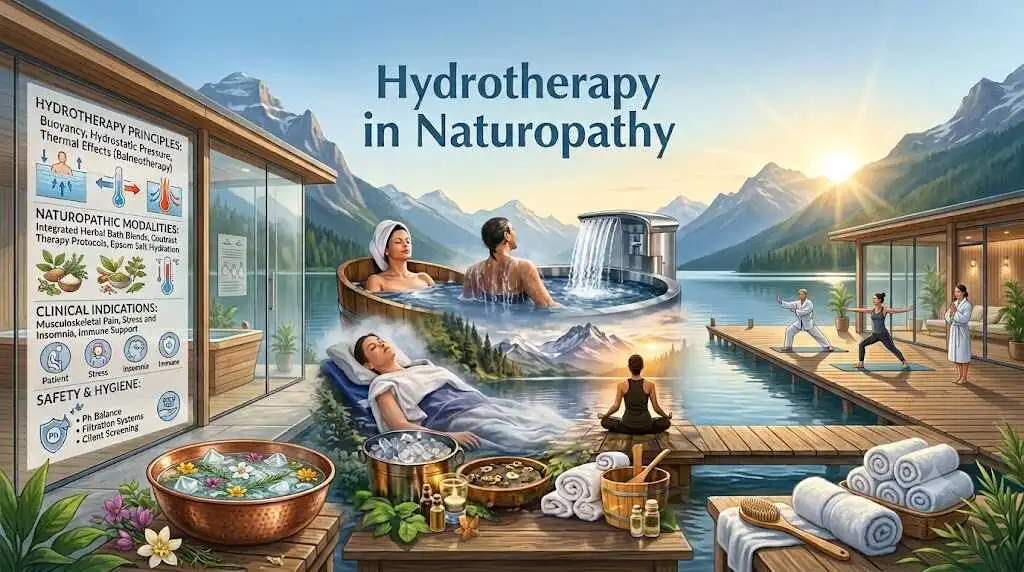
Hydrotherapy in Naturopathy: Healing & Rejuvenation
Hydrotherapy in naturopathy involves the use of water in different forms, temperatures, and pressures as a key natural healing technique designed to improve wellness and cure diseases. It is based on one of the basic tenets of naturopathy, which is Vis Medicatrix Naturae or the healing power of nature.
Through the use of water, there will be revitalization of internal organs, improvement in blood circulation, and proper metabolic detoxification. Understanding the role of hydrotherapy in naturopathy highlights how contrasting temperatures enhance systemic blood circulation.
Key Takeaways
- Therapeutic Water Application: Hydrotherapy in naturopathy uses hot, cold, and contrasting water temperatures to stimulate the body's natural healing response.
- Circulation & Detoxification: Temperature variations help regulate blood flow, stimulate lymphatic drainage, and assist in metabolic waste removal.
- Nervous System Balance: Warm treatments promote deep relaxation and stress relief, while cold applications invigorate energy and enhance immune function.
How Hydrotherapy in Naturopathy Works
Thermal therapy is one of the main processes of water therapy that works on the following principles:
Key Mechanisms of Water Healing
-
Vascular gymnastics (Contrast therapy): Exposure of the body to hot and cold water leads to alternating expansion and contraction of the blood vessels, which increases blood flow and facilitates its transportation along with waste removal from the body.
- Lymph stimulation: The change of temperatures helps the lymph fluid to move around the body, which makes it easier for the immune cells to move around.
- Nervous system regulation: Hot water application has a relaxing effect on the sympathetic nervous system to prevent anxiety and stress, while cold application stimulates mind and speeds up metabolism of the cells.
- Pore removal and detoxification: The warm steam and hydro-baths facilitate opening of the pores for toxin removal via sweat glands.
Common Techniques of Hydrotherapy in Naturopathy
Incorporating hydrotherapy in naturopathy into your wellness routines offers a natural way to reduce inflammation and ease chronic muscle tension.
|
|
|
|
|
|
|
|
|
|
|
|
|
|
|
|
|
|
|
|
|
|
|
|
|
|
|
|
|
|
|
|
|
|
|
Precautions & Guidelines for Safe Practice
- Determine Personal Vitality: Cold-water therapies demand adequate internal heat from the body; do not apply extreme cold if one is persistently tired or feels cold.
- Consider Health Problems: People with serious hypertension, heart problems, or circulatory illnesses must seek advice from a doctor before applying hot saunas or contrast therapies.
- Avoid Extremes of Heat: Do not use extremely hot water that might hurt the sensitive skin and induce dizziness or even fainting.
- Drink Plenty of Water: Take enough room-temperature water before and after the use of warm water therapies and steams to replace lost fluids.
- Ensure Adequate Relaxation After Therapies: Make sure to take time to relax after therapies.
Ending Notes
The timeless nature of hydrotherapy demonstrates that naturopathy is based on the body’s natural ability to heal. Through the use of water, the body can be healed through methods that do not require any form of surgery or other harmful treatments. Through such methods as thermal contrast therapy, circulation is stimulated, toxins are removed through metabolism, and nervous systems can be brought back into balance. Hydrotherapy in naturopathy is trusted by people from all over the world today.
Frequently Asked Questions
1. What is the main difference between hot and cold hydrotherapy?
Hot water relaxes muscles, dilates blood vessels, and promotes sweating. Cold water constricts blood vessels, reduces local inflammation, stimulates the nervous system, and boosts metabolic activity.
2. Can hydrotherapy in naturopathy help with chronic pain?
Yes. By improving blood circulation, reducing tissue congestion, and easing muscle tension, regular hydrotherapy can significantly alleviate chronic joint and muscular pain.
3. How does hydrotherapy support immune function?
Thermal contrast therapies increase the circulation of white blood cells and lymphatic fluid, enhancing the body's natural defense mechanisms against infections and illnesses.
Disclaimer: The content on LifePositive.com; including articles/blogs on yoga, acupuncture, naturopathy, and other alternative healing modalities for holistic wellness, is for informational and educational purposes only. It is not a substitute for professional medical advice, diagnosis, or treatment. Always consult a qualified healthcare provider before starting any new health protocol or making changes to an existing treatment plan.
Also Read: Fasting Therapy in Naturopathy
By Umesh Kumar Khiri



Discussion (0)
No comments yet. Be the first to comment!
Leave a Comment
You need to login to post a comment.