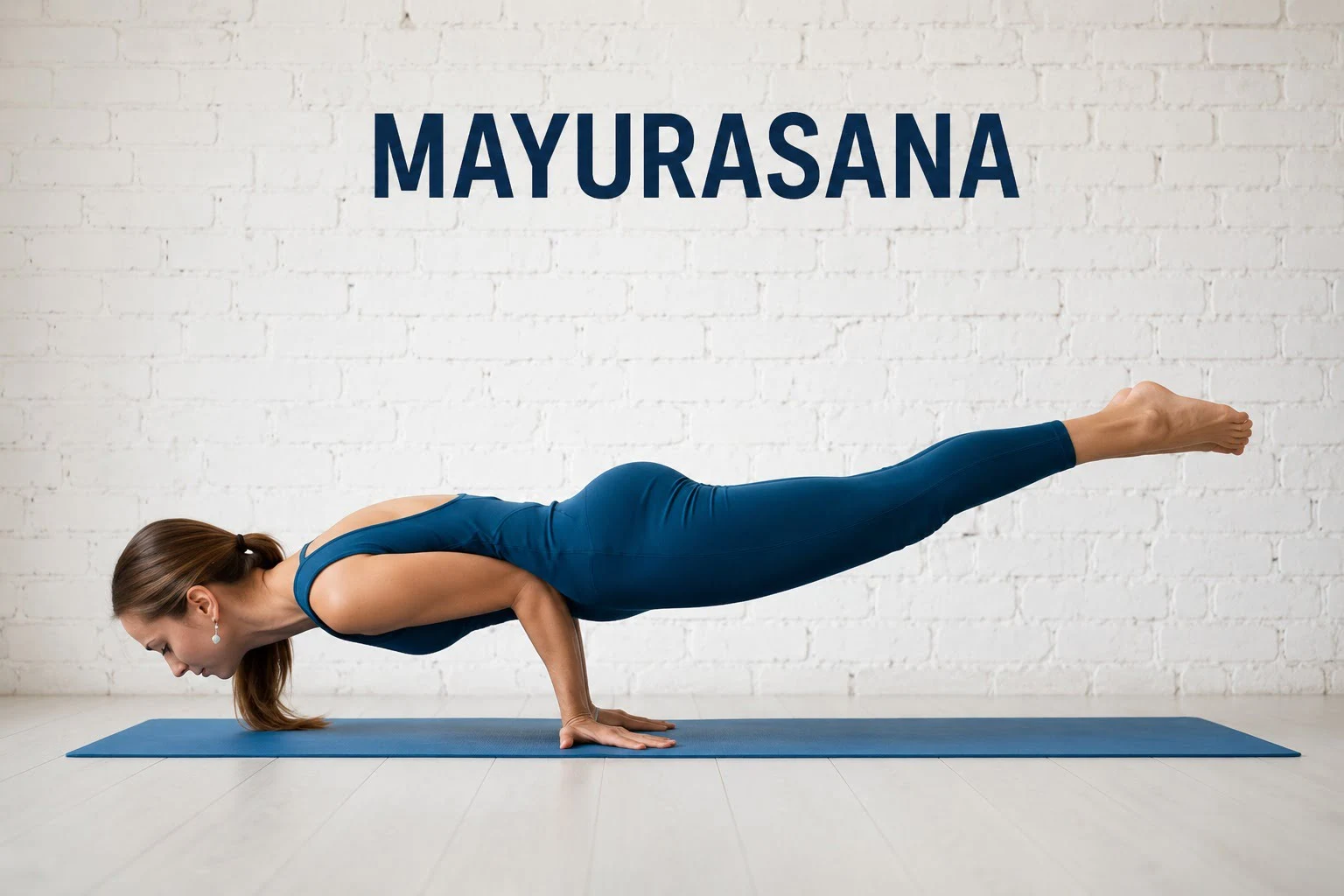
Mayurasana (Peacock Pose): Enhance Body Control
Mayurasana, popularly known as Peacock Pose, is an advanced yoga asana that tests one's physical strength and concentration. In this asana, you have to balance your body in a horizontal position using only your hands.
Balance, stability, and concentration are important factors that must be included in a comprehensive yoga routine. Many yoga routines emphasize flexibility; however, arm balancing asanas also emphasize balance, coordination, and confidence. While Mayurasana might appear intimidating at first glance, it is possible to learn how to do this yoga asana with regular practice and the right techniques.
Key Takeaways
- Builds Upper Body Strength: Heavily engages the wrists, forearms, shoulders, and core to balance the body horizontally.
- Enhances Focus and Balance: Demands deep mental concentration, coordination, and controlled breathing.
- Requires Proper Warm-Up: An advanced arm-balancing pose that needs gradual preparation to protect the wrists and joints.
What Is Mayurasana (Peacock Pose)?
The term Mayurasana is a combination of two Sanskrit words, Mayura (which means "peacock") and Asana (which means "pose"). The pose looks like a peacock spreading its tail, and that is how it got its name. It is acknowledged as a classical arm balance in Hatha Yoga that has been mentioned in yoga scriptures for ages.
During Mayurasana practice, the palms are placed on the floor, and the elbows are pressed against the belly. Then, the whole body is lifted up till it gets straight and parallel to the floor.
Since this pose demands strength, balance, and coordination of the body, Mayurasana is usually performed by intermediate and advanced yoga students. Beginners may practice some wrist mobility exercises and build the required muscles to perform Mayurasana properly.
How to Perform Mayurasana (Peacock Pose)
These instructions should be followed to perform Mayurasana safely.
- Kneel properly on a yoga mat.
- Rest your hands on the floor with your fingers pointed towards your toes.
- Get your elbows close and place them against your belly with care.
- Straighten one leg back and then do the same with another leg.
- Slightly shift your body weight forward while tensing your abdominal muscles.
- Gradually raise your legs up from the floor to be parallel with the floor.
- Maintain your focus slightly ahead of you and breathe deeply.
- Stay in the posture for 5 to 15 seconds.
- Slowly bring down your legs and come to the beginning position.
Suggestions for Beginners
- Prepare your wrists, shoulder joints, and abdominal muscles before the pose.
- Practice the pose with one foot raised at first.
- Do not separate your elbows from each other.
- Do not hold your breath during balancing.
- Study the pose under the guidance of an experienced yoga teacher.
Wellness Benefits of Mayurasana
Regular practice of the Peacock Pose can contribute to strength, stability, and overall body awareness.
|
|
|
|
|
|
|
|
|
|
|
|
|
|
|
|
|
|
|
|
|
|
|
|
|
|
|
Tips and Precautions
Do Mayurasana cautiously and do not push yourself into the posture.
- Warm up your wrists, shoulders, and core muscles before practising the pose.
- Practice on a firm yoga mat.
- Do not take quick actions when lifting and lowering the body.
- Breathe slowly during the pose.
- Do not practice the pose if you have problems with your wrists, elbows, shoulders, abdomen, or hernia unless recommended by a certified medical professional.
To Conclude
Mayurasana is an advanced pose in yoga that builds upon qualities of strength, balance, coordination, and concentration through yoga practice. While this may take time and gradual progress, regular practice will improve body control and help build confidence in addition to increasing physical awareness.
Frequently Asked Questions
1. Is Mayurasana appropriate for total beginners?
As Mayurasana is an advanced posture of arm balancing, beginners must gain wrist power and core strength prior to performing Mayurasana with the assistance of professionals.
2. Why are the elbows pressed to the belly in Mayurasana?
This helps in creating a stable base of support that allows better balance of the body with the weight of the body distributed equally on arms and core.
3. How long should one stay in Mayurasana?
Most people usually perform Mayurasana for 5 to 15 seconds at first. The time can be gradually increased as the person gains strength and balance.
4. Which yoga poses can help prepare the body for Mayurasana?
Some yoga poses, which include Plank Pose, Chaturanga Dandasana, Dolphin Pose, Bakasana (Crane Pose), and others, can help prepare the body for Mayurasana.
Disclaimer: The content on LifePositive.com, including articles/blogs on yoga, acupuncture, naturopathy, and other alternative healing modalities for holistic wellness, is for informational and educational purposes only. It is not a substitute for professional medical advice, diagnosis, or treatment. Always consult a qualified healthcare provider before starting any new health protocol or making changes to an existing treatment plan.
Also Read: Ustrasana
By Umesh Kumar Khiri


.jpg)
Discussion (0)
No comments yet. Be the first to comment!
Leave a Comment
You need to login to post a comment.