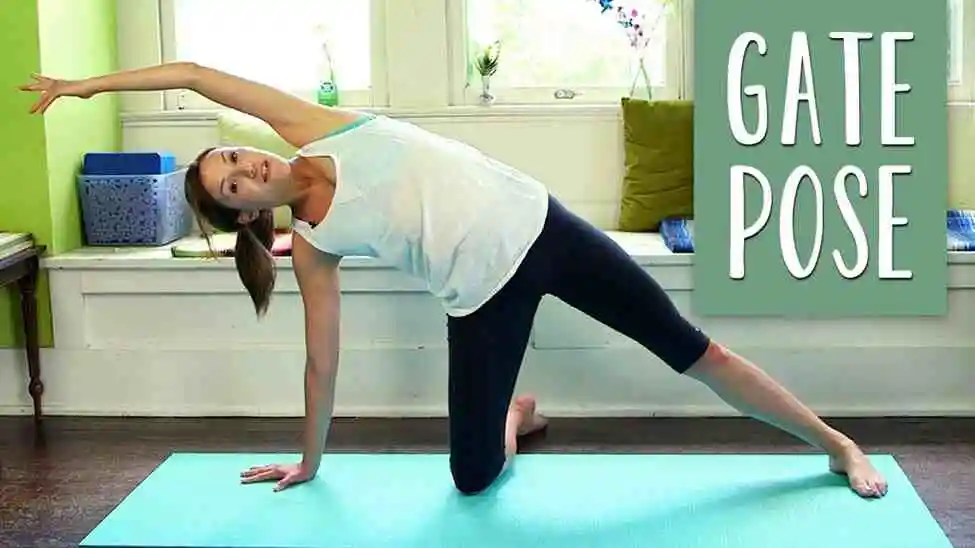
Parighasana (Gate Pose): Side Stretch & Balance
Practising 'Parighasana' or the Gate Pose helps you restore your balance and maintain core stability. Imagine your body as a house, needing to air out its rooms at the end of a cold winter season. Static conditions and sitting at a desk for most of the day tend to suffocate our muscles with tension, restricting movement and making us feel sluggish.
Parighasana helps you to open up your lungs and let the fresh air in. It is a dynamic lateral stretch; it opens up all the rarely stretched side lines of your body from your grounded knee to the tips of your fingers. In the act of extending the leg and lifting the arm above the head, the posture makes for an expansive stretch along the side of the body, like the ribs opening out to become a fan and letting air into the lungs. It is a graceful motion that loosens up the body and reestablishes its correct posture.
Key Takeaways
- Stretches the Side Body: Opens intercostal muscles, waist, and ribs.
- Builds Core Stability: Strengthens lateral abdominals and hip flexors.
- Improves Breathing: Expands chest capacity for full oxygen intake.
What Is Parighasana (Gate Pose)?
Parighasana derives its name from the Sanskrit terms Parigha, which translates to "gate bar" or "the beam that locks the gate," and Asana, which means "pose." The extended leg and side stretch give the asana its characteristic shape resembling the gate.
The Parighasana asana is done in a kneeling position whereby one leg is extended sideways while the upper body is stretched toward the extended leg. The asana is characterized by a simple stretch together with mindful breathing.
This asana is not about rigorous stretching exercises. Rather, it requires conscious movement. The Parighasana asana allows you to stretch the sides of your body comfortably.
How to Practise Parighasana (Gate Pose)
Here are some easy instructions to perform Parighasana.
- Begin by kneeling down on your mat.
- Extend your right leg a little so that the right foot touches the floor while ensuring your left knee stays below your left hip.
- Inhale deeply, raising your left arm above your head.
- Now exhale slowly and bend your torso sideways to reach down towards your extended right leg, allowing your right hand to touch your leg gently at any comfortable point.
- Remember to keep your chest up high and not to bend your torso.
- Stay in this stretch position for 20-30 seconds.
Tips for Beginners
- Don’t move hastily and avoid bouncing into the stretch.
- Synchronize each and every movement with your breaths.
- Use yoga blocks in case you find difficulty stretching out your leg.
Wellness Benefits of Parighasana
Regular practice of Parighasana (Gate Pose) offers several physical and mental wellness benefits.
|
|
|
|
|
|
|
|
|
|
|
|
|
|
|
|
|
|
|
|
|
|
|
|
|
|
|
Tips and Precautions
Do Parighasana mindfully and with correct posture.
- Warm up before going deep into the lateral stretch.
- Do not overstretch your body.
- Make sure to keep your supporting knee well-padded by using a yoga mat or a folded blanket.
- Breathe slowly and steadily throughout the practice.
- Those who have had recent injuries to their knees, hips, shoulders, or spine must seek medical advice first.
- Pause if you need to rest
To Conclude
Parighasana is a simple and satisfying yoga pose that enhances your body's flexibility and proper posture through gentle side stretches and mindful breathing. If you need relief from stiff muscles or want to explore new techniques in yoga, then gate pose will be helpful to achieve the desired goal. Through consistent practice of the yoga pose of Parighasana, you will improve your body flexibility, breathing, and physical balance.
Frequently Asked Questions
1. Can Parighasana be practised in the morning in the yoga regime?
Yes. Doing Parighasana in the morning can assist in making the stiff muscles flexible and also help in preparing for the day ahead.
2. Is it necessary that I should do Parighasana on both sides?
Certainly. It is important to do the pose on both sides to maintain flexibility equally in both sides of the waist, hips, and spine.
3. Does Parighasana assist me in becoming aware of breathing?
Yes. Since in Parighasana there is a side stretch which makes your rib cage free, it helps in better breathing during your practice of yoga.
4. Do I have to warm up before practising Parighasana?
Yes, it is suggested to do a little warm-up. Simple exercises for the shoulders, hips, and spine will be helpful to you.
Disclaimer: The content on LifePositive.com, including articles/blogs on yoga, acupuncture, naturopathy, and other alternative healing modalities for holistic wellness, is for informational and educational purposes only. It is not a substitute for professional medical advice, diagnosis, or treatment. Always consult a qualified healthcare provider before starting any new health protocol or making changes to an existing treatment plan.
Also Read: Marjariasana
By Umesh Kumar Khiri


Discussion (0)
No comments yet. Be the first to comment!
Leave a Comment
You need to login to post a comment.