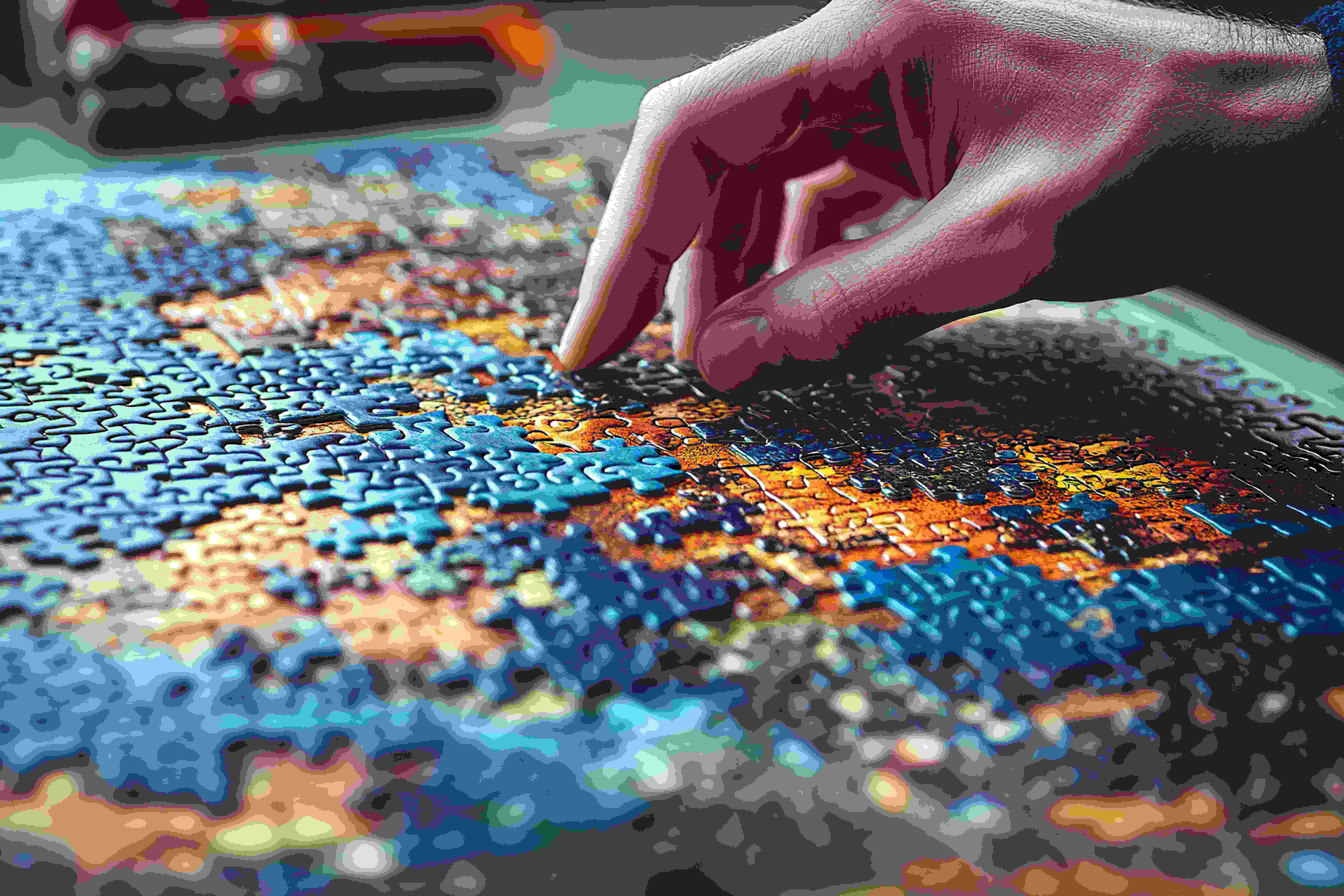
Tactile puzzles solved by visually challenged make it to the Guiness books
In an event recently in multiple venues, the visually challenged surprised everyone at their performance in solving rotating tactile puzzles overcoming their challenge. This is a great moment for inclusion.
Tactile puzzles and it's benefits
To understand tactile puzzles, it helps to first separate them into two distinct categories, because they offer very different benefits:
Manipulative Puzzles (Rubik’s Cubes, interlocking burrs, metal disentanglement, maze balls, and assembly puzzles).
Tactile Logic Puzzles (puzzles where you must use touch alone to solve them, such as feely-boxes, raised-dot mazes, or texture-matching games played blindfolded).
Here is a breakdown of both categories and their profound benefits.
Category 1: Manipulative Puzzles (Rubik’s Cubes, Burrs, etc.)
These puzzles require you to rotate, twist, pull, and manipulate physical pieces. The benefits go far beyond "keeping your hands busy."
Spatial Intelligence & Mental Rotation: Manipulating a 3D object in your hands builds your brain's ability to visualize objects from different angles. This is the same cognitive skill used in architecture, surgery, and engineering.
Proprioception (Body Awareness): Your fingers are packed with nerve endings. Solving a manipulative puzzle trains your brain to know exactly where your hands are in space without looking at them. This improves fine motor control and hand-eye coordination.
Bilateral Brain Coordination: Complex puzzles (like a Rubik’s Cube) require both hands to perform different, simultaneous movements. This strengthens the corpus callosum—the bridge between the brain's left and right hemispheres—enhancing overall cognitive processing speed.
Muscle Memory & Efficiency: With repetition, your hands learn the "feel" of a correct move. This automates physical actions, freeing up your working memory to focus on the next strategic step.
Category 2: Pure Tactile Logic Puzzles (Touch-Only)
These are puzzles specifically designed to be solved without sight. They use raised textures, temperature differences, weights, or hidden compartments.
Sensory Gating & Focus: When you close your eyes to solve a tactile puzzle, your brain actively suppresses the visual cortex (which usually hogs cognitive resources). This forces your somatosensory cortex (touch center) into overdrive. This "sensory gating" is a form of meditation that induces a state of deep, singular focus often compared to "flow state."
Parietal Lobe Development: The parietal lobe integrates sensory information. By relying purely on touch, you dramatically increase the brain's ability to interpret subtle cues—like the difference between a smooth surface and a slightly grainy one, or the weight shift of a hidden ball inside a box.
Cognitive Empathy: When solving touch-only puzzles, you realize how heavily you rely on sight. This builds mental flexibility and patience, as you must translate abstract tactile data (e.g., "this feels like a groove") into logical conclusions (e.g., "therefore the piece must slide left").
The Universal Benefits (Across Both Types)
Regardless of which tactile puzzle you choose, you gain these overarching advantages:
Benefit How It Works
Stress Reduction & Cortisol Drop The repetitive, rhythmic motion of your fingers (like turning a cube or tracing a maze) activates the parasympathetic nervous system. It physically lowers cortisol levels, acting as a portable stress ball with a cognitive purpose.
Neuroplasticity (New Pathways) Tactile puzzles are "novel" to the brain. Learning a new physical manipulation literally grows new dendritic branches between neurons, keeping your brain youthful and resilient against age-related decline.
Grounding & Emotional Regulation Touch is the most primal sense. When you are anxious, your mind races into the future. Tactile puzzles forcibly anchor your attention to the present moment—the texture, the pressure, the angle. This is why they are heavily used in occupational therapy for ADHD and anxiety.
Frustration Tolerance Tactile puzzles punish brute force; they reward patience and gentle precision. Failing repeatedly while physically holding a puzzle teaches you to regulate your physical tension (you learn to relax your grip), which translates to better emotional regulation in real life.
Memory Consolidation The hippocampus (memory center) is closely linked to the motor cortex. Physically handling a puzzle while thinking about a strategy improves your ability to retain that strategy in long-term memory—often more effectively than reading about it.
Who Benefits the Most?
Children (Ages 3–10): Tactile puzzles are critical for developing the "pincer grip" needed for writing. They also teach object permanence and early cause-and-effect logic.
Older Adults: Manipulative puzzles are one of the best defenses against dementia, as they engage both cognitive and motor networks simultaneously—a process called "dual-tasking" that strengthens neural reserves.
Visually Impaired Individuals: Tactile logic puzzles are not just entertainment; they are practical brain-training for interpreting braille and navigating space via sound and touch.
High-Stress Professionals: Surgeons, pilots, and programmers use tactile puzzles to rebuild fine motor precision and "reset" their nervous systems after hours of staring at screens.
A Practical Tip
If you want to maximize the benefits, do not look at your hands while solving. Try solving a Rubik’s Cube behind your back, or put a metal disentanglement puzzle under a cloth. By removing your dominant sense (vision), you force your tactile system to work at 100% capacity, amplifying all the neurological benefits listed above.
By Jamuna Rangachari


Discussion (0)
No comments yet. Be the first to comment!
Leave a Comment
You need to login to post a comment.