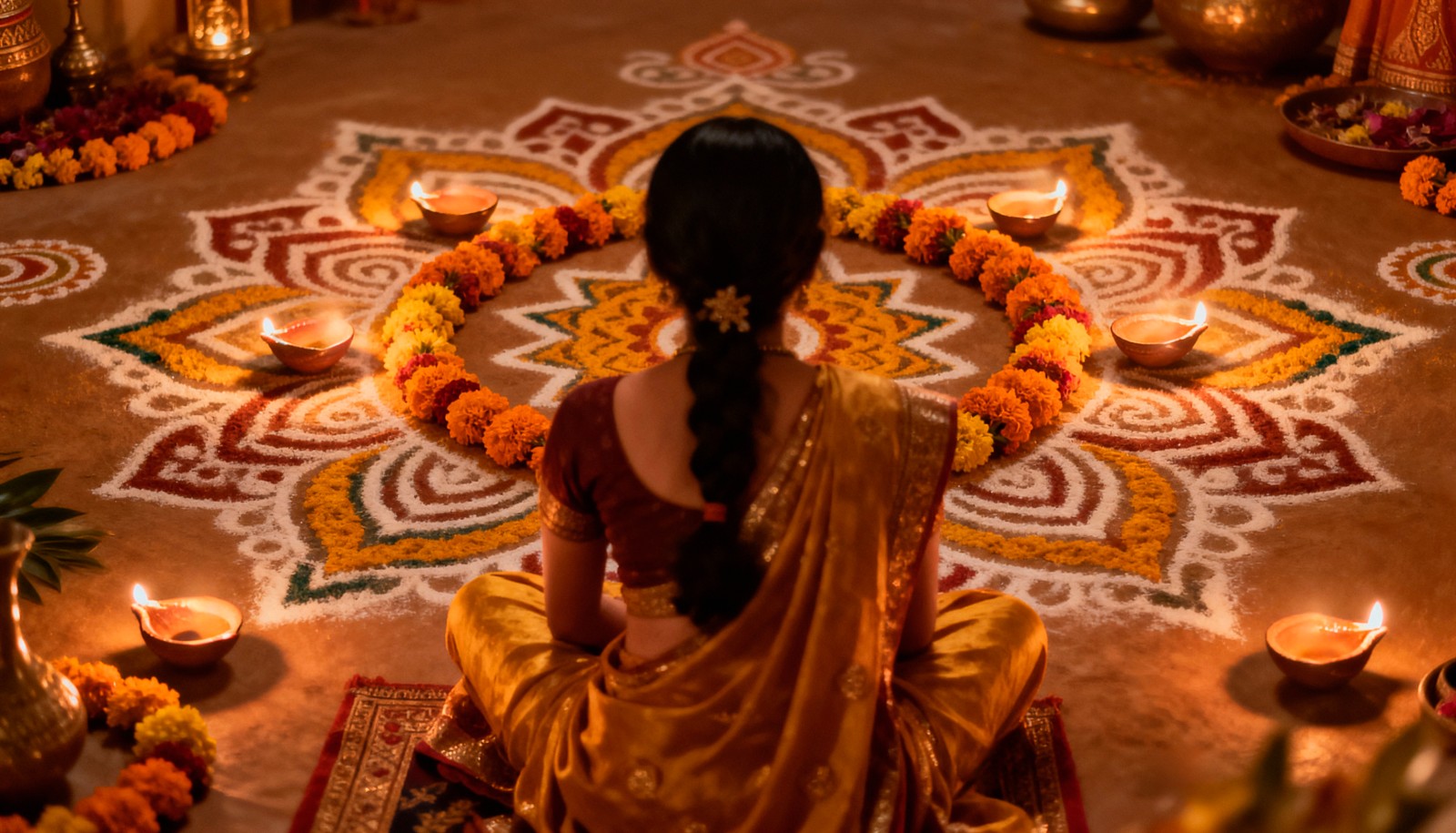
The spiritual essence of tradition
This is a profound question. To speak of the "spiritual essence" of traditions is to look past the varied rituals, rules, and costumes, and ask: What is the living heart that animates them?
That essence is remarkably consistent across cultures, manifesting as a perennial philosophy with several core, interwoven threads:
1. The Recognition of Two Orders of Reality
At its core, every spiritual tradition distinguishes between the surface appearance of things (the changing, material, and often chaotic world) and a deeper, foundational reality (the eternal, the sacred, the Divine Ground of Being).
-
In Hinduism: Brahman (ultimate reality) vs. Maya (the world of illusion and change).
-
In Christianity: The Kingdom of God vs. the fallen world.
-
In Taoism: The Tao that cannot be named vs. the ten thousand things.
The essence is the call to shift one's center of gravity from the fleeting to the eternal, to "seek first the kingdom" or attain moksha (liberation).
2. The Human Condition as a State of "Forgetting" or Separation
Traditions universally diagnose a core human problem: we have forgotten our true nature. We are asleep, lost, or alienated. This isn't a moral failing but a spiritual amnesia. We identify solely with our ego, body, and thoughts, and thus suffer.
-
Buddhism: Dukkha (suffering) arises from Tanha (clinging/craving) based on the illusion of a separate self.
-
Platonism: We are prisoners in a cave, mistaking shadows for reality.
-
Abrahamic Faiths: We are in a state of exile from our original home, a separation from God (however understood).
The essence is the diagnosis of a core wound—a sense of incompleteness that drives all human striving.
3. A Path of Awakening and Return
Traditions are not just philosophies; they are technologies for transformation. Their essence is the practical path back to wholeness. This path almost always has three stages (the "threefold path"):
-
Ethics (Purification): Simple rules (Golden Rule, precepts, virtues) clear the clutter of selfishness. You quiet the noise of the ego so you can hear something deeper.
-
Meditation/Contemplation (Illumination): Practices to still the mind, focus attention, and turn inward. Prayer, mindfulness, chanting, or ecstatic dance. The goal is gnosis (direct knowing), not just belief.
-
Service/Compassion (Integration): The awakened state isn't a private escape. It naturally overflows as love, justice, and compassion for all beings. You see the Divine in others.
The essence is a lived discipline, not a mere intellectual agreement. It's a "way" (Tao, Dharma, Halakha, the Way of Christ).
4. The Paradox of the Path: Effort and Grace
Every mature tradition holds a beautiful paradox: you must strive with all your might (meditate, pray, be good), but the ultimate transformation cannot be achieved by the ego alone. It is a gift, a grace, a sudden "turning."
-
In Zen: "Sitting is itself enlightenment." You do the practice without grasping for the result.
-
In Christianity: "Work out your salvation with fear and trembling, for it is God who works in you."
-
In Bhakti Yoga: The devotee offers every action, every thought to the Divine, surrendering the fruit of the action.
The essence is this dynamic relationship between human effort and a surrender to a reality larger than the self.
5. The Primacy of Direct Experience Over Doctrine
Finally, the spiritual essence is experiential, not dogmatic. Doctrines, scriptures, and beliefs are maps, not the territory. They point toward the moon; they are not the moon itself.
-
A tradition that reduces to "correct belief" (orthodoxy) has lost its essence and become an ideology.
-
A living tradition lives in practice, ritual, and direct encounter (orthopraxy). It's about tasting the honey, not analyzing its chemical formula.
The essence is the invitation to a direct, transformative encounter with the sacred ground of your own being.
In a Nutshell:
The spiritual essence of a tradition is a living, practical system for healing the sense of separation from the whole. It begins with a diagnosis of our forgetfulness, prescribes a path of ethical and contemplative practice, and culminates in a direct, compassionate awakening to the true nature of reality—which is ultimately a reality of unity, love, and profound peace.
When you strip away the incense, the robes, the architecture, and the political history, this is the pulse that remains. It's why a Christian monk, a Sufi mystic, and a Zen master can recognize each other as kin.
By Jamuna Rangachari


.png)
Discussion (0)
No comments yet. Be the first to comment!
Leave a Comment
You need to login to post a comment.