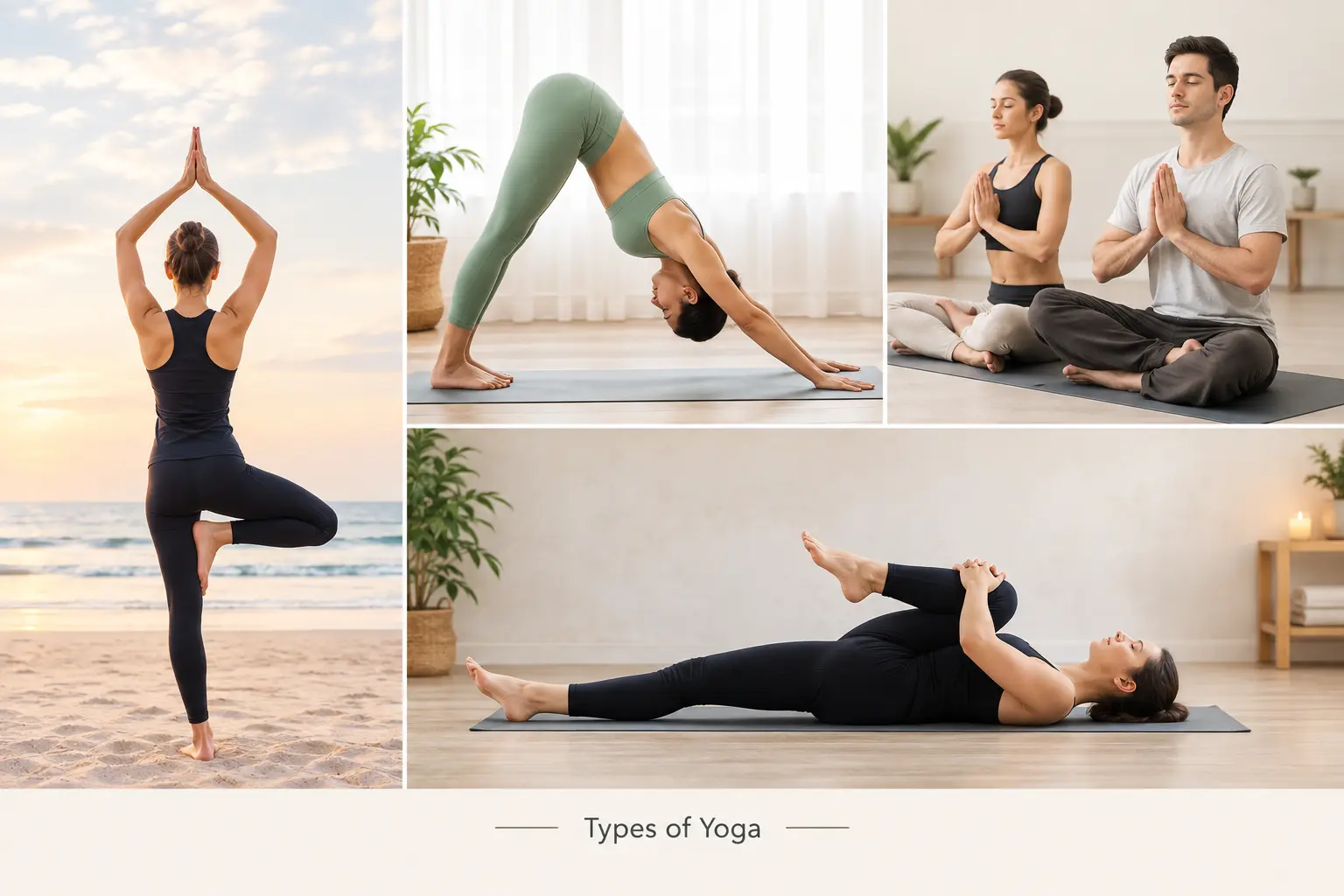
Types of Yoga: Find the Practice That Fits You
Different types of yoga may involve movement, breathwork, meditation, discipline, and spirituality, among other things.Good health has always been regarded as the most prized thing of mankind. Yet, full-blown vitality has seldom been defined by physical fitness alone. Already in the ancient world, wise men and healers understood that neither a sound body could be achieved nor maintained without the presence of a serene mind and balance of spirit. The term "yoga" comes from the ancient Sanskrit root "yuj," which means "unify." Yoga became known as the holistic approach toward achieving good health and mastering the self. Yoga is not merely about stretching, flexibility, and physical poses.
With the passage of time, various yoga approaches emerged, each being more or less focused on different sides of the practice. From the solid practices of Hatha Yoga to fluid movements of Vinyasa and quiet poses of Restorative Yoga, there is something for everybody, regardless of their preferences or fitness levels. Knowing the different types of yoga is crucial in choosing one for yourself.
Key Takeaways
1. Diverse Approaches: Offers styles ranging from dynamic, high-energy practices (Vinyasa, Ashtanga) to slow, restorative ones (Yin, Hatha).
2. Meets Varied Goals: Helps practitioners select a style based on physical fitness, relaxation, or spiritual discipline.
3. Accessible to All Levels: Provides suitable options for beginners, athletes, and individuals seeking injury rehabilitation.
What Are the Different Types of Yoga?
There are numerous forms of yoga, and the terminology can sometimes be confusing because some names describe traditional philosophical paths, while others describe modern physical practice styles.
|
|
|
|
|
|
|
|
|
|
|
|
|
|
|
|
|
|
|
|
|
|
|
|
|
|
|
|
|
|
|
|
|
|
|
|
Which Types of Yoga Should You Choose?
Your choice can depend on your experience, physical condition, schedule, and personal objectives.
|
|
|
|
|
|
|
|
|
|
|
|
|
|
|
|
|
|
|
|
|
|
|
|
|
|
|
|
|
|
Benefits of Exploring Different Types of Yoga Styles
Trying different approaches can help you understand what works best for your body and lifestyle.
|
|
|
|
|
|
|
|
|
|
|
|
|
|
|
|
|
|
|
|
|
|
|
|
|
|
|
Wrapping Up
Yoga is a much broader concept than one school or sequence of exercises. Hatha, Vinyasa, Ashtanga, Yin, Kundalini, Power and Restorative Yoga are some of the numerous schools of yoga that represent different ways of practicing this art. On the other hand, there are also philosophical aspects of yoga which can be studied by following Karma, Jnana, Bhakti and Raja Yoga schools.
Ultimately, the right kind of yoga for everybody is the yoga that suits his or her body type and goals. There is no need to stick to one particular school all through your life; one should try various approaches, perform exercises with what one can and listen to how they affect one's body. Consistency will make yoga not only a part of one's training program but also a way of life.
FAQs
1. Which types of yoga are recommended for beginners?
Hatha Yoga would be a reasonable start, as the slow pace will give you time to learn the basics of poses, breathing, and alignment. Gentle Vinyasa can also be a good choice depending on the class.
2. Which kind of yoga is best for improving flexibility?
Yin and Hatha Yoga could be considered helpful for those interested in increasing their flexibility. One has to progress gradually without ever stretching forcibly.
3. Is Power Yoga fit for everyone?
It is not necessarily true that Power Yoga is for everyone. Power Yoga can be rather demanding, and newbies might want to develop some strength first.
4. Is it possible to practise several types of yoga?
Yes, it is. One can combine different types of yoga and make up an integrated practice, such as Vinyasa Yoga for movement and Yin or Restorative Yoga for rest days.
5. Is yoga just a physical practice?
No, yoga includes postures, breathing, meditation, ethics, concentration and spirituality. Physical practice is only a part of the yoga tradition.
Disclaimer: The content on LifePositive.com, including articles/blogs on yoga, acupuncture, naturopathy, and other alternative healing modalities for holistic wellness, is for informational and educational purposes only. It is not a substitute for professional medical advice, diagnosis, or treatment. Always consult a qualified healthcare provider before starting any new health protocol or making changes to an existing treatment plan.
Also Read: Benefits of Yoga
By Umesh Kumar Khiri



Discussion (0)
No comments yet. Be the first to comment!
Leave a Comment
You need to login to post a comment.