Vajrasana (Thunderbolt Pose): 7 Key Benefits, Step-by-Step Steps, and Alignment Guide
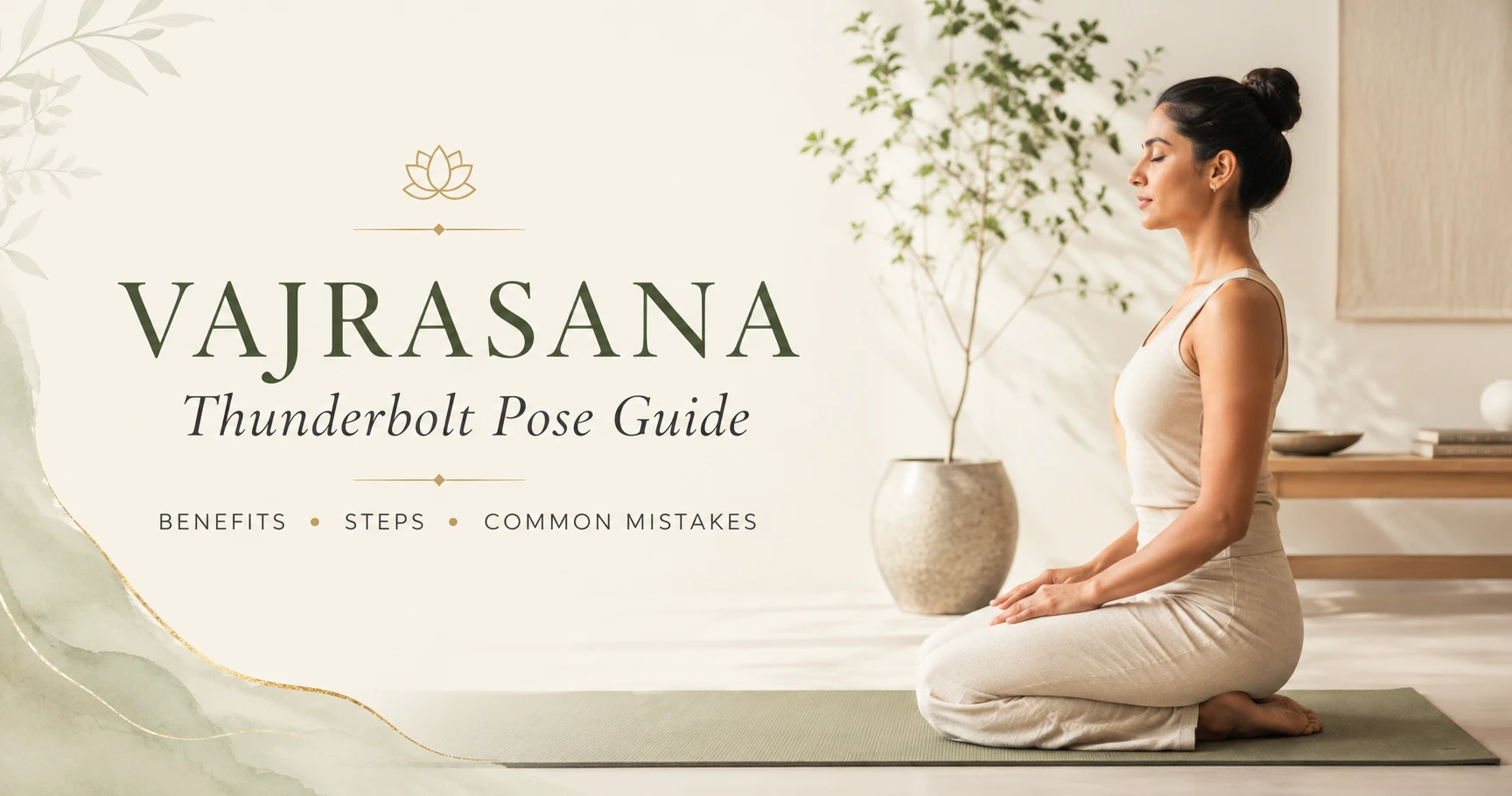
Vajrasana (Sanskrit: ???????), translating to Thunderbolt Pose or Diamond Pose, is a classical kneeling posture where the practitioner sits directly on the heels with the big toes touching and the spine held upright. Derived from the Sanskrit word vajra—meaning "thunderbolt" or "diamond"—this pose is celebrated in traditional hatha yoga for making the body firm and resilient. Mastering Vajrasana offers substantial physiological advantages, including regulating lower-body blood flow, stabilizing the pelvic region, and providing a grounded seat for pranayama and daily meditation.
What Are the Key Health Benefits of Vajrasana?
Practicing Vajrasana delivers targeted benefits across the digestive, musculoskeletal, and nervous systems. By redirecting blood flow away from the lower legs and toward the abdominal cavity, it creates ideal conditions for metabolic processing and postural stability.
- Digestive System Activation: Sitting on the heels restricts blood flow to the lower limbs, increasing circulation to the stomach and liver to aid nutrient absorption and relieve bloating.
- Pelvic Floor and Core Stability: The neutral pelvic tilt naturally aligns the lumbar spine, strengthening the pelvic floor muscles without straining the lower back.
- Quadriceps and Ankle Extension: Gently stretches the quadriceps femoris, patellar tendons, and anterior ankle muscles to maintain joint flexibility.
- Nervous System Calming: Sitting upright with steady abdominal breathing stimulates the parasympathetic nervous system, lowering stress and acute anxiety.
| Body System | Primary Action | Health & Biomechanical Outcome |
| Digestive Organs | Abdominal Blood Flow Diversion | Accelerates digestion and reduces post-meal sluggishness |
| Spine & Lumbar | Vertical Pelvic Neutrality | Alleviates lower back compression and corrects slouching |
| Thighs & Knees | Controlled Flexion & Quadriceps Stretch | Improves knee joint resilience and thigh flexibility |
| Ankles & Feet | Plantar Flexion Stress | Lengthens top-of-foot tendons and ankle ligaments |
How to Perform Vajrasana with Proper Alignment?
Achieving safe, effective alignment in Vajrasana protects your knee cartilage and prevents ankle numbness. Follow these structured steps:
- Kneel on the Mat: Begin kneeling on a padded surface with your thighs perpendicular to the floor and your knees placed close together.
- Position Your Feet: Bring your big toes together so they touch or lightly overlap, while letting your heels flare slightly outward to form a comfortable cradle.
- Lower Your Hips: Exhale as you gently lower your buttocks onto the inside curves of your open heels (not flat between them on the floor).
- Lengthen the Spine: Rest your weight evenly across both heels. Lift through the crown of your head, draw your shoulders back, and drop your collarbones away from your ears.
Place Your Hands: Rest your palms flat on your thighs or knees. Maintain a steady, relaxed rhythm of breathing for 1 to 10 minutes.
How Can Beginners Modify Vajrasana Safely?
Tight quadriceps, rigid ankles, or prior joint issues can make sitting on the heels uncomfortable. Using simple props accommodates your body's current range of motion:
- Under-Ankle Support: Place a tightly rolled towel under your ankle joints if the tops of your feet feel overly stretched against the mat.
- Between-Thigh Support: Place a folded blanket or yoga block between your thighs and calves to reduce the flexion angle at the knees.
- Knee Separation: If your knees feel pinched or pressured, separate them slightly while keeping your feet positioned together.
What Are Common Errors and Contraindications?
To protect your joints and ligaments, avoid these common positioning mistakes:
- Collapsing the Lower Back: Slouching forward flattens the natural lumbar curve and strains the spinal discs. Keep your sternum lifted.
- Uneven Weight Distribution: Leaning heavier onto one hip forces the spine into lateral tilt. Distribute weight symmetrically across both heels.
- Ignoring Sharp Joint Pain: Over-stretching tight knee ligaments can lead to meniscal strain. Always back out of the pose or add props if sharp pain occurs.
Contraindications: Avoid unassisted Vajrasana if you have severe knee osteoarthritis, recent ankle surgery, ligament tears, or severe varicose veins. Consult a healthcare provider or certified yoga teacher before practicing.
How Does Vajrasana Compare to Virasana (Hero Pose)?
While both are classic kneeling postures, subtle structural adjustments target different muscle groups:
- Positioning of the Hips: In Vajrasana, you sit directly on top of your heels with your feet touching. In Virasana (Hero Pose), your feet separate wider than your hips, and your buttocks rest on the floor between your feet.
- Knee & Hip Rotation: Vajrasana involves straight, linear knee flexion, whereas Virasana introduces slight internal rotation at the hip joint and greater lateral spread at the knees.
What Are Practical Daily Applications of Vajrasana?
Integrating Vajrasana into your routine extends well beyond a formal yoga class:
- Post-Meal Digestive Reset: Spend 5 to 10 minutes in Vajrasana right after eating to prevent indigestion, acidity, and post-lunch drowsiness.
- Meditation Base: The broad, grounded foundation formed by your shins creates an ideal, steady platform for pranayama and quiet reflection.
- Desk Relief Micro-Break: Use a modified kneeling setup during work breaks to counteract long hours of chair-bound hip flexion.
FAQ Section
1. Can you practice Vajrasana immediately after eating?
Yes, Vajrasana is one of the very few yoga postures specifically recommended after meals because it redirects blood circulation to the stomach to support digestion.
2. How long should a beginner hold Vajrasana?
Beginners should start with 1 to 3 minutes, gradually increasing the duration to 10–15 minutes as joint flexibility and comfort improve.
3. Why do my feet go numb in Vajrasana?
Numbness is caused by temporary nerve pressure or restricted blood flow across the top of the ankles. If you feel tingling, gently release the pose and stretch your legs out straight.
4. Is Vajrasana safe for people with knee pain?
It can be safe if modified with a yoga block or blanket placed between the thighs and calves to decrease the knee bend angle, but it should be avoided during acute joint inflammation.
5. What is the difference between Thunderbolt Pose and Diamond Pose?
There is no difference; both are English translations for the Sanskrit name Vajrasana.
6. Does Vajrasana help with posture correction?
Yes, sitting on your heels naturally tilts the pelvis into a neutral position, enforcing an upright spine and lifting the chest.
7. Can Vajrasana help relieve lower back stiffness?
By promoting proper pelvic alignment and taking pressure off the lumbar vertebrae, Vajrasana helps ease mild lower back tightness caused by sitting at a desk.
Conclusion
Vajrasana is an accessible, highly effective seated posture that bridges physical wellness, digestive support, and mental clarity. By honoring your body's flexibility limits and using simple props, you can safely incorporate this posture into your daily routine—especially after meals. Consistent practice builds joint resilience, strengthens posture, and provides a stable foundation for long-term health.


Discussion (0)
No comments yet. Be the first to comment!
Leave a Comment
You need to login to post a comment.