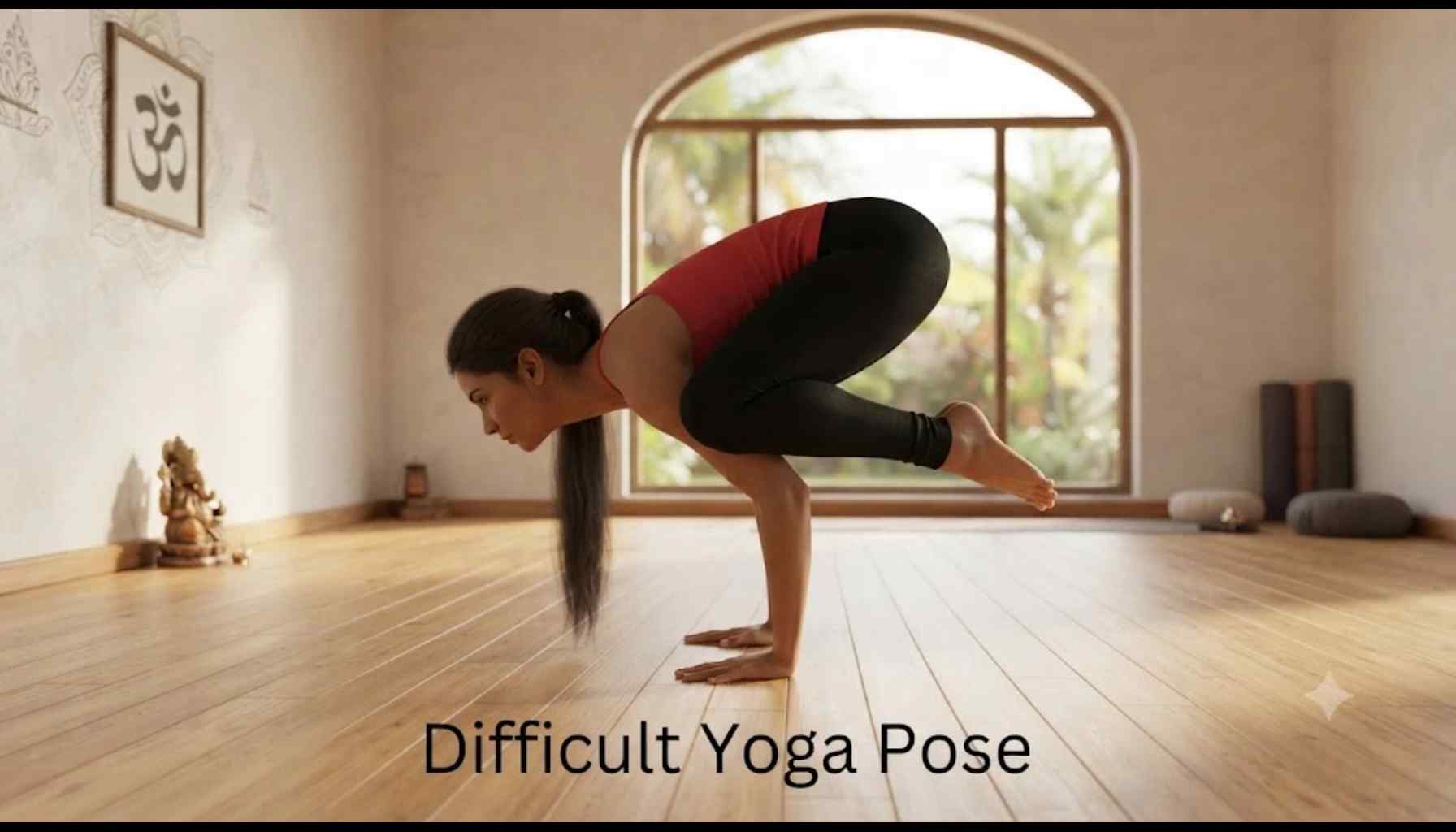
Difficult Yoga Pose: Challenge Your Limits
A difficult yoga pose can challenge your strength, flexibility, balance, coordination, and concentration. Advanced yoga postures often require more than physical flexibility because they demand controlled breathing, body awareness, and mental focus.
Practising difficult yoga pose is not about forcing the body into complicated shapes. Instead, the aim is to gradually develop strength, mobility, balance, and confidence through consistent practice. Beginners should first build a foundation with basic postures before attempting advanced variations.
Key Takeaways
- Difficult yoga poses build strength, flexibility, balance, and focus.
- Consistent practice helps improve control, mobility, and body awareness.
- Proper alignment, modifications, and guidance support safer practice.
Understanding Difficult Yoga Pose
A yoga posture may feel difficult when it requires considerable strength, flexibility, balance, mobility, or concentration. Some advanced poses combine several of these elements, making them more demanding.
For example, arm balances require upper-body and core strength, while deep backbends require adequate spinal and shoulder mobility. Individual difficulty also varies according to a person's experience, flexibility, and physical condition.
How to do Difficult Yoga Pose?
1. Dhanurasana – Bow Pose
Dhanurasana, or Bow Pose, is a challenging backbend that opens the front body while strengthening the back muscles.
Steps:
- Lie on your stomach and bend both knees.
- Hold your ankles and lift your chest.
- Raise your thighs while breathing steadily.
Modification: Place a yoga strap around your ankles if reaching them feels difficult.
2. Chakrasana – Wheel Pose
Chakrasana is also known as Wheel pose which involves complex back-bend which needs strength in arms, shoulders, legs, and core.
Steps:
- Lie on the ground and bend your knees backwards such that your feet are firmly planted on the floor.
- Place your palms next to your shoulders.
- Pressing the floor, raise your body upwards and continue breathing.
Modification: Practice in front of a wall or use yoga blocks under your hands.
3. Sarvangasana – Shoulder Stand
Sarvangasana is an inverted pose which tests your balance, body control and alignment while raising your body.
Steps:
- Lie on your back and raise your legs.
- Hold your waist with your hands.
- Raise your legs straight up and breathe steadily.
Modification: Place folded blankets beneath your shoulders for additional support and comfort.
4. Natarajasana – Dancer Pose
Natarajasana is a demanding balancing posture that combines standing stability, hip mobility, shoulder flexibility, and concentration.
Steps:
- Stand tall and shift weight onto one foot.
- Bend the opposite knee and hold your ankle.
- Extend the lifted leg backward and reach a little forward, maintaining controlled breathing.
Modification: Hold a wall or use a yoga strap around the lifted foot for balance.
5. Bakasana – Crow Pose
Bakasana is an arm-balancing posture that strengthens the wrists, arms, shoulders, and abdominal muscles while challenging concentration.
Steps:
- Squat down and place your palms firmly forward.
- Bend your elbows and position your knees on them.
- Shift forward and lift both feet from the floor. Relax and breathe.
Modification: Place a cushion or yoga bolster beneath you for confidence and support.
6. Pincha Mayurasana – Forearm Stand
Pincha Mayurasana is an advanced inversion requiring considerable shoulder strength, core stability, balance, and body awareness.
Steps:
- Place your forearms on the floor shoulder-width apart.
- Lift your hips and walk your feet closer.
- Kick up gently while maintaining controlled breathing.
Modification: Practise with your feet against a wall until your balance improves.
Benefits of Practising Difficult Yoga Poses
- Builds overall muscular strength and physical endurance.
- Improves flexibility and joint mobility.
- Enhances balance, coordination, and body awareness.
- Strengthens the core, arms, shoulders, and legs.
- Supports better posture and spinal mobility.
- Improves concentration, focus, and mental discipline.
- Encourages controlled breathing and mindful movement.
- Helps develop stability and movement confidence.
- Promotes relaxation by encouraging mindful practice.
- Challenges the body and supports functional fitness.
How to Prepare for Difficult Yoga Poses
Proper warming up is crucial before performing advanced yoga poses. It is essential to start by warming up those muscles and joints that will be used to perform the chosen pose.
While preparing for back bends, it is vital to slowly warm up the spine, shoulder, hip joints, and chest. Yoga props will allow one to perform advanced postures and help to learn proper alignment and how to use props.
Best Time to Practise
Perform difficult yoga postures if you are warm enough and your mind is concentrated. People who are trying to attain advanced postures can perform some preparation exercises 2-3 times per week.
Give yourself enough time to recover after difficult yoga practice, particularly after intensive physical or inversion workouts. Do not do difficult postures right after a big meal.
Safety Tips
Advanced yoga poses should not be attempted abruptly but slowly and step-by-step. Sharp pain, dizziness, numbness, and discomfort should not occur during practice.
One needs to learn advanced postures under the supervision of an experienced yoga instructor. Injured people, pregnant women, and patients who have recently undergone surgery should ask for professional advice before performing advanced yoga.
Common Mistakes to Avoid
- Skipping warm-up before challenging postures.
- Forcing flexibility beyond your comfortable range.
- Holding your breath during difficult movements.
- Ignoring alignment while trying to achieve depth.
- Attempting advanced poses without proper guidance.
Final Thoughts
A difficult yoga pose is more than an impressive physical shape. It can become a useful way to develop strength, flexibility, balance, patience, concentration, and body awareness.
Whether you are progressing toward Dhanurasana, Chakrasana, Bakasana, or an advanced inversion, focus on controlled breathing and proper alignment rather than forcing the posture. With consistent practice, suitable modifications, and appropriate guidance, difficult yoga poses can become achievable milestones in your yoga journey.
Frequently Asked Questions
1. Which yoga pose is difficult for beginners?
Advanced inversions, arm balances, deep backbends, and complex balancing postures can be particularly challenging for beginners.
2. How can I improve difficult yoga poses?
Practise consistently, strengthen supporting muscles, improve mobility, and learn proper alignment under qualified guidance.
3. Should difficult yoga poses be practised daily?
Advanced postures do not necessarily need daily practice because the body also needs adequate recovery between demanding sessions.
4. Can yoga props make difficult poses easier?
Yes, props such as straps, blocks, bolsters, blankets, and walls can provide support while learning challenging postures like Bakasana.
5. What is a Cleopatra Pose?
A Cleopatra pose is a reclining or side-lying posture with one arm raised and bent behind the head, famously emulating ancient Egyptian depictions of Queen Cleopatra.
Also Read: Pregnancy Yoga
By Umesh Kumar Khiri


Discussion (0)
No comments yet. Be the first to comment!
Leave a Comment
You need to login to post a comment.