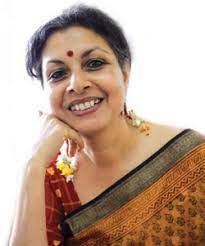
Everyday spirituality
August 2002
By Suma Varughese
Make everyday life your spiritual practice. When the milk boils over, when the bathroom flush doesn’t work, when your colleague steals your idea and the lady standing next to you in the train is stepping on your toe, rejoice and give thanks! Your Spiritual Quotient is going to go up a notch! ‘In my earlier job I had a colleague who used abusive language towards me. I decided the environment was harming me and left the job, for I was confident that the universe would look after me. Sure enough, I got another job with a higher post within nine days.”-Madhuri Gawande (37), Manager, S.V. Distribution “My guru Swami Chaitanya Bharti was holding a group meditation workshop which used to begin every day at 5.30 p.m. In the middle of the sessions, he called me one day at 4.30 p.m. and asked me to take over that day’s session as he wasn’t well. Instantly, my whole brain went into a spin. But fortunately, I knew what to do. The first thing is to say yes to such things. Then you have to boost the level of your awareness so much that your fears and inhibitions get sucked away. With that awareness I went and conducted not one but two sessions.” -Saahil Surti, Bach Flower Therapist and meditator, Pune “I was informed by a fellow professor that my junior, who I had supported and assisted from the time she was a student, was backbiting about me. However, the next day, I greeted her cordially. The professor who had told me about it asked me how I had stayed so calm. In reply I said that I have taught the Bhagvad Gita for the last 34 years, and it would be a shame if I did not practise it. The incident made me aware that I did not need a certificate from anyone. My own conscience was enough.”-Purnima Dave, Head, Philosophy Deptt, Sathaye College, Mumbai “I have been suffering from Parkinson’s disease for the last seven to eight years. I am coping with it. I have not taken a break from teaching. Never succumb to a weakness.” -Kanla Tina (65), a teacher of Transcendental Meditation. Problems on the job, challenges, betrayals and illnesses. These are the very stuff of life. And as every spiritual teacher emphasises, the acid test of our Spiritual Intelligence Quotient (SQ). Even the most sublime philosophy or spiritual experience is of no use if it does not transform our lives. Spirituality in the truest sense is meant to be hands-on, experiential, applied. It is meant to be the alchemy that can convert the dross of our everyday lives into the purest gold; the formula that can transform the uncertain wins and gains of our lives into the most glorious paean of triumph; the master key to the mystery of life. As masters like S.N. Goenka and Sri Sri Ravi Shankar reiterate, it is the science and art of living. “Everything that happens to you in the course of your life is there to help you,” says Saahil Surti. “Everyone who irritates you is your best friend because whenever you get poked, it is a sign that you need to get cleansed.” Neale Donald Walsch writes in his book Conversations With God that the purpose of life is: “Using all of Life-all of many lives-to be and decide Who You Really Are; to choose and to create Who You Really Are; to experience and to fulfill your current idea about yourself.” This perspective has never been more relevant than in present times. As spiritual awareness becomes conspicuous and many of us awaken to its truths, we necessarily have to incorporate it within our schedule of feeding the baby, maintaining harmony at home, coping with cranky in-laws and bosses, handling draining commutes, stressful pilgrimages, but if we can bring God into the details of our lives, we can ford the gap between the spiritual and the mundane and fuse their essences. So what is spirituality and how can it help us achieve all these wonderful things? Spirituality is the discovery of our true self. Hidden beneath the sheaths of our body, emotions, thoughts, and feelings and personality, is the subtle essence of who we are, immortal, immu-table, whole, perfect and complete-spirit. The spiritual quest involves coming in touch with this aspect of ourselves and eventually to establish ourselves within it. In order to herald the true self, we must first eliminate the false. We must learn to disidentify with our body, emotions, thoughts, etc. We can only do this by becoming aware of the conditioning that has created these identities in the first place. The sum total of our past thoughts, expe-riences, upbringing and genetic inheritance have created the likes, dislikes, interests, talents, habits and attitudes that we falsely believe is us. This conditioning must be allowed to unspool if we are to arrive at what is real and unconditional within us. Whatever be our technique, the common elements are likely to be awareness and acceptance of the conditioning. We have to introspect upon our behaviour, thoughts, emotions, habits and desires. By accepting them, we reduce their control over us until they slowly leave us. As this painful and long process unfolds, we change. There is more space for us to be who we are, and therefore for others to be themselves too. We are less reactive, less driven by instincts, impulses and desires. As the contents of the mind gradually dwindle we become more peaceful, centred and harmonious. Life becomes more meaningful and purposeful as we find that all the random events of our lives are adding up to a definite pattern. People and messages come into our lives just when we need them most. The universe itself seems to be conspiring in the process. This creates awareness of the intrinsic link between us and the universe and between all living beings. Faith in the Creator accelerates and a reverence for all that lives pervades us. This is the blueprint of the life divine; the life each of us has the potential to realise. The question is how do we do this through everyday living? Be in the moment The Buddha sat on the dais, twirling a lotus in his hand. Peace, calm and presence radiated out of him in an almost solid force field. Amitabh strained for a closer look, his entire being concentrated on the act. The Buddha, who was scanning the audience, rested his eyes upon him for a second. Amitabh smiled with delight and the Buddha burst into a smile so joyful and so loving, that he felt it entering him with the force of a shaft of sunlight. Rrrrrrr went the alarm clock. Gradually, serenely, Amitabh swam to consciousness. The dream still clung to him like a warm cloak. He drank in the memory for a minute, and resolutely turned his attention to the moment. Parts of him were resisting getting up, resisting being in the moment. Sitting up in his bed, Amitabh turned his attention inward and allowed his awareness to play on whatever was going through his mind. His breath became slow and still. Gradually, the thoughts dissolved, leaving quietitude behind. He breathed a prayer of gratitude for the gift of another day. Then he turned his attention to the morning that had just arisen. To what he wished to achieve. To the attitude he wished to maintain. Fresh from a Vipassana course, he felt as if he had taken a bath in the waters of eternity. All hurry, worry, impatience, stress, seemed to have been sucked out of him. And he intended to preserve this state in the forthcoming days. The quality we bring to every moment of our life is what creates the pattern of our days. Approaching each moment with an awareness of its uniqueness and preciousness, and a determination to wrest its complete potential can transform even the most insignificant act to something intensely valuable. The great Vietnamese Buddhist monk, Thich Nhat Hanh, offers a series of gathas (verses) to anchor us in the moment as we perform our morning routines. The Buddhists call this mindful living, being aware of each moment, moment by moment. Here is the gatha for waking up: Waking up this morning, I smile.Twenty-four brand new hours are before me. I vow to live fully in each momentAnd to look at all beings with eyes of compassion. Imagine if we were to chant this to ourselves on waking up. Imagine if we really meant it. How much we take life for granted. Receiving the gift of 24 hours as we rountinely do seldom seems a cause for celebration, but ask a condemned prisoner at the gallows or a dying patient and they will tell you how unutterably irreplaceable these hours are. In her book, Kitchen Table Wisdom, an American doctor turned counsellor, Rachel Naomi Remen, quotes a friend dying of HIV/AIDS, “I have let go of my preferences and am living with an intense awareness of the miracle of the moment.” How can we access such inten-sity? For a permanent access to such immediacy we need to engage in the act of deconditioning mentioned, earlier but the beginning stage could well be the philosophical understanding of the tangibility of the moment. Present moment awareness is the focus of many contemporary teachers such as J. Krishnamurti, Eckhart Tolle, and almost all Buddhist teachers, but its stream of wisdom has permeated all paths. The essence of this philosophy is that neither the past nor the future exist, we only live in the Now. By transcending the mind’s compulsive tendency to live in the past and the future, we can live fully, intensely and enjoy the bliss of enlightenment. Living in the Now means accepting every moment as it unfolds no matter what it contains. Says Eckhart Tolle in his book, The Power of Now: “Why is it (Now) the most precious thing? Firstly, because it is the only thing. It’s all there is. The eternal present is the space within which your whole life unfolds, the one factor that remains constant. Life is now. There was never a time when your life was not now, nor will there ever be. Secondly, the Now is the only point that can take you beyond

Discussion (0)
No comments yet. Be the first to comment!
Leave a Comment
You need to login to post a comment.