Evolving through illness
In an effort to overcome a challenging illness, human beings often undergo intense emotional and physical churning that engenders a massive spiritual shift in their consciousness, says Jamuna Rangachari
As humans born on earth, we are obligated to evolve. The meshes of earthly life are designed to facilitate evolution through external and internal friction. No matter how much we try to evade this responsibility, we have to fight our demons and ascend to a higher frequency of existence. And until we have done the required inner work, the body remains a repository of all that which is unhealed and unresolved in our life, in the form of chronic aches, pains, and almost incurable diseases. For the longest time, we were programmed to believe that the human body is destined to fall sick and deteriorate gradually. Therefore, all illness is nothing but a gradual progression in that direction. Physical suffering has to be tolerated as inevitable and borne with a smile.
Yet, as illnesses surmounted, and the human race reeled under it causing many to lose time, relation ships, and their cherished dream, the search for per fect health gained momentum, unleashing a slew of spiritual and metaphysical discoveries. The yearning to house a body brimming with health and vitality motivated people to introspect, go on healing jour neys, try various alternatives, and change several key elements in their mental and emotional make-up, making the entire process a kind of spiritual practice. Yet, not every illness is curable; Suma wrote an article called Karma and Grace in the magazine, which injected me with a fresh dose of hope. The article beautifully highlighted the fact that when faced with a challenge, one also gets the requisite strength to handle it. She elucidated that the difference between the karma we earn and what is actually visited upon us is huge, and that divine justice goes hand in hand with divine grace. This further inspired me to face my challenge with fortitude.
I then started exploring all kinds of alter native therapies to heal myself. I also decided to focus on the positive in life and being grateful for all that I had. After experimenting with several modalities, I finally stumbled upon acupressure which healed me completely. Gradually, I shifted to focussing on my emotions, to heal any underlying psychosomatic issues that could possibly have triggered the problem. Today, I am certain that it was my keenness to work on my emotions and develop a positive attitude that resulted in my overall healing. Gradually, I shifted to focussing on my emotions, to heal any underlying psychosomatic issues Gradually, I shifted to focussing on my emotions, to heal any underlying psychosomatic issues that could possibly have triggered the problem. Today, I am certain that it was my keenness to work on my emotions and develop a positive attitude that resulted in my overall healing.
Overcoming any stubborn illness is a form of sadhana. Illness wonderfully stops us in our tracks, forces us into new priorities and redirects our lives.
The harder the struggle to get well, the greater the dividends in terms of finding one’s core strengths and discovering hidden abilities. other major setback in life, is supposed to help us learn, evolve, and grow. My own battle with multiple sclerosis became a form of school, a training ground, from where I emerged stronger and empowered. When I was diagnosed with multiple sclerosis in 2007, I was devastated. There was no known cure or any guidelines on what someone afflicted with this problem must do to keep herself reasonably healthy. During those days of intense turmoil, I serendipitously came across the book, Tough Times Never Last but Tough People Do, by Dr Robert Schuller. The book talks about people who courageously withstood and overcame mam moth challenges that came their way. It speaks about building a positive self-image, no matter what the problem, and creating a positive world for yourself. It motivated me to read positive stories, and take inspi ration from people who remained cheerful and upbeat in the worst challenges of their life. Around the same time, the then editor of Life Positive, Suma Varughese, with the flu, or years of struggle with a chronic illness, getting sick has a wonderful way of stopping us in our tracks, forcing us into new priorities, and redirecting our lives. The harder the struggle to get well, the greater the dividends in terms of finding one’s core strengths and discovering hidden abilities.
Leena Haider, a businesswoman and Heal Your Life practitioner from Mumbai, was diagnosed with breast cancer at the age of 44. She says, “The breast cancer diagnosis transformed my life. Of course, I went through the initial shock and trauma, but once I came to terms with it, I realised that it was just my body telling me to change my thinking. Till then, I always put myself and my needs on the back burner. This was my body’s way of asking me to stop doing that.” She came up with an action plan that put all her learnings as a healer to the test.
Since she worked on removing her illness with commit ment and dedication, it became a kind of sadhana for her. And like any sadhana done with determination and sincerity, it fructified into her growth and empowerment as an individual. “I started affirming that all the resources required for my healing would come to me. I used a lot of affirmations, prayers, essen tial oils, Bach flower remedies, Reiki, EFT, and other modalities to help myself. In the process, I became more authentic, learnt to experimented with their mind and life to find a way to victory.,
Sai Padma, a 44-year-old from Visakhapatnam, was born healthy but got afflicted with polio at the age of one and a half months. The attack crippled her voice and movement of limbs. Her parents, both of whom were doctors, did their best to restore some kind of normalcy to her. After receiving several shock treatments—the only treat ment available then—her voice and upper limbs became active but movement in her legs could not be restored.
Today, in hindsight, I realise that I wouldn’t have taken so many bold decisions and lived life as per my choice if I hadn’t had this diagnosis.” She concludes, “I believe that everything happens for a reason. Deep down, I know that I went through this experience so that I could help many women with the same. I completed a diploma course in classical music, along with finishing her graduation in commerce and a diploma in computers. She then wanted to study chartered accountancy, but sadly, all the institutes she approached, politely declined to admit her, say ing that they cannot accommodate her. Finally, one institute accepted her after much persuasion. Once admitted, she poured her heart and soul into master ing the subjects. But then, there was another chal lenge waiting for her. “Life twisted again after I finished my CA internship. I would come down with severe fatigue, pain, and constant fevers,” she says. She was diagnosed with a condition called gross scoliosis for which she had to undergo surgery but recovered well through sheer grit. Currently, she is pursuing her MBA (finance) so that she can help finance various disability related sectors and make women more economically independent.
Caring and healing
The caregivers of such patients have to put their lives on hold to accommodate a severe ly challenged soul among themselves. And this alone has on many occasions caused people to discover qualities hitherto unknown to themselves, such as, patience, compassion, perseverance, humility, sacrifice, and unconditional love. Secondly, illness too, like any other major setback in life, is supposed to help us learn, evolve, and grow.
Overcoming any stubborn illness is a form of sadhana. Illness wonderfully stops us in our tracks, forces us into new priorities and redirects our lives. The harder the struggle to get well, the greater the dividends in terms of finding one’s core strengths and discovering hidden abilities.
Recently, I watched an interview with the chairman of Microsoft, Satya Nadella, on TV. As he spoke, I learnt that Satya owes his deeply empathet ic nature to Zain, his eldest son, who is severely disabled. He was born weighing just three pounds, having suffered asphyxi ation in the birth canal. As a result, he is visually impaired, suffers from cerebral palsy, has limited communication, and is a quadriplegic. “When he brings his maximum effort to the table, I feel the need to do more for him and others,” said Nadella.
He shared how the condition of his son has taught him and his wife, not just how to cope but also the power of kindness. In the process,
Nadella learned the empowering act of being kind to others as well as himself.
Another astounding care giver who I came across recently is Yukta Sahni, a young vivacious mother, living in my colony in Delhi. She knew almost everything about nutrition and health. Intrigued, I asked her if she was a doctor or a nutritionist, which she denied. After she left, another young woman who was sitting next to us told me her story, which one could call heart-wrenching or inspiring, depending on one’s perspective. Yukta’s son was diagnosed with leukaemia when he was just five. After a few rounds of chemotherapy, radiation, and the works, when she found no improvement, she felt extremely depressed and went into the “Why me?” syndrome. The doctors did not have an answer, nor did her friends or relatives. At that juncture, she started to pray deeply for guidance.
Serendipitously, she met a senior in the ward who told her that all she could do now was to make her son as happy as possible since only that could enliv en his mind and spirit. Inspired, she began to consciously give him healthy, nutritious food and take him out to all the events he loved. As a result, the boy started participating in all the games and activities in the colony, reading plenty of books, as well as making friends everywhere.
Life for him and the family started becoming joyous, with hope for complete recovery injected in the process.
“I do not know what will happen next, but I do hope and pray for as much happiness as is possible for my son. This can happen only if I can be as happy as I can be. I have surrendered myself to the Almighty with complete faith that I shall be guided on the right path by Him.” Her faith, courage, and optimism, in the face of impending sorrow and uncertainty, has made her an inspiration for every one around her.
An example of selfless love
Not just children, even adults need the support and care of their loved ones to heal. At 49, while vaca tioning with her extended family in Lakshmangarh, a small village in Rajasthan, Bimla Killa had a massive brain stroke. Since there was no history of any major brain-related illness on both sides of her family, the doctors administered her with painkillers, thinking it to be a migraine. When on the third morning too, she woke up with the same splitting headache, her husband, Mahesh, packed for both of them and flew back to Kolkata. She was driven straight to the hospital, where the doctor declared it to be a massive brain haemorrhage. The next morning, she suffered a paralytic stroke, which damaged 30 per cent of her brain, rendering her entire left side immobile. She lost her speech and the use of her right limbs. Doctors put her survival chances at less than 20 per cent.
Bimla spent the next two months in the ICU of Woodlands Nursing Home in Kolkata, silently bat tling the odds. During this period, Mahesh spent most of his waking hours outside the ICU. After she was discharged, a series of treatments like physiotherapy, speech therapy, counselling, and many others were started for her. Their
While attempts to overcome personal illness build core strengths of an individual such as being determined and responsible, dealing with illnesses of near ones gives the caregiver a glimpse into the expanse of his soul.
consciously give him healthy, nutritious food and take him out to all the events he loved. As a result, the boy started participating in all the games and activities in the colony, reading plenty of books, as well as making friends everywhere.
With this, the little boy’s life changed from being only about treatment to one that made
medical interventions and may face more. Still, he has a discerning passion for music and loves to spend time with his family members. Even in his most vulnerable moments, 21-year-old Zain shows great resilience and strength, which inspires both his parents. His positive chatter stops their internal chatter of “Why me? Why my him look forward to life. Life for him and the family started becoming joyous, with hope for complete recovery injected in the process.
“I do not know what will happen next, but I do hope and pray for as much happiness as is possible for my son. This can happen only if I can be as happy as I can be. I have surrendered myself to the Almighty with complete faith that I shall be guided on the right path by Him.” Her faith, courage, and optimism, in the face of impending sorrow and uncertainty, has made her an inspiration for every one around her.
An example of selfless love
Not just children, even adults need the support and care of their loved ones to heal. At 49, while vaca tioning with her extended family in Lakshmangarh, a small village in Rajasthan, Bimla Killa had a massive brain stroke. Since there was no history of any major brain-related illness on both sides of her family, the doctors administered her with painkillers, thinking it to be a migraine. When on the third morning too, she woke up with the same splitting headache, her hus band, Mahesh, packed for both of them and flew back to Kolkata. She was driven straight to the hospital, where the doctor declared it to be a massive brain haemorrhage. The next morning, she suffered a paralytic stroke, which damaged 30 per cent of her brain, rendering her entire left side immobile. She lost her speech and the use of her right limbs. Doctors put her survival chances at less than 20 per cent.
Bimla spent the next two months in the ICU of Woodlands Nursing Home in Kolkata, silently bat tling the odds. During this period, Mahesh spent most of his waking hours outside the ICU. After she was discharged, a series of treatments like physio therapy, speech therapy, counselling, and many others were started for her. Their bedroom started resembling an ICU facility with an adjustable bed and all monitoring equipment. Things began to look brighter, and the efforts of therapy began to reap results. She had started stringing six to seven words together to communicate and could walk with some help.
Unfortunately, in the next MRI scan, six months after the stroke, she was found to have another aneurysm in her brain that needed to be surgically clipped. She was hastily flown to Mumbai with a slew of family and extended family members.
The surgery took close to six hours. The surgeon told Mahesh, “An operation is also an injury, albeit a controlled one. Though we have clipped her aneurysm, there has been extensive damage.” He then added that chances of Bimla’s survival beyond three years were slim, and all the progress she had made in speech and the use of her limbs had been lost. She had touched ground zero once again.
Mahesh has to strive to keep pace with her slow speed—go to the club every evening, have their dinner together, after which they watch their favourite TV shows before retiring to bed.
Their daughter, Raksha Bharadia, who is married and lives in Ahmedabad, recounts, “I remember once when I was visiting them in Kolkata. It was six in the morning and they had just finished their meditation. This is the best medicine we can give to ourselves. Along with this, we need to add oodles of positivity too to our thoughts because this is what the Universe is trying to convey to us.
Many proponents of the mind-body healing spec trum say that we are responsible for our health or ill ness. This sometimes sounds a little condescending. A better way to think is to take a longer, spiritual view, and let go of the notion that illness is bad, or that we must have done something wrong to bring it
Holistic healing
Instead of seeing illness as our failure to maintain our health, it’s more useful to view it as a sign that we’re ready to grow. The part of us that chooses illness is the spiritual self that sees our highest good.
True healing requires coming into alignment with our highest good. But if we have addressed symp toms without supporting this realignment, we probably won’t be able to sustain a state of health and well-being for long. We need to adopt a new way of living to help us continue the deeper pro cess of change that can be engendered only spiritu ally.
In all my experience, I have found that including a sincere prayer of thanking the Universe, the cosmos,
All illness is purposeful for both, the personality as well as the soul. The ego, the part of us that believes we’re defined by our physical body, can’t help but find illness threatening and considers it inimical. However, as we address our lives’ situations more deeply, we realise that ‘responsibility’ is not the same as ‘control’. We can only control what’s within the range of our conscious awareness. Illness brings our hidden aspects to the surface and makes us con sider new options. This is, perhaps, one of its most important functions.
So, instead of seeing illness as our failure to main tain our health, it’s more useful to view it as a sign that we’re ready to grow. The part of us that chooses illness is the spiritual self that sees our highest good in a way limited perceptions of our ego can’t.
From a spiritual perspective, illness is a step toward wholeness. No one consciously chooses pain or illness, yet the experience of dealing with these challenges can lead us on a journey that ultimately delivers great rewards. We have seen many people with cancer and other diseases describe their illness as one of the greatest blessings of their lives because it forced them to reshuffle priorities and pursue paths that brought profound fulfilment. The illness gave them an opportunity to make choices they wouldn’t have considered otherwise. As far as healers are concerned, illness gives them more confidence in their own healing prowess, as nothing speaks louder than one’s own authentic experience. To caregivers, it shows them that life is all about caring and loving despite whatev er cards may be dealt by life to their loved ones. In the process, all of them become complete if they look at the illness as a supreme teacher. Isn’t it often said that the true test of love is caring for loved ones when they combat illness?
Let us strive to accept any illness as a comma and not a full stop in life. Only then shall we be able to see life as an eternal gift.
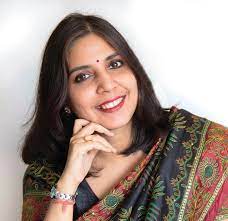
Jamuna Rangachari is a writer who has authored two books for children, and compiled and interpreted Teaching Stories-I and II for Life Positive.
To read these articles online and post your comments, go to http://www.lifepositive.com/Magazine/January2018. We welcome your comments and suggestions on this article. Mail us at editor@lifepositive.net
Discussion (0)
No comments yet. Be the first to comment!
Leave a Comment
You need to login to post a comment.