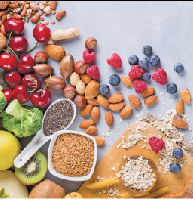
EAT TO YOUR HEARTS CONTENT AND HEALTH
Naini Setalvad gives us various options for foods that help keep our ticker in tip-top shape
The previous year of the pandemic had a lot of people pull up their socks and take their health seriously. On the flip side, though, a lot of people decided to tide over this time of crisis by taking comfort in pizzas, butter chicken, and biryani. This has led to my phone incessantly ringing with enquiries on how to reduce spiking cholesterol levels. Observing this rise in cholesterol, I’d like to share with you foods that I recommend for this reversible condition.
Fibre: As children, we were constantly reminded to eat our vegetables. I hope you have all paid heed to this advice to stay clear of conditions like high cholesterol. Fresh green vegetables and fibrous fruits increase bowel load and clear out unhealthy fats. Eat seasonal foods and be sure to have your grapes along with the seeds as seeds lower your bad cholesterol.
Allium: My meals are incomplete without condiments like garlic and onion. These Indian staples add the right amount of zing to every dish. I can vouch that besides being flavourful, they also impart the compound allium to our dishes. Allium is known for its many benefits, especially its cholesterol-lowering power. Get your allium dose by adding garlic and onion to your salads, tadkas (tempering), sautés, or vegetables.
Turmeric: You are probably wondering how this spice makes an appearance in all my articles. But what can I say? Its versatility has no bounds! Among its numerous benefits, turmeric is useful in lowering cholesterol as well. My go-to turmeric would be the darker variety with its higher therapeutic benefits. It is best to have turmeric as part of a tempering, as fats like ghee and coconut oil allow better absorption of this powerful antioxidant.
Lycopene: According to me, who needs superfoods when our daily produce has such remarkable properties! The humble little tomato that is extensively used in our soups, gravies, and salads is actually a goldmine due to its cholesterol-lowering carotenoid, lycopene. This phytochemical protects heart health by lowering blood pressure as well.
Coriander seeds and fresh leaves: Here is another addition from my kitchen. The dhaniya powder made from ground coriander seeds not only adds an earthy flavour to dishes but also helps in reducing cholesterol as well as sugar levels. I add it to my www and vegetables and garnish with fresh coriander leaves.
Vitamin C: If you haven’t already stocked up on your Vitamin C, given the pandemic, here is another reason why your pantry should be full of lemon, tomatoes, papayas, and other Vitamin C-rich foods. Not only is it anti-inflammatory in nature and helps fight infections but also lowers cholesterol. The easiest way to get your Vitamin C is by just squeezing lemon over all your meals.
Barley: I’d like to share that whole grains are full of fibre. Barley is an ancient pseudo-grain that effectively helps reduce cholesterol. Barley contains the compound beta-glucan, which helps clear out the bad cholesterol from clogged arteries.
Pyridoxine: We need all vitamins to be in sufficient proportion. I have observed that vitamin B6 plays an important role in preventing clogged arteries by reducing cholesterol. Carrots, spinach, bananas, and chickpeas are some of the foods high in this vitamin.
Psyllium husk: Psyllium therapy is a great adjunct to reducing cholesterol as it helps faster clearance of fat from the bowel. When having psyllium husk, it is important to have large amounts of water, or it could leave you constipated.
Omega-3: I want you to add to your daily diet omega-3, a heart-protecting antioxidant. With its anti-inflammatory effect on the liver, it reduces the production of plaque. Omega-3-rich foods include flax seeds and walnuts. Sprinkle them over your salads, or munch on them as a snack.
Phytosterols and Phytostenols: These natural compounds produced by plants reduce cholesterol. They are known to mimic the effect of their synthetic drug counterparts. Foods like brown rice, whole wheat, lentils, nuts, seeds, and cruciferous vegetables are rich in phytosterols and phytostenols.
Try out my delicious fibre-packed recipe.
Bottle Gourd Pav Bhaji
Ingredients
1 cup boiled bottle gourd
1 cup boiled mixed veggies (French beans, carrots, cauliflower, peas)
¼ cup capsicum, finely chopped
½ cup onion, finely chopped
4-5 garlic cloves, finely chopped
2 cups tomatoes, finely chopped
1-2 tbsp red chilli powder
1 tbsp pav bhaji masala
1 tbsp coriander, finely chopped
1 tbsp liquid cow’s ghee
Salt and lemon to taste
Method
1. Take ghee in a pan and heat it. Add chopped onion and garlic, and sauté for a few minutes till translucent.
2. Add chopped capsicum, and sauté till it’s soft.
3. Add tomatoes, and allow them to cook till pulpy.
4. Add red chilli powder and pav bhaji masala, and mix well. Add the boiled mixed veggies and doodhi (bottle gourd), and mash it all with the help of a masher.
5. Add salt and coriander, and mix well
6. Squeeze lemon on top, and serve hot

Discussion (0)
No comments yet. Be the first to comment!
Leave a Comment
You need to login to post a comment.