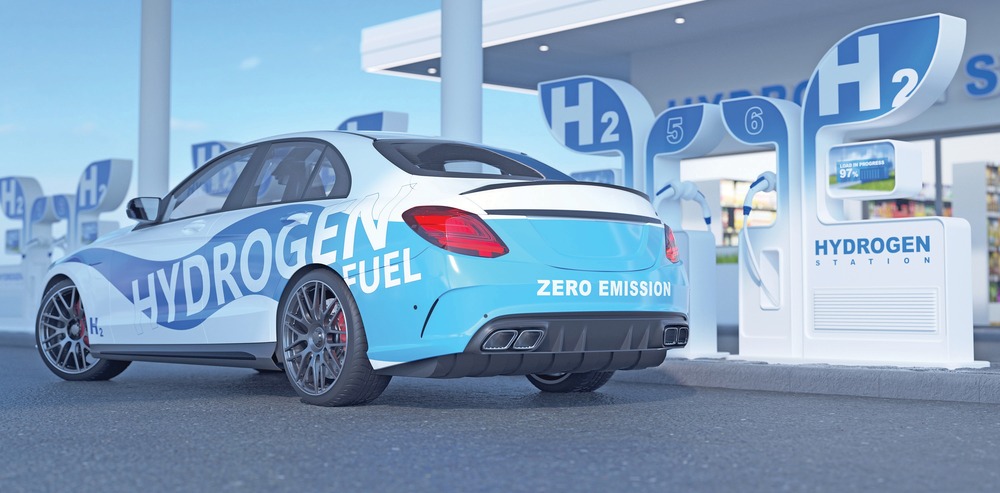
Fuel of the future
October 2022
By Darshan Goswami
Fuel of the Future?
Darshan Goswami is optimistic that hydrogen, produced from tap water, could become the forever fuel of the future, generating power for homes, industries, and cars.
A new day is dawning for a revolutionary way to generate electric power from renewable energy sources. Imagine a future where the electrical power needed to run your computer, TV, and DVD is generated from a small appliance about the size of a dishwasher, located in your home. Envision generating electricity without combustion and producing heat and pure drinking water as by-products. Picture a world powered almost entirely by an infinitely abundant and totally clean fuel. Hydrogen, the most common element in the universe, is that fuel, which can be produced from tap water to generate power for homes and cars. Imagine being able to drive your car more than 500 miles between fill-ups. The car you drive could become a power station on wheels, producing about 30 to 50 kilowatts of electricity. At work, the parked car in the parking lot could be making money for you by supplying energy to the power grid during peak hours. The same fuel cells in the car parked in your garage could provide power for your home use.
In the new age of hydrogen, each individual could become the producer as well as the consumer of energy. Automobile, oil, and utility companies are spending billions to make this dream come true.
Renewable Energy Source
Hydrogen is a renewable, versatile, simple, and sustainable domestic energy, and there is no danger of running out of hydrogen because it is the most abundant element in the universe. Hydrogen can be produced through a thermal, electrolytic, or photolytic process from fossil fuels, biomass, or water. Renewable and nuclear systems can produce hydrogen from water, using a thermal or electrolytic process. People can even produce it in their homes with relatively simple apparatuses.
‘Hydrogen Economy’ is the term used to mark the shift from fossil fuels such as coal, oil, and gas to hydrogen. The vision of a Hydrogen Economy is one of an unlimited source of fuel that would be used to generate energy without releasing carbon and other pollutants into the air.
Hydrogen has the potential to do for the energy revolution what the computer and the Internet have done for the information revolution. Fuel cells are considered the microchip of the hydrogen age, the key to abundant energy from secure, renewable resources. Ultimately, fuel cells supplying homes, businesses, and industries could be linked to a national power grid, allowing surplus power at one location to be transferred to areas experiencing power shortages.
Hydrocarbon Economy
Today, we have a hydrocarbon economy, but the transition toward a Hydrogen Economy has already begun. In the very near future, we will have weaned ourselves from carbon and
we will live in a Hydrogen Economy powered by hydrogen energy from renewable resources. You will have access to hydrogen energy to the same extent that you now have to petroleum, natural gas, and electric power.
Some cities, such as Chicago and Vancouver, already have buses powered by hydrogen fuel cells. Ford, GM, BMW, Toyota, and Honda have prototype cars powered by hydrogen. The Ford chairman, William Clay Ford Jr., has declared that the fuel cell will “finally end the 100-year reign of the internal-combustion engine.” Such efforts are leading the world towards a Hydrogen Economy.
The present fossil fuel economy has created significant environmental problems worldwide. A Hydrogen Economy promises to eliminate all of the problems created by the fossil fuel economy. The advantages of a Hydrogen Economy include greater fuel efficiency, the elimination of pollution and greenhouse gases caused by fossil fuels, and the elimination of economic dependence on Middle East oil reserves.
Good for Developing Countries
Specifically, a Hydrogen Economy may be even more beneficial to developing countries because it will generate more economic opportunities, reduce poverty, and offer dramatically cleaner renewable resources to bypass at least part of the expense of building a fossil fuel infrastructure.
A Hydrogen Economy could produce total decentralisation of the global energy market controlled by giant oil companies and utilities, and result in the vast redistribution of wealth and power. In a Hydrogen Economy, utility companies will become obsolete.
Environment 55
A World Hydrogen Energy Roadmap must be developed to address hydrogen production, delivery and transportation, storage, conversion, public–private partnerships, research, codes and standards, testing, public education, and end-use products. It must also overcome major challenges in the development of new sensor technology. This effort must include government, industry, universities, and research laboratories.
Government subsidies and tax incentives could be used to encourage putting a Hydrogen Economy on the fast track. The goal of the programme should be to develop technologies to safely produce, store, and transport hydrogen from water, nature’s abundant and virtually free source of hydrogen.
New Energy Revolution
Hydrogen has the potential to do for the energy revolution what the computer and the Internet have done for the information revolution. Global reliance on Middle East oil will come to an end, and international trade balances will be realigned. Fuel cells are a critical technology that will bring a total revolution in the energy sector and change the course of history. President Bush has referred to fuel cells as the “wave of the future” and called for a “focused effort to bring fuel cells to market.” The ultimate goal is to use the renewable energy of the sun to split water into its basic components of oxygen and hydrogen.
A Hydrogen Economy would open the doors for fundamental changes in our economic, political, and social institutions, similar to the impact of steam power at the beginning of the Industrial Age. The giant oil companies are investing heavily in a hydrogen future to control the design, production, and sales of the devices that produce and consume hydrogen. Fuel companies like Shell, BP, and Texaco are forming hydrogen and fuel cell technology divisions.
A Hydrogen Economy is a bright vision for the future of energy that will revolutionise the world by reducing our reliance on oil from Middle Eastern countries. I envision hydrogen as the power generation fuel of the future that will wean the world away from oil, slow global warming, and lift billions out of poverty. If significant progress is desired, government and private partnerships must be established to concentrate on development efforts. A ‘Manhattan Hydrogen Project’ is needed to ensure that the Hydrogen Economy vision becomes a reality soon.
Darshan Goswami, has more than 40 years of experience in the energy field. He worked as a project manager for Renewable Energy, Micro-grid and Smart Grid projects at the United States Department of Energy (DOE) in Pittsburgh. He is an electrical engineer with a passion and commitment to promote, develop, and deploy renewable energy resources an hydrogen economy.


Discussion (0)
No comments yet. Be the first to comment!
Leave a Comment
You need to login to post a comment.