
Handing Lifes Black Swan events
Sujatha Rao encourages us to be prepared for unexpected events in our lives by making the most of opportunities or reserves while they are available
Up until 1697, human beings believed all swans to be white. But then some Dutch explorers spotted a few black swans in Western Australia and, suddenly, human beings woke up to the reality of the existence of black swans. When we come to think of it, statistically, all it takes is the sighting of one black swan to prove that black swans do exist.
Since then, the term ‘black swan theory’ came to be used as a metaphor for describing an occurrence that is rare and unpredictable but has a catastrophic impact.
Nassim Nicholas Taleb popularised this theory in his famous book The Black Swan. According to Taleb, to be classified as a black swan event, it should meet the following three criteria:
It should be an outlier, lying outside the realm of the regular, expected happenings. It should lead to an extreme impact. Despite its outlier status, in hindsight, it’s explained to be an event that could have been predicted.
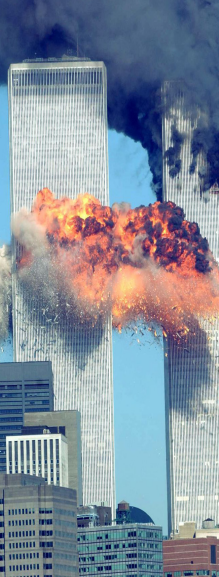
Both the world wars, the 9/11 terrorist attacks, and the 2008 financial crisis are some examples of black swan events that fit into all the three attributes described above. The recent pandemic is not considered to be one by researchers as they found that there is a one per cent probability of pandemics of some intensity occurring, making them not that rare after all.
Such black swan incidents show that we cannot assume the absence of evidence to be equal to the evidence of absence. This theory has been very beautifully put into words by Donald Rumsfeld in the following quote:
58 LifePositive | FEBRUARY 2023
There are known knowns; there are things we know we know. We also know there are known unknowns; that is to say, we know there are some things we do not know. But there are also unknown unknowns—the ones we don’t know we don’t know. And if one looks throughout the history of our country and other free countries, it is the latter category that tend to be the difficult ones.
In his book, Taleb argues that expecting the unexpected and being prepared for it may actually be a lifesaver in certain situations. While this appears to be quite common-sensical, to further elucidate the significance of this, he cites the phenomenon of the turkey being fed well throughout the year, leading to its getting fooled into believing its very good fortune in life, till the arrival of Thanksgiving Day causing it to lose its head in one single day.
So it goes without saying that if we act as though we are in a fool’s paradise, totally oblivious and unprepared for the unexpected, then we could be as damned as the turkey is when doomsday arrives in our lives out of the blue. It pays not only to expect the unexpected but also to try to hedge ourselves against the known and unknown major events that we encounter in our personal lives.
Taleb, who (among many other things) is a derivative trader, claims he uses trading to gain independence and freedom from authority. He often adopts a customised strategy with his investments by being passive and aggressive at the same time. He says he put 90 per cent of his money into very safe havens, such as treasury bills, etc. and the remaining 10 per cent into very risky investment options to reap the benefits from a positive black swan event.
While the above example is a specific one
from the financial aspect, let’s now examine some of these known, unknown, expected, and unexpected events in life that we encounter in general:
• Known-Expected Events:
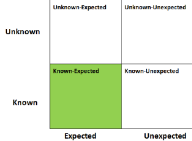
Examples: Life-stage events such as education, marriage, retirement, etc.
• Either Expected Or Known Events
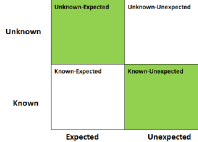
Examples: These are certain things that fall in the realm of the grey zone. For instance, while we know that all of us will eventually die, death sometimes might hit us most unexpectedly through a sudden, massive heart stroke. Similarly, a pregnant woman expecting the birth of her child during a certain month may have to deal with a surprise actual-arrival date.
With proper planning in life, whether the matter is related to finance or other things, we should be able to tide over the events listed under (a) and (b) smoothly. For a majority of the life
stage–related events, preparation is within one’s own control as we more or less know their timelines. So proper planning for each of these events—be it from the financial angle, from the perspective of acting upon building the requisite skills, or from the overall well-being aspect—and acting upon the said plan will help us successfully cross each of these milestones.
However, there is a lot of difference between knowing about an event and acting in preparation for that event. It is worth taking the right steps much in advance with adequate planning to save a lot of heartache later on, especially for matters that are listed under (b).
• Neither Known Nor Expected
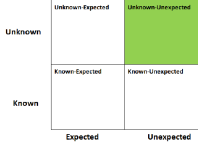
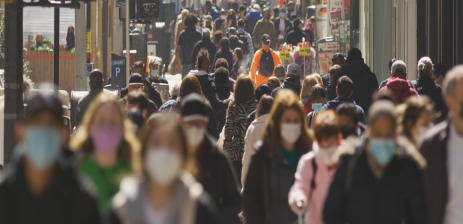
Examples: Pandemics, accidents, etc. are certain events in life that hit us in an unknown and unexpected way. COVID-19 has amply demonstrated the risks of an unknown event knocking us down when we are least expecting it. Before its arrival, 2020 was touted to be that special year ushering in a new millennium holding a bright promise in its wake. Within three months into that year, it became clear that this was unlike any year in the century in terms of the negative impact it unleashed upon
60 LifePositive | FEBRUARY 2023
It’s true that there is little that one can do in the face of something that comes as totally unexpected from the unknown realm of things. But having a contingency plan for things is far better than sitting in denial that nothing untoward is likely to happen. Everyone needs to create that little place to keep things going on in life, no matter what happens.
human beings across the globe. We lost many lives and livelihoods to the pandemic. Even a planned mega event such as the Olympic Games had to be postponed. If this doesn’t serve as a wake-up call, then nothing else will.
It’s true that there is little that one can do in the face of something that comes as totally unexpected from the unknown realm of things. But having a contingency plan for things is far better than sitting in denial that nothing untoward is likely to happen. Everyone needs to create that little place to keep things going on in life, no matter what happens. For instance, even though one is doing quite well at work presently, one cannot vouch with a 100 per cent guarantee that one is absolutely at no risk of losing one’s job. So it always pays to keep upgrading one’s skill sets and have an alternative plan. But that has to happen before the catastrophic event comes calling. For example, one can save money when one still has the job and not after one gets laid off.
Similarly, while there’s little one can do after the pandemic hits, there is definitely something
human beings can do in terms of boosting their immunity levels through properly taking care of themselves through healthy practices so that it can act as a protective shield against eventualities like this. For eventualities that may or may not happen, you should create reserves when everything is going well.
Black swans (the birds) perhaps exist only in certain parts of the world. But the metaphoric ones abound everywhere and in everyone’s life. While this might appear to be a scary thought, we should never lose the perspective that there is abundant beauty in not knowing what our future holds. It makes the journey that much more exciting when the future holds a pleasant surprise. On the flip side, it can also bring us crashing down when the opposite happens. That’s the very reason why there’s a need to cushion our fall.
Let’s march on into the future with hope in our hearts and a plan in our minds so as to learn to take the black swan events of our lives in our stride.
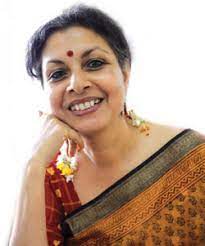
Sujatha Rao is a retired banker. She has been contributing articles to various newspapers and magazines over the last two decades. Two of her short stories were placed third in Times of India’s national level Write India contest (Seasons 1 and 2). Her first book titled In the Company of Stories was published recently. Her other interests include reading, traveling, practising yoga, and mindfulness.
Discussion (0)
No comments yet. Be the first to comment!
Leave a Comment
You need to login to post a comment.