
Heal naturally in heritage havelis
September 2023
Heal Naturally IN vHeritage Havelis
Life Positive presents a residential retreat for Wellness and Self-realisation through music and art. Lata Agrawal gives you a sneak peek of the
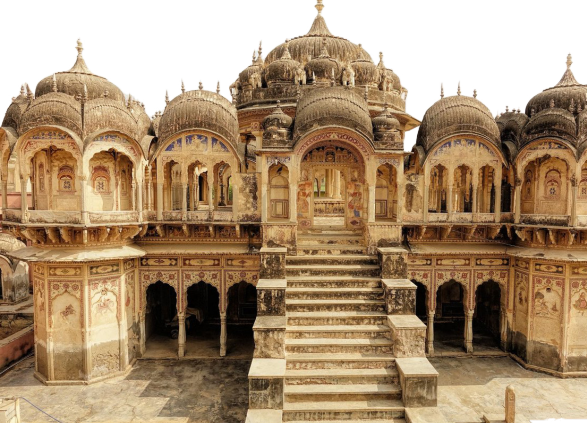
fascinating world that awaits you once you register for it
Life Positive has always made a difference in people’s lives, guiding them forever on their spiritual paths by offering valuable insights and holistic healing via retreats and getaways to rejuvenate the mind and soul. Forging ahead in this endeavour, we are proud to announce our upcoming residential wellness retreat for Self-realisation at Ramgarh Shekhawati, situated in the royal state of Rajasthan, from the 14th to the 18th of October 2023.
Rajasthan. What an incredible palette! It’s simply fascinating how the vivid hues of Bandhej (tie and dye art) knots and Leheriya stripes enliven this nude brown state full of camels and sand dunes; how hot days mellow into cool breezy evenings and then nap in warm, orange sunsets. Streets bustle with bright turbans and glittering zari poshaks as the enticing scent of red chillies and spices waft through the desert air, imprinting it heavily with tradition and heritage, across lanes and alleys. And of course, the extravagant moustache seen here is unmissable! Lavish and long, those winding curves tell a rich tale of kings and princes, culture and folklore, woven deeply into the Rajasthani heritage; all birthed in opulent palaces, formidable forts, and enchanting havelis that ornament Rajasthan.
The rich heritage of Ramgarh
Ramgarh Shekhawati is one such jewel tucked in the Aravallis. It is a decorated town in the district of Sikar, Rajasthan. Known for its ancient havelis, cenotaphs (chhatris) and exquisite frescos, Ramgarh Shekhawati is a historic marvel one must visit. Founded by the Poddar family in 1791, Ramgarh emerged as one of the richest towns in the 18th and 19th centuries, developed by the wealthy seths (businessmen), also called ‘Ramgarh Sethan.’
Adorned with breathtaking murals and stunning frescoes, the walls of this heritage town are a sight to behold and are rightfully called the ‘Open art gallery’ of Rajasthan. Furthermore, Ramgarh’s mansions, aka havelis, and their unique cenotaphs, or chhatris, with intricate paintings are a dazzling wonder, narrating the glorious history and craftsmanship of the bygone era.
The Vedaaranya Haveli and MOHAR ((Museum of Heritage and Art at Ramgarh) of Ramgarh Shekhawati have been beautifully restored by Dr Shruti Nada Poddar, an educationist and heritage conservationist who decided to resurrect her ancestral home and bring it back from the throes of ruin in 2013.
It is on these premises that Life Positive will host its first residential retreat for Wellness and Self-realisation in Rajasthan. Immerse yourself in myriad colours and soulful sounds to heal and nourish your body-mind and access the deepest parts of your soul. Dr Shruti will hold a Vibrational Healing workshop for the participants, where she will take them on a blissful sound journey composed of healing seed sounds. Shilpi , an artist and a painter par excellence, will give you the opportunity to heal your stress by giving expression to your inner child through a play of colours. So pick that brush up, dab it in colour, and unleash your inner artist in this special retreat.
A mix of culture, history, art and healing Dr Shruti has successfully revived the forgotten art and artisans by converting these heritage havelis into cultural and healing homestays that host people, events, and festivals. Numerous seekers, explorers, and art connoisseurs throng this place to connect to their rich past and attend workshops and retreats held by celebrated artists, performers, and healers.
Every nook and corner of Ramgarh Shekhawati oozes history, heritage, and tradition. The famous Ram Gopal Poddar Chhatri built by the Poddars in 1872 will leave you enthralled. The ceilings of these domes are embellished with captivating frescoes based on varied themes from the Ramayana, the Mahabharata, the devotional tales of Radha Krishna, and the Mughal and the Raj eras, replete with royal elephants and horses going to battle or even quirky glimpses from daily life.
The participants also stand to visit the only Veda temple in India, a temple which houses the revered Vedas—the foundation of Hindu spiritual philosophy. The Veda temple, a temple honouring Vedic knowledge, was built by Seth Jainarayan Poddar in the 1800s. It is the highest point in Ramgarh, also called the Shikhar Bandh, and has now been revived for people to visit and take cognisance of their spiritual heritage.
Life Positive feels extremely privileged to offer its natural healing and wellness retreat in this heritage haven. Participating in this music and art-filled healing festival in Vedaaranya is like getting a ticket to travel back in time. To breathe and experience history like never before and to occupy spaces where a bygone era unfolds, unravelling the mysteries of yore. A dream come true for many!
This fascinating retreat will be held from the 14th to the 18th of October 2023 at the Vedaaranya and MOHAR Haveli.
Day 1: The first day’s schedule will kick off after some lunch and rest followed by a visit to the MOHAR Haveli, which is the treasure
Ra
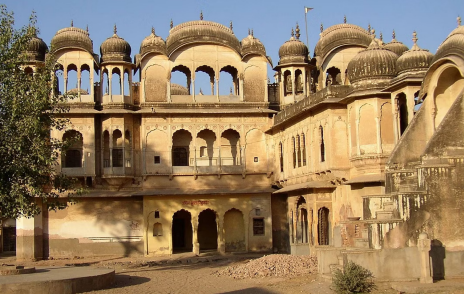
Rammgarh Shekhavati is full of breathtaking havelis
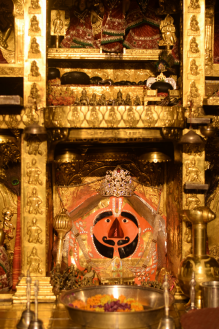
The Salasar Balaji temple trove of heritage and culture, setting the perfect tone for your retreat!
You will also learn about Ramgarh and its rich history through a story narrative, along with getting introduced to your fellow explorers and facilitators later in the day. The day will conclude with a Vibrational Healing session with Shruti Nada from 9 p.m. to 10 p.m.
Day 2: The second day will have a divine start with an early morning visit to the much revered Salasar Balaji Mandir. After breakfast, a workshop called Exploring Spaces Within and Without, a reflective art workshop designed by Shilpi, will await you to captivate you with its fluidity, playfulness, and nuance. In the evening, you will get to enjoy a Vibrational Healing session with Shruti Nada.
Day 3: The third day entails a trip to the unique Veda Mandir, along with a visit to the intriguing chhatris and havelis of the town. The tour will be followed by a riveting Vibrational Healing session by Dr Shruti Nada, designed to bathe you in healing sounds that stir your soul and calm your mind as they facilitate a deep catharsis within you. And before you call it a night, Dr Shruti will once again enthral you with another session called Movement in Music at 9 p.m.
Day 4: The fourth day will be dedicated to art and poetry. After breakfast participants will get exposed to the second level of the module, Exploring Spaces Within and Without, under Shilpi’s guidance. Furthermore, another module called Concrete Poetry will be shared with the group too by Shilpi after lunch, lasting two hours. Concrete Poetry is a verbivocovisual art form where each participant creates a concrete poetry of her own by the end of the session. Concrete poetry celebrates the form of alphabets like elements of art and takes language beyond the context of intellect into the realm of feelings and intuition. While the mind analyses, the heart synthesises, and through this medium of expression, both faculties work simultaneously and quite wonderfully!
However, all good things must come to an end, although the journey is never-ending. It’s time to bid goodbye as we reach the fifth day, ready to pack our bags full of memories and experiences worth a lifetime.
Spiritual healing workshops and retreats with Life Positive leave an indelible impression on the mind, infusing it with positivity and accelerating personal growth at both conscious and subconscious levels. Modern man ought not to miss such an invaluable opportunity to explore his inner world, in the crucible of art, history, and heritage. For they say: “A people without the knowledge of their history, origin, and culture is like a tree without roots.”
We welcome you to join us in the journey within to mend the broken heart, energise the soul, and discover the Self.
Below are the workshop details and interviews with our world-class facilitators:
WORKSHOP 1
VIBRATIONAL HEALING BY SHRUTI NADA PODDAR
When sound energies are produced at their very primordial level, they can restore the homeostasis of the human body-mind, heal deep-rooted ailments, and infuse a person with a higher vibratory frequency. Who hasn’t felt the cosmic reverberations of the Shiv Tandav Stotram, the chants of Aum, or the Sanskrit hymns created in the praise of the Creator? We relate so deeply with them because they resonate with our own cellular frequency. Knowing this, the facilitator, Dr Shruti Nada Poddar, created Nada Vibronics, a vibrational healing ecosystem that applies vibrational technologies to cure diseases and empower people through consultancies, workshops, and retreats.
Dr Shruti’s healing music is used worldwide to heal mind-body conditions and specific diseases. She is also the winner of the BMW Simply Unstoppable Award in 2018 and the FICCI Tourism Award in 2019 for her special contribution to the Tourism Industry. She received the Delhi Ratna Award in 2003 for her pioneering work with spiritual healing music, and an NRI award for International Cultural Relations. She received an Honorary Doctorate in 2017 for her pioneering contributions to the field of education and wellness.
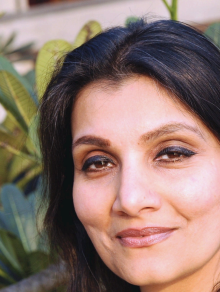
BIJAL MAROO INTERVIEWS DR SHRUTI NADA PODDAR
Her life purpose seems to ooze out of her name itself. From sound healing to restoring heritage havelis in the town with the sole Veda temple, Dr Shruti Nada Poddar has done it all!
I am curious to know about your name —‘Shruti Nada.’
‘Shruti’ means ‘the Vedas, or the four texts of ancient Indic wisdom,’ and my grandfather named me thus. ‘Nada,’ which means ‘vibrations,’ is a suffix I chose for my website. Later, when I had to choose a new name, I just took on ‘Nada.’
Please tell me a little about Nada Vibronics. I learnt to use sound for self-awareness and self healing. I had undergone surgery in 1992 and realised the impact of chanting Aum silently
to remove the pain. So, I experimented with sound. I studied the effect of beej mantras (seed sounds) on different brain waves such as alpha, beta, and theta, using EEG. I began teaching Nada Vibronics in workshops. The whole world is vibrations, or Nada Brahma. The five senses take in and give out vibrations. Our ability to handle the mind is what determines our health. Through the practice of learning to chant and how to utter verses, we can heal ourselves.
From healing to heritage conservation, how did the transition happen?
Well, I was in Belfast, UK, in 2013, when I had inspiration from the Mother of Auroville. I have been given so many talents, skills, and special learnings in life. What is the purpose? It is important to find that purpose. When it comes to you, it is imperative not to run from it even if it is difficult. This purpose manifests many difficulties, but when you face them, you become stronger—a spiritual warrior. It was a sudden revelation about what to do with my life.
I needed to find some land in India where I could use all my life experiences to create a space of excellence from the grassroots. My search intuitively led me to Ramgarh Shekhawati. Here, the heritage havelis called for attention and restoration. What I did was part of the natural movement after going there. Just like Sri Aurobindo was given an aadesh (summons) to go to Auroville, I too was summoned to Ramgarh and never looked back.
Where do art and healing intersect?
One must remember that healing is not individual. Most people can’t function as they are plagued by fear. Faith is a great protector; faith in God, guru, life, and the Universe. We need to create a space which is safe where people have somebody they can talk to, who can
hear them out and help them psychologically. A community—like we have satsangs and mandirs in India; groups which are psychological oases.
We adopt a lot of healing practices as a part of our day. But healing can happen only if you work with your hands; if you go out there and face adversity. What I did at the grassroots level required me to overcome many challenges as a test of my spirituality. This is karma, and one cannot shy away from karma if one wants to access spirituality.
Creativity is also part of karma. You feel happy when you create something beautiful like a poem, make a meal, or write something beautiful.
So, what is Vedaaranya about?
The idea of Vedaaranya is a much larger concept than the haveli and the festival. ‘Vedaaranya’ means ‘Vedic forest,’ with all kinds of ayurvedic trees and herbs with birds, animals, and people living in nature. Ramgarh was called the Doosra Kashi. Kashi was a place of great knowledge. Ramgarh too had eight centres of Sanskrit learning. There was so much diversity—diversity of expressions, of paintings on walls, of knowledge—and a forest just across the road. The whole place seemed like a Vedic forest, both as a metaphor and in reality. The manifestation of hospitality is a necessity in the larger plan. Tourism is a way for people to appreciate all the good things that a place has to offer. It’s an intelligent way to create socio economic wellness for the region.
What is your vision for Vedaaranya? I want the women, who are not literate but very intelligent and talented, to be empowered. The youth need to develop a perspective of their own spaces and heritage, and recognise the riches, both tangible and intangible. There is a lot of innate traditional knowledge that they don’t value. We were scientifically ahead of the times in building methodology, healing, ayurveda, and Vastu Shastra, which need to be revived. The future generations can adopt, enjoy, and even earn out of this indigenous knowledge. This can prevent the huge exodus to cities.
(A story that Dr Shruti recounts is about the poor kingdom of Sikar and how it became the richest town in 18th-century Rajputana. The queen of Sikar felt scorned by her sister
in-law, the rich queen of Churu. At his wife’s behest, the king of Sikar convinced the affluent merchants of Churu to set up base in Sikar. The merchants insisted on zero taxes, equal status to the royals, and their own rule instead of the king’s, as pre-conditions to migrate to Sikar. The king agreed and the merchants opened their coffers to establish an epitome of beauty and affluence in Ramgarh.)
Do you believe you are the reincarnation of the queen of Sikar at whose behest Ramgarh Shekhawati was built?
No, but I have a deep past-life connection to this place, a purpose which pushes me from within. I do believe in a continuum; the body is just incidental. Just like clothing, the body also changes.
Please tell me about the upcoming art retreat in October
The art retreat organised by Life Positive in October will be conducted by an art therapist. Vedaaranya and Mohar havelis create a beautiful ambience for unleashing creativity. The spaces are any art enthusiast’s delight with wall frescoes and ancient architecture. Through the Heritage Walk, I will introduce you to the soul of Ramgarh that pulled me to it. My purpose is to bring the world to Ramgarh and Ramgarh to the world.
WORKSHOP 2
SELF-DISCOVERY THROUGH ART BY SHILPI
Art is not only about beauty and self-expression but also about healing, therapy, and self-discovery. In this era full of busyness and tight schedules, art helps you pause, reflect, and come back to yourself. Art creates a safe space for people to observe, introspect, and be in a state of flow. Realising the power of art in helping people find a bridge to their unalloyed, pure Self, Shilpi, a New Delhi-based artist, poet, and educator, started an art-based healing and self-discovery module. Shilpi’s art has been exhibited globally, including at the Indian High Commission in London. She is also the founder of Wings of Wonder, an arts lab for children, and leads experiential workshops called START (Shilpi Talks ART) for individuals over the age of 15.
Join this workshop amid the murals and frescos of the Vedaanranya and Mohar havelis in Ramgarh Shekhavati.
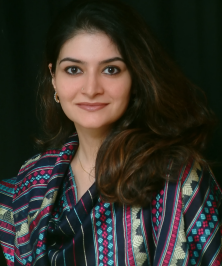
NITYA RAJGOPAL INTERVIEWS SHILPI
I noticed you’re a literature graduate. How did you begin your journey as an artist? I’ve been painting and drawing since forever, as every child does. Also, writing came very naturally to me. I was also trained in classical dance. My house was a place where art, music, and dance were celebrated. I took up art as a subject and scored ninety-nine on hundred, topping my board exams. I wanted to study art, but my father told me to finish my education first. Poetry was the next best thing, so I decided to learn literature. I was exposed to Socrates, The Iliad, and world literature—so many different things. At the time, I wondered why I was doing this. But in hindsight, everything falls into place. I can move easily between words and visuals, visuals and words. I see no demarcation there. The lines get blurred for me. That’s where my Concrete Poetry started. I did not know it was an art form. It’s a verbivocovisual medium, where you use alphabets like elements of art and design.
What then inspired you to become an art educator?
I had my first solo art exhibition when I was in my first year of college. One of my professors helped me out. I collected the funds, and I would go to her house and paint. I really worked hard on this first series. Then the show happened and people came. Some people said something kind, some said something clever. And I thought to myself, This can’t be it. Because, for me, at that time, this was it. Having my own art show. I thought this is what I wanted to do for the rest of my life. But (after the show) I felt, this can’t be it. So very young, at that age, I realised that it can’t be me just telling my story. It’s not just about my voice.When I had my children, I realised that one needs a village to raise a child. I realised I needed more children
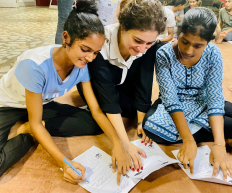
for a certain kind of learning. So I started inviting children over, and I would teach everything through art because that was all I knew. I would teach geography through art and maths through art. That kept growing. Then I started my own Art Lab. I also illustrated three or four children’s books.
Then COVID happened. I couldn’t connect online with my children. In my classes, it was about their story, their voice. It is about them. It’s not about art. An artist or a poet just triggers something, moves something inside us, and whatever we spill, we spill from our own lives. I was heartbroken that I couldn’t connect with them, but the good thing that emerged was that I started connecting with adults online. That’s how this whole window of teaching adults opened up and grew.
How did this journey of art education lead you into art therapy?
For me, when people say “art therapy,” I hear “art art.” Because art is therapeutic. The therapy happens. It is an unveiling through art. Self expression comes through self-recognition. I prefer to use the word unfolding rather than therapy.
What is this unfolding? And how does art facilitate this unfolding?
If you have read the Gita, it talks about Karma Yoga, Jnana Yoga, Bhakti Yoga, and Raja Yoga, which is about meditation. For me, all these things come together. When we are painting, then Karma Yoga is happening; your motor movements, your hands; you are aligned with your body. Then, your intellect, your memory, your associations, your observations, all these things are also aligned and engaged when you’re painting. So even Jnana Yoga is happening. Bhakti Yoga happens because no matter how good an artist you are, there is a sense of surrender that automatically comes; you realise that although your pencil or your brush becomes an extension of your fingers, it’s still doing something or becoming something; that it had to be. It has a life of its own. It’s coming through you, it’s not yours. Raja Yoga happens because you are in a flow state. You don’t know if it’s been one minute, ten minutes, two hours, or four hours. According to me, that’s how the unfolding happens.
Art is not just something that’s working on the surface. It is moving something. It shifts the core, and it is a path to Self-realisation. It helps us observe ourselves and the world around us better. Observation is happening outside, and it’s a reflection inside. So these lines blur. The line
between you and the other blurs through art. It just dissolves. Pain will not lead to sadness if it’s observed through the eyes of art. It is what it is in that moment. This present moment is pregnant with a zillion possibilities. And I really think art has the power to unfold that, for us to look at it for what it is.
Self-awareness is a journey. It is a pathless path. Sometimes we are aware of the workings (of art), sometimes we are not. When people ask what qualification they need for my art workshop, I always say a heart open to possibilities. That is the only thing you require to pick up a brush or a pencil.
Where, according to you, does the transformative power of art lie?
Buddha said “Appo deepo bhava (Be a light unto yourself).” That was his last teaching, the first being “suffering is.” I think painting is a journey from “suffering is” to “Appo deepo bhava.” That is the entire unfolding. Until we look within, we will not be able to do art. You cannot learn art without learning about life, and you cannot learn about life, in my case at least, without understanding art. They go hand in hand. They imitate each other. The distinction between art and life fades away, and they become one. Art creates a sense of wonder.
Lata Agrawal, born and brought up in the plains of Siliguri, West Bengal, is a passionate writer and poet at heart. She has worked as a content writer and editor for various companies and websites, and is now an active blogger and freelancer.
Discussion (0)
No comments yet. Be the first to comment!
Leave a Comment
You need to login to post a comment.