Mandala
MANDALA
Lotus Blooms In The Big Apple
A new wellness and
spirituality web magazine,
A Lotus in the Mud,
founded by seasoned journalist
and the founding editor of Life
Positive, Parveen Chopra, was launched at the Consulate of India
in New York on January 21. Chopra, who has a rich experience in body-mind-spirit journalism, summed up the webzine’s unique content mix in his speech at the launch: “We tap the world’s religious and spiritual traditions for wisdom as well as draw from the latest medical and scientific research to present content for our readers to be fully productive and successful, and yet be healthy, happy, and centred.” He added that every article they post on alotusinthemud.com must pass the litmus test of usefulness— something that the readers can benefit from to better their lives. He cited articles such as Practical uses of faith—A Zoroastrian perspective, The 4 happy hormones and how to boost them, Is work worship?—renegotiating work-life balance, and Beware the frozen food convenience to buttress his claims. The unique interactive features of his web magazine include short
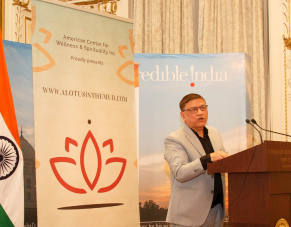
Praveen Chopra at the launch of ‘A Lotus in the mud’ web-magazine in NY
meditations with soothing music, personality quizzes, and space for visitors to share their experiences of healing and personal or spiritual growth.
Launching the website, Consul General Randhir Jaiswal congratulated Chopra for the initiative which he called “another slice of India in America, promoting wellness through yoga, right food habits, etc, and from which people should take benefit.”
Chopra agreed that even though the Lotus site sources from the world’s major faiths, its founders, advisers, and donors—being proud people of Indian origin—are committed to preserving, protecting, and promoting Indian heritage by projecting it to the American audiences.
At the launch event, a video introducing the webzine explained that ‘Lotus in the mud’ is a key concept in Hinduism and Buddhism, signifying that we may get muddled by problems, but we have the inherent capability to emerge as full-bloom lotuses in body, mind, and spirit.
A trained teacher of meditation, Chopra founded Life Positive, India’s first spiritual magazine, from New Delhi in 1996 after leaving his job at India Today. Here in the US, he edited The South Asian Times and the interfaith journal One World Under God.
Last year, Chopra founded the American Centre for Wellness & Spirituality Inc, a 501(c)(3) not-for-profit, to run the Lotus website.
LOCAL ACTION WITH GLOBAL CHANGE
Dr Francin Pinto believes that we all
can bring about a change if we wish
to. She founded the Garbage Concern
Welfare Society (GCWS) in 2005 and has been
instrumental in diverting over 25 million
tonnes of waste from eco-sensitive locations. Its
current daily operation diverts 122 tons of waste.
The team has trained over 5000 marginalised
people to become waste managers, providing
them with a dignified livelihood in the waste
management sector.
Dr Pinto says, “The only difference between a problem and a solution is inaction. When we know a serious crisis is staring at us in the area of sustainability, we all must do something about it.” She says that if waste is not treated or systematically recycled, the accumulated waste becomes a bio-hazard for the community at large. Hence, for sustainable development to become a reality, minimising waste by restructuring the usage process and its treatment at source before discharge, reduces the overall impact on the ecosystem. This is done in a systematic manner by the organisation.
To enable Zero Discharge Communities (ZDC), every institution or community has a Standard Operating Procedure (SOP) for on-site waste management. These audits identify and qualify the various types of waste produced, with details of the frequency of production and the current process of handling and discharge. In the case of hazardous waste, the concentration and toxicity are analysed by a certified body. The findings are submitted via a
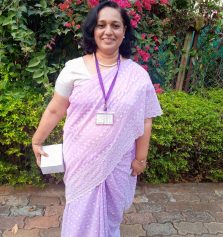
Dr.Francin Pinto works to enable zero discharge communites
Waste Inventorisation Report, with suggestions to minimise the waste, dispose it safely, and recover resources from the waste. After this, the stakeholders are educated on how to go about and implement the suggestions for a cleaner, healthier society.
Furthermore, GCWS also studies the impact of the adoption of this system which is then shared as best practices with other communities to multiply the impact.
By creating such communities, the organisation has noted that it reduces pollution of the ecosystem by 85 per cent and increases the recovery of new resources from waste by 65 per cent. The economic benefits increase exponentially as the practice reduces the unnecessary use of petroleum fuel for the collection, disposal, and dumping of waste into eco-sensitive regions. The livelihoods created within the ZDC for the marginalised further add economic value and build a holistic and progressive community.
- By Jamuna Rangachari

Discussion (0)
No comments yet. Be the first to comment!
Leave a Comment
You need to login to post a comment.