
Mandala
May 2023
Giving Tribals DUE RECOGNITION
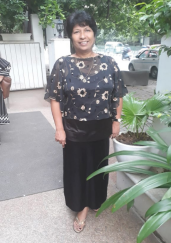
We often ignore tribals who are very much a part of our society. However, some of us view them differently. Being with them in the urban forest of Aarey, Cassandra Nazareth from Mumbai wanted to make their lives better. She formed the Nazareth Foundation, and her friends, Blasia Pinto, Mahesh Bariya, and Rita Newnes, joined her.
They have worked in creating livelihood for the women by providing them with basic amenities in over 12 villages in Aarey, 11 villages in Sanjay Gandhi National Park, and six villages at Madh Island.
Through the foundation’s flagship programme, Tribal Tadka, the foundation has been able to transform the lives of communities in the villages.
Today, the women host TribalTadka lunch or breakfast nity has been able to provide a much-needed impetus to the #SaveAarey campaign, which attempts to save the land and the villages of Aarey. ther projects include facilitating the tribals to get their own Aadhar and PAN cards. Project Roots,
which helps them in getting caste certificates, is one of two ongoing projects, the other one being a protein nourishment project for
women and children. The Tribal Tadka project enabled the provision of 2700 smokeless stoves in the kitchens, 45 bio-toilets, food
grains, sanitary pads, books, saree donations, sewing machines, flour mills in 11 villages, and the refurbishing
of borewells and mega water programmes along with a flea market and are capable of providing a village experience to everyone who visits them. The lunch comes with a charge, and each tribal woman earns from it.
The programmme also includes a Warli art-and craft workshop and a Village Walk. As part of the entrepreneurship program, the women make items like quilts, bags, hand-painted coasters, etc. and also prepare delicious items like til laddoos and modaks, which the foundation helps them sell through the monthly sale that they organise.
The foundation along with the Warli commuty has made a conscious effort in ensuring that their work is people- and environment-friendly.
During the COVID epidemic, they crowd-fund ed over 25 lakh rupees worth of cooked food, which was distributed daily, as well as 35 lakh rupees worth of sponsored grain, and this im pacted over 16,000 families positively.
“We treat them as people and have tried our best to help them in all areas,” says Cassandra. We are sure she will continue making the life of these marginal people much easier.
- By Jamuna Rangachari
Empowering the Differently Abled SRamakrishna from Ayikudy
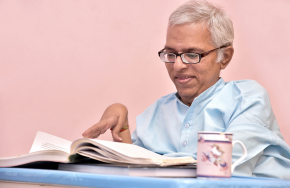
Village in Tirunelveli District, South Tamil Nadu, while in his fourth year of studying engineering, injured his spine while attending the last round of the Naval officers’ selection test and became a quadriplegic in 1981.
Since he realised that the differently abled did not have places to go to, he began ASSA (Amar Seva
Sangam) for them in 1981.
S Sankara Raman, a chartered accountant and a wheelchair user, affected by muscular dystrophy, joined ASSA in 1992 as the secretary.
Together, Ramakrishna and Raman built a ‘Val ley for the Differently Abled’ in a thirty-acre area in Ayikudy. This is a centre helping the physically challenged with models for self-help initiatives. “I feel disability should not hamper anyone’s aspirations in life,” says Sankara Ra man. “When I was younger, I read an interview with the famous tennis player Arthur Ashe of the US, on his health issues. He had said in that interview, ‘When I was winning Wimbledon and other championships, I never asked God why I was given all these credits and achieve ments. Now when I am having health issues, I have no right to ask God why you have given this to me.’ He felt from that moment that he should never blame anybody for his condition but take this as a challenge in his life and thank God for giving him an opportunity to continue with his life and pursue his aspirations despite whatever challenges he had.”
Giving an example from his own life, Sankara Raman says, “When I was young and doing various assignments for my CA Articleship or during my practice, people used to ask me, ‘What problem are you suffering from?’ I would always say I am fine. Puzzled by my answer, they would stare at me disbelievingly. I would tell them that they were looking at my wheelchair and not at me, and that is their problem, not mine.” He asks everyone to focus on their strengths instead of their weaknesses, if any.
The organisation has spearheaded the empowerment of many people with disabilities and has a big partnership with the Government of Tamil Nadu through which they are catering to more than 3000 children with disabilities in the state.
- By Jamuna Rangachari
Upholding the upanashic spirit
Upholding the Upanishadic spirit
In current times, inspiring hope and enthusiasm itself are parmarth (the highest good). A society which doesn’t preserve spiritual prosperity can’t sustain its material prosperity for long. In the absence of such spiritual and wisdom dialogues, society breeds all kinds of individual inferiorities and social evils like drug addiction, physical violence, and mental cruelty, to name a few.
In a nutshell, Upanishad is the most appropriate ideas- and thought The world we live in today is progressing in terms of material wealth. But most of mankind is unable to find health, peace, happiness, and fulfilment in their work. Thus it becomes imperative to promote insightful conversations in the public sphere, which will provide clarity to people and thereby enable themto see life from a spiritual perspective. ‘Upanishad’ is a conversation series between the Darpan Foundation founder Shri Nandkishore Tiwariji and outstanding professionals made up of people from all walks of life. The goal of this series of discussions is to preserve the spirit of genuine inquiry, which is characteristic of Upanishadic knowledge. India has always been a land of seekers. Traditionally, we have always encouraged asking questions.
This forum is helping to continue the spirit of seeking and knowing. In fact, it is glorified and divinised so that the younger generation gets inspired by it. According to Guruji, this, in turn, will fill everyone with confidence. In
sharing movement that helps to keep the whole of humanity together through open-hearted dialogues. The Upanishadic spirit is applauded in occidental and oriental ways of thought
sharing. This spirit attracted the Mughal prince Dara Shikoh, so much so that he translated a few Upanishads into the Persian language.
Every month since 2017, the Upanishad dialogue is organised, in which one or the other prominent personality engages Guruji by hosting the talk. Varied topics have been covered so far, some of which are Directing Destiny, Seekers and Seeking—Myriad Hues!, Youth and Spirituality, Celebrating the Girl Child, Role of Unknown, Ecology and Spirituality, Art and Spirituality, and Exploring Swadharma. Eminent personalities like Dr David Frawley, filmmaker Vivek Ranjan Agnihotri, M P Tejaswi Surya, author Amish Tripathi, artist Thomas Easley, conservation architect Prof Satyaprakash Varanashi, IPS officer Dr Ajay Kumar Singh, and Indic researcher and author Nilesh Oakji have participated in the dialogues so far.
By Rishi Rathore
Discussion (0)
No comments yet. Be the first to comment!
Leave a Comment
You need to login to post a comment.