
Own your body
August 2023
The proliferation of social media and the homogenisation of beauty have given rise to a global epidemic of dissatisfaction with the body, with grave consequences, particularly for youngsters. How can we overcome this universal malaise and develop a healthy body image? Navni Chawla explores.

“I have struggled with my body. Sometimes, I feel insecure in my own skin. There is no gap between my thighs, which is something the media keeps harping on. That makes me feel like I am not normal or beautiful,” shares Shubha Sharma, a Delhi-based 16-year-old school student. Sara Jain, 20, a college student from Delhi, shared that her weight fluctuated so much that stretch marks developed on different parts of her body, namely, the legs, hips, and waist, making her diffident about wearing shorts and skirts. Rohan Gambhir, 23, a software engineer at Infosys, Bangalore, shares, “I have become an angry person because of my baldness. I started losing hair very early in life, and my parents did not pay attention to it. Now, I need to go through painful hair transplant treatments. Else, I will have to live looking like this, which is also painful.”
Do you have a habit of obsessively checking your body by looking into the mirror frequently or weighing yourself constantly? Does thinking about food and e x e rcise s e worsen your mood? Do you wear loose o r o v e r s i z e d clothes t o camouflage your body? Do you often compare your body w i t h o t h e r s and feel unhappy? When you look in the mirror, do you always see flaws that need fixing? If the answer to all these questions is yes, then you struggle with how you perceive your body. How you see your body and the feelings you associate with that perception forms your body image. According to a survey conducted by the Be Real Campaign, about one in three young people are reported to have serious concerns about their appearance. A positive body image establishes a healthy relationship with one’s body. Poor body image or body dissatisfaction leads to a higher rate of eating and mood disorders in individuals. Research shows that women experience more body dissatisfaction than men.
Body image issues are spread across a wide spectrum of age groups; they are not limited to just adolescence or teenage. They are also not limited to women. Ekta based psychotherapist having a private practice, shares, “A six-year-old kid was brought in for therapy (on his paediatrician’s advice) because he would just refuse to eat. Progressive sessions revealed that his father had a pot belly, and his mother taunted him for it. This conflict between the parents, and the atmosphere at home, impacted his psyche, and he developed a fear of looking like his father. On digging deeper, it was a fear of not being accepted.” She added that sometimes body image issues revolving around hair, height, skin colour, and ethnicity germinate very early on. Teasing is common amongst children, and it leaves an indelible mark on the young and malleable minds of those subjected to it. Those who are teased or bullied often experience a lack of belonging or a fear of being ridiculed.
Why do we develop an unhealthy body image, what are its consequences, and how can we resolve it? Let’s inquire.
Behind a negative body image
Our body image starts developing at a very tender age, although it reaches its peak at puberty. A variety of internal and external factors influence our perception of our body. Internal factors like self-esteem play a powerful role. With low self-esteem, one is already inclined towards self-criticism. Negative thoughts and feelings like sadness, guilt, shame, anxiety, and anger assail one and influence the way one feels about the body. It becomes a vicious cycle. Low self-esteem fuels a poor body image and that, in turn, reduces self-esteem even further.
Puberty marks a major transition from one phase of life to another. It is also the time when an adolescent starts becoming very conscious of their body as it goes through so much transformation during this time. “I have seen that girls in their pre-teens feel very uncomfortable when they start getting their periods. This is when other physical changes such as the development of breasts and hips occur, often leading to fear of and shame about the body,” shares Ekta Baxi. “Similarly, short

stature or delayed facial hair amongst boys become points of contention. Jokes and leg pulling by friends or peers impact the way they feel about their bodies,” adds Ms Baxi. Because of a strong need to belong to their peer group during puberty, the entire focus is mostly on the body and how one looks and dresses.
In today’s digital age, youngsters also have a vanity life to maintain on their social media handles. The social media epidemic has led us to believe that the only goals worth achieving in life are Korean glass skin and six-pack abs. It has increasingly led to equating one’s self
worth with one’s looks and the number of likes on Instagram pictures. Unrealistic beauty standards drive a need to look perfect.
“I began editing my pictures 10 years back. I did not think that I was beautiful, and I needed to go the extra mile to look good,” says Karishma Saini, 25, a Delhi-based freelance content manager. She adds, “I found this app called Beauty Plus. I used it to put filters on my face that would make my skin look flawless and radiant. I would also use the slimming tool on this app to alter the shape of my face, nose, and stomach. After spending hours on it, I would get a dopamine kick even though I would be exhausted. I would feel so satisfied looking at my edited pictures that I would not like what I saw in the mirror. I wished I could edit my face and body in real life too. But I was finally able to break this cycle very recently. I realised that I was wasting so much time on it that I had no time to live. To lead a meaningful life, I had to free myself of this obsessive-compulsive behaviour.”
Managing body weight is probably the most common struggle people face, especially as they grow older. At a time when we are expected to be impossibly thin no matter what our age, most people, particularly women, set themselves up for a losing battle and the experience of much Poor body image leads to magnifying physical flaws angst.Aparna Dedhia, 49, a Mumbai-based writer and meditation teacher, shares her struggle of trying to lose weight from the age of 19. It has been a journey marked by changing diets and exercise routines, some of which would help her shed considerable weight, while others would only shed her confidence.
Aparna shares, “Someone would mention ‘keto,’ and I would jump on the bandwagon of this low-carb, high-protein diet. Being a vegetarian, I tried various paneer dishes and adding flax seeds and isabgol (psyllium husk) instead of eggs to patties and flatbreads. But no amount of paneer, cheese stuffed in capsicums, or cabbage rolls could replace a bowl of khichdi or dal chawal. I was back to square one with my sky-high weight.”
It was the same story when it came to exercise routines. Aparna tried spinning (cardio workout on a stationary bike), aerobics, Zumba, and power yoga, to give it all up, either out of sheer boredom or after reaching a plateau.
Aparna adds, “Then came the messiah of obesity and diabetes, Dr Jagannath Dikshit, who advocated intermittent fasting, recommending 16 hours of fasting between the last meal of the previous day and the first meal of the next day, and allowance for two meals within a 55-minute window each. As an Indian, I loved this form of restrictive eating as I was used to fasting for Ekadashi and other forms of vrats (fasts), and it worked wonders for me. I followed it for the longest period of time until I realised that it was responsible for my IBS. I had not taken into account my menopause and thyroid issues. The last few months of my life have been plagued with severe gut issues: acidity and indigestion. The long hours of fasting increased my acid levels, corroding the lining of my intestine and leaving me with a bowel disorder.”
\
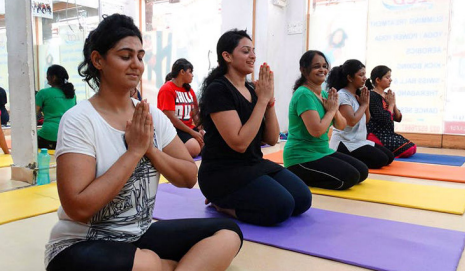
Appreciate your body’s health, strength and flexibility regardless of size
“I jumped on the low-carb high-protein keto diet. But no amount of paneer, cheese stuffed in capsicums, or cabbage rolls could replace a bowl of khichdi or dal chawal. I was back to square one with my sky-high weight,” says Aparna Dedhia
Truly, the amount of damage poor body image can do to a person’s well-being is immeasurable. Body image issues can lead to various complex behaviours and coping mechanisms in individuals. Below are some examples:
• Excessive dieting or restrictive eating: Developing strict diets or engaging in extreme calorie-counting in an attempt to achieve a specific body shape or size.
• Obsessive exercise: Feeling compelled to exercise excessively as a way to control one’s weight or change one’s physical appearance.
• Body checking: Constantly examining and scrutinising one’s body in mirrors or reflective surfaces and frequently measuring body parts to assess perceived flaws or changes.
• Avoidance of social activity: Avoiding
socialising or attending events that require one to wear certain clothing or expose one’s body, leading to isolation and withdrawal.
• Comparison and self-judgement: Constantly comparing one’s body with others’ and engaging in negative self-talk about perceived flaws and shortcomings.
• Seeking reassurance: Frequently seeking validation and reassurance from others about one’s appearance or seeking constant compliments to alleviate anxiety related to body image.
• Compulsive behaviours: Engaging in repetitive behaviours such as excessive grooming, skin picking, or seeking cosmetic procedures to correct perceived flaws that may not be noticeable to others.
1. Emotional distress: Developing feelings of depression, anxiety, and low self-esteem affecting overall emotional well-being and quality of life.
2. Emotional eating: Creating a vicious cycle where negative emotions trigger food cravings, leading to overeating, guilt, and further negative emotions. Emotional eating is not a healthy or sustainable way to address emotional distress or body image issues. Neetu Parag, 26, a salon owner from Noida, shares, “Whenever I feel empty within, I eat. When I am under stress, I overeat. I feel food is filling up that void inside me and will probably make me feel better. Over the years, this habit has doomed both my mental and physical health. Now, I am working with a therapist to help me through this challenge so that I can live a healthy and full life.”
The ideal body that is painted by the media, cinema, and the fashion world has a leading role to play in making people feel inadequate about their appearance. The homogenisation of beauty is the key culprit here in a world full of wildly diverse body shapes, facial features, complexions, and hair. How many in the world can possibly be tall, slim, white, and blonde? “A kid in the fourth grade was undergoing counselling because his grades had dropped. He was very aggressive and would often beat up other children. It turned out that the
underlying cause was his being teased for his dark skin. I have also seen some kids withdraw completely and confine themselves to their homes. They were unwilling to step out. This becomes a huge point of worry for the parents. Lack of social interaction makes them prone to anxiety and other personality problems,” says Ekta Baxi.
Another consequence of poor body image is the proliferation of cosmetic or surgical procedures to revamp one’s appearance. American beauty idols like the Kardashians sensationalise cosmetic procedures like nose jobs, butt injections, bloodied vampire facials, skin
lightening procedures, and Botox injections. They convey the impression that altering one’s appearance through surgery can make one look like a goddess. Some film stars and celebrities get plastic surgery done early on in their careers to look more desirable on screen.
According to a study conducted by the
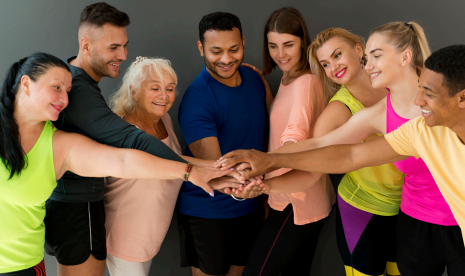
“A kid in the fourth grade was undergoing counselling because his grades had dropped. He was very aggressive and would often beat up other children. It turned out that the underlying cause was his being teased for his dark skin, “ says Ekta Baxi
International Society of Aesthetic Plastic Surgery (ISAPS) in 2019, approximately 11 million surgical and non-surgical cosmetic procedures were performed globally. This study included both invasive procedures like breast augmentation, liposuction, and rhinoplasty as well as non-invasive treatments such as Botox injections and dermal fillers.
Dr Jayesh Joshi, 48, a plastic cosmetic surgeon, who operates from his clinic, Relive, in New Delhi, shares, “Cosmetic surgery can build self-confidence by enhancing a person’s physical features and attractiveness. It provides several benefits to people who suffer from body dissatisfaction. I have found in my long career that people are so obsessed with altering their looks that they rarely focus on healing their poor body image. Many of those most anxious to undergo cosmetic surgery also demonstrated significant improvements in depression and anxiety. They felt relieved that surgical treatment could magically remove their flaws and create their desired bodies.”
While cosmetic surgery can be a personal choice for some individuals, it’s essential
to carefully consider the potential risks, benefits, and reasons behind undergoing such procedures. It is always recommended that one consults qualified medical professionals and makes informed decisions based on individual circumstances and needs.
Although more and more women today consider going under the knife, it is still considered an extreme step in coping with body dissatisfaction.
How to heal
Psychotherapists recommend strengthening one’s self-esteem, practising positive body talk, journalling all the fears and complaints about one’s body, and talking about one’s body image issues with an expert. These tools help tremendously to get over body image issues.
As we heal, we will gradually recognise how misplaced our obsession with the body has been. Moreover, we will realise that beauty is not just based on one’s features, hair, height, or complexion but also on other far deeper parameters such as charisma, character, vitality, and goodness. We have all encountered people who have riveted us with the energy, liveliness, joy, love, and peace radiating from them. When ordinary faces and bodies are lit up from within, they emanate a transcendental beauty. Real beauty is not skin deep. It is as enduring as the person itself.
For Aparna Dedhia, her seesaw of weight gain, weight loss, and chasing various fitness trends has made her realise that it is vital to adopt a balanced approach when it comes to one’s food habits and exercise routines. She says, “I strive to cultivate a positive mindset, foster self-love, and develop sustainable habits that support overall well-being. I am learning to listen to my body’s needs and honouring its signals for nourishment, movement, rest, and self
care. By finding joy in physical activities that I genuinely enjoy, and adopting a flexible and balanced approach to eating, I hope to break free from the oscillations between fat and fit, and, instead, embrace a lifelong journey of self
improvement and self-acceptance.” She sums it up: “Fitness is not about being better than someone else. It’s about being better than you used to be.”
Let me share my own struggles with my body. Not only did I develop a binge eating disorder that made me gain weight, but I had several issues with the way I looked. I would feel that I was ugly and dark. I loathed the shape of my ears which I considered too pointed and made it a point to hide them behind my hair. I also thought that I was too short. I would run constant comparisons in my head with some other prettier or taller girl, feeling even worse. This went on for a long time until I realised that I needed to change.
I began looking at the beautiful features God had blessed me with, such as my eyes. I started to see beauty in my golden-wheatish colour. I love my skin colour now. I started loving my wavy and riotous hair, instead of pining for shiny and straight hair. My kind of hair is so desirable today, and girls go to salons to get what I have been naturally endowed with. My journey of developing a positive body image may not be over, but it is well begun.
Correcting and improving one’s body image is a personal and complex journey, but here are some expert solutions that can be helpful.
• Seek professional help: Consult a therapist or counsellor who specialises in body image and self-esteem. They can provide valuable guidance and support.
• Practise self-compassion: Cultivate self
compassion, which entails being kind and Aparna Dedhia: A return to balance 34 LifePositive | JULY 2023
Shift your perspective by focussing on the things your body allows you to do rather than solely on its appearance. Engage in activities that make you feel good, and appreciate your body for its strength and functionality.
understanding toward yourself. Embrace your unique qualities and focus on self acceptance rather than comparison with others.
• Surround yourself with positive influences: Spend time with people who uplift and support you. Engage in activities and communities that promote body positivity and inclusivity.
• Challenge negative thoughts: Learn to recognise and challenge negative thoughts or beliefs about your body. Practise reframing negative self-talk and replacing it with positive and realistic affirmations.
• Focus on holistic well-being: Shift your focus from appearance-based goals to overall well-being. Prioritise self-care, healthy habits, and engaging in activities that bring you joy and fulfilment.
• Practise body appreciation: Shift your perspective by focussing on the things your body allows you to do rather than solely on its appearance. Engage in activities that make you feel good, and appreciate your body for its strength and functionality.
Remember, improving body image is a journey that takes time and effort. It’s important to be patient and kind to yourself as you work towards a more positive and healthy relationship with your body.
Sometimes, all you need to get your struggles with your body into perspective is to meet those whose body issues are vital, immediate, and immense. Both the children of my 50-year-old paternal uncle, Sushil Chawla, a Ludhiana
based businessman, are differently abled. His elder daughter, Sara, 22, lost her eyesight during a medical emergency. His younger son, Sahir, 19, was diagnosed with a rare genetic disorder called Duchenne muscular dystrophy, a degenerative condition that led to progressive weakness in his muscles. But I have never seen a glimpse of self-pity on the faces of these children. I cannot fathom the amount of strength the whole family drew from within to continue life with positivity and enthusiasm. They have built an invulnerable family environment, helping and uplifting each other. Both children have immense willpower to do something in life and not let their physical challenges come in their way. Sara is in the final year of studying law and is preparing for the IAS exams. Sahir is studying BCA (Bachelor of Computer Applications) and is already building websites for clients from home. What an inspiring duo! They make me realise the insignificance of my small problems and fill me with motivation.
Beyond the body
“Only the material body is perishable; the embodied soul within is indestructible, immeasurable, and eternal. Therefore, fight, O descendant of Bharat.”
—Bhagavad Gita 2:18
Another insight that will help us see our body issues in perspective is the spiritual understanding that we are not our body. At our core, we are the soul, or the spirit. We are not the body. We have a body. We are immortal. The body is mortal. The death of a dear one can awaken us to this truth. But in day-to-day life, we forget it and spend an inordinate number of hours dressing and decorating the body, preparing and partaking of food for the body, and buying and looking after a house to host the body. When the time comes to bid farewell to this body, everything will be left behind. The accumulated wealth, assets, reputation, name,
and approval of our parents and others will perish along with the body.
Working on this insight will help us gradually pay attention to what really matters. Building our character and making ourselves better human beings every day is priority number one because our psyche will accompany us beyond the grave. Our relationships could be another area of focus because others too, like us, are immortal; and most of us take birth only to work our way through the karma that binds us to others. This is the real work we are here to do, and the body is a fascinating distraction that comes in the way.
Develop a friendship (maitri) with your body “Love your body, every curve, every edge, for it is a vessel that carries the essence of your being. Celebrate its uniqueness, honour its strength, and let self-acceptance guide your journey to true beauty.”
—Anonymous
Losing attachment to the body does not mean that we stop caring for it. Rather, it should be looked at as a temple in which God resides. We must do everything in our capacity to keep it healthy and clean. It is important to respect the human body as it is nothing short of a gift. Even if you see certain flaws in it, love and accept them. Only from a loving space can change germinate. Louise Hay, the renowned motivational author of Heal Your Life has influenced and transformed thousands with her message of healing oneself with love. She cured her own cancer by sending love and positive vibrations to her cancer cells. Not just Louise but many others too have found their illnesses receding or have even lost excessive weight once they learnt to love and accept their body. Here are some scientific and psychological ways to develop a sense of maitri, or friendship, with
your body: Make a song and dance out of life! 36 LifePositive | AUGUST 2023
• Write love notes: Treat your body like a dear friend and write love notes or affirmations on sticky notes. Place them on your mirror or other areas where you’ll see them daily to remind yourself of your body’s beauty and worth.
• Dress up for yourself: Embrace your personal style and dress up in outfits that make you feel confident and comfortable. Experiment with different colours, patterns, and accessories to celebrate your unique expression.
• Have a dance party: Put on your favourite music and have a spontaneous dance party in your living room. Move your body freely and joyfully, focussing on the pure enjoyment of movement rather than how you look.
• Create a body gratitude jar: Get a jar and some colourful paper. Each day, write down one thing you appreciate about your body and place it in the jar. Over time, you’ll have a collection of positive affirmations to reflect upon when you need a boost.
Reclaim your wholeness
• Practise mirror self-love exercises: Stand in front of a mirror, look into your eyes, and say kind and loving words to yourself. Compliment different parts of your body and acknowledge the amazing things it can do.
• Engage in body-positive activities: Surround yourself with body-positive content, such as books, podcasts, or social media accounts that promote self
acceptance and body diversity. Engage in activities that celebrate and honour all bodies, such as attending body-positive events or participating in body-positive art projects.
Remember, developing a friendship with your body is a personal journey, and it’s important to find solutions that resonate with you. Experiment with different strategies, be patient with yourself, and always approach your body with kindness, compassion, and lots of love. Your body is the crown of creation. Love it. It deserves it.
Dr Bijal Maroo, homeopath and writer, offers guidelines to heal a poor body image based on her professional and personal experience
I struggled with a negative body image when I was sidelined for being dark-skinned. The label weighed on my mind for many years. My initial reaction was to hide from the world. I hid behind boring brown and grey-coloured clothes. I also over-compensated by studying very hard. The improved grades helped my esteem. Then I discovered sunscreen, and it became my best friend.
As Wayne Dyer, the American self-help author, wisely said, “Friends are God’s way of apologising for your family.” My friends made me realise my strengths, and my confidence soared. I began experimenting with my wardrobe. A pastel palette seemed to suit my dusky skin. When I unearthed my talents as a speaker and writer, I finally came into my own. Finally, exercises in self-love and gratitude truly
helped me to accept myself completely. I have listed a few ways to develop a positive body image based on my personal and professional experience.
1. Be realistic: Take images of perfect bodies seen on celluloid with a pinch of salt. These images are distorted using photo filters to create magic on the silver screen. Cameramen also use a few tricks such as low-angle shots to get actors to look slimmer and taller. For models and actors, looking good is a professional mandate. They spend 3–5 hours exercising and have dieticians monitor every morsel they eat. But if we did the same, we wouldn’t get anything else done.
2. Accept, appreciate, and give gratitude for your body: “I cried because I had no shoes until I met a man who had no feet,” is a quote attributed to Helen Keller amongst others. Instead of focussing on our physical shortcomings, we can focus on the boon of a healthy and intact body. The Gratitude practices from the book The Magic by Rhonda Byrne helped me in my journey.
3. Impart mindfulness training: Mrs Geeta Dalal, a clinical psychologist and Arts-based Therapy Practitioner, suggests sensitising and educating children and parents about ‘body shaming.’ Thus, students will be mindful of what they say to their peers and avoid inadvertently hurting another child’s
feelings. Mindfulness will build awareness of the role played by the media in building body image.
4. Celebrate individuality: Besides grooming, we can focus on building a well-rounded personality through developing our skills, talents, knowledge, and character. As Dr Meenakshi Jain, a cosmetologist, observed, “How long can you impress people with just a pretty face?”
5. Develop self-esteem: Make a list of at least 100 of your positive qualities. Yes! Each one of us has at least 100, which we could refer to whenever we need to feel good about ourselves.
6. Avoid comparisons: The message we imbibe today is that if we don’t sport a chiselled body and an hourglass figure, we are lesser mortals. Our youth feels this pressure very acutely. We need to adopt a zero-comparison approach to help children breathe easy.
7. Build a support network: In case the pressure gets out of hand, counsellors, parents, and teachers need to work in tandem to help pull children out of the abyss of a negative body image.

1. Be realistic: Take images of perfect bodies seen on celluloid with a pinch of salt. These images are distorted using photo filters to create magic on the silver screen. Cameramen also use a few tricks such as low-angle shots to get actors to look slimmer and taller. For models and actors, looking good is a professional mandate. They spend 3–5 hours exercising and have dieticians monitor every morsel they eat. But if we did the same, we wouldn’t get anything else done.
2. Accept, appreciate, and give gratitude for your body: “I cried because I had no shoes until I met a man who had no feet,” is a quote attributed to Helen Keller amongst others. Instead of focussing on our physical shortcomings, we can focus on the boon of a healthy and intact body. The Gratitude practices from the book The Magic by Rhonda Byrne helped me in my journey.
3. Impart mindfulness training: Mrs Geeta Dalal, a clinical psychologist and Arts-based Therapy Practitioner, suggests sensitising and educating children and parents about ‘body shaming.’ Thus, students will be mindful of what they say to their peers and avoid inadvertently hurting another child’s
feelings. Mindfulness will build awareness of the role played by the media in building body image.
4. Celebrate individuality: Besides grooming, we can focus on building a well-rounded personality through developing our skills, talents, knowledge, and character. As Dr Meenakshi Jain, a cosmetologist, observed, “How long can you impress people with just a pretty face?”
5. Develop self-esteem: Make a list of at least 100 of your positive qualities. Yes! Each one of us has at least 100, which we could refer to whenever we need to feel good about ourselves.
6. Avoid comparisons: The message we imbibe today is that if we don’t sport a chiselled body and an hourglass figure, we are lesser mortals. Our youth feels this pressure very acutely. We need to adopt a zero-comparison approach to help children breathe easy.
7. Build a support network: In case the pressure gets out of hand, counsellors, parents, and teachers need to work in tandem to help pull children out of the abyss of a negative body image.
Dr Seuss says it best: “Why fit in when you were born to stand out?”
Navni Chawla, a Delhi based writer has a heart brimming with passion for life and loves capturing the beauty of the world through words.


Discussion (0)
No comments yet. Be the first to comment!
Leave a Comment
You need to login to post a comment.