
Relationships
October 2023
Healthy sex, Happy marriage
Anu Mehta talks about the importance of sorting out obstacles to a fulfilling married life created by sexual dysfunction and stress
According to the Vedas, marriage is a union between a man and a woman, with a commitment to pursue Dharma (duty), Artha (earning money and other possessions), Kama (physical and other desires) and Moksha (the eternal liberation) in unison. In many cultures, marriage is recommended or considered compulsory before pursuing any sexual activity. Once this condition is met, sexual activity in a marital relationship can help to strengthen it. Hormones released during sex achieve this in various ways:
• The hormone oxytocin, also known as the love hormone, secreted by the pituitary gland during sexual activity, helps to increase the sense of intimacy and love, which, in turn, enhances sexual function and reproduction.
‘• Endorphins released during sex increase happiness, calmness, satisfaction, and relaxation. These help reduce pain, stress, fatigue, and negative thoughts.
• The hormone serotonin, released after sex, helps in the feeling of fulfilment, satisfaction, and mood regulation (it acts as an antidepressant), which helps increase optimism in life.
• Sex in marriage lowers divorce rates and improves physical, mental, and emotional health.
Anu Mehta talks about the importance of sorting out obstacles to a fulfilling married life created by sexual dysfunction and stress
Stress and negative emotions can mar our sex life by releasing the hormone cortisol; alter physiological functions by reducing the release of hormones, testosterone, and oestrogen; reduce sex drive; and decrease psychological well-being.
The key to sexual and marital happiness lies in understanding the factors responsible for sexual dysfunction and stress:
• Our lifestyle
Most individuals want to be successful human beings and try their best to complete societal expectations and duties within the assigned age in their lifetime. Marriage and maturing as a parent at an appropriate age becomes an important milestone.
These are individual goals, but marriage and and enjoyable sex life are about two people performing a passionate dance of life by being emotionally, mentally, physically, and sexually in sync to seek pleasure and mutual trust. And this calls for couples to relax, calm down, and balance the expenditure of their time, space, and energy. Despite knowing this, couples seem to invest less and less time in adventure and exploring each other, and more and more time to fit into their successful cultural and career mould. By the end of the day, they are exhausted, bored, worried, or stressed out, with no time to connect with themselves or each other through sex.
• Body image
Many of us are not used to seeing
ourselves naked. Consequently, allowing ourselves to be in a vulnerable position with another can cause anxiety and avoidance of sexual proximity and initiation of sex, and sexual dissatisfaction.
• Insensitivity
To create safety in the relationship, partners must treat each other with respect and sensitivity, and not try to control, threaten, or manipulate each other.
“Aditya married his girlfriend, Sheena, a virgin and an aspiring model, who posted her bikini-clad photographs on Instagram. In these photographs, Aditya’s mother saw Sheena as inappropriate, immoral, vulgar, available, and cheap. Sheena felt insulted by her mother-in
law, and their personal life and sex life fell apart.

• Lack of communication
Communication is the key to a healthy sexual life. When couples are aware of what pleases or displeases their partners sexually, they can create an
excellent rapport
with each
other.

Most couples do not have effective communication skills and are ignorant of each other’s sexual preferences, needs, fantasies, and desires, which can be a source of exhaustion, disconnection, and dissatisfaction.
• Presence of children
Most couples believe that children add love to life. Pregnancy, childbirth, and childcare within available time and space is a lifetime commitment and can create considerable stress. The couple may experience anger as they go through the drill of diapers, sleepless nights, and personal expectations. Fluctuating hormones post pregnancy can also be a big put off in sex life.
• Inability to conceive
Not being able to conceive a child can be very stressful for a couple. Dr Ameet Patki, an infertility specialist, says, “Highly driven, successful, and educated A-type personalities
with plum jobs may not have the time to conceive a child but may opt to try for a child under social pressure.” For them, conceiving a child may gain priority over making love and enjoying each other. Once this objective is achieved, sexual intimacy may disappear as an unnecessary task.
• Job stress
Undergoing intense stress in a high-profile job, where one has to constantly meet targets and deadlines, can decrease sperm volume, sperm concentration, testosterone levels, and sex drive, and lead to a sexless life.
• Erectile dysfunction
Depression, anxiety, diabetes, or a weight problem can create erectile dysfunction and impact sexual life adversely.
It was surprising for Aman that he could have a normal erection and have sex with a
younger woman, his girlfriendw, but could not sexually perform with his wife. He realised that communication, which is vital for marital intimacy, was missing in his marriage. He was filled with rage for his wife as she reminded him of his mother who nagged and cursed him till she was alive.
• Premature ejaculation
When a man ejaculates too quickly, his partner may feel cheated, dissatisfied, and sex-deprived.
• Reasons for low sex drive in women Many women today undergo long work hours in challenging jobs, or sleepless nights at call centres, or choose to be an athlete and participate in marathon races, which causes hormonal flux and reduces their sex drive. Hormonal flux is also responsible for the medical condition amenorrhea, the absence of menstruation during the reproductive years in a woman.
Contraceptives and certain medications can also reduce sexual desire and libido.
For a woman, menopause is a natural biological process marked by a natural decline in the reproductive hormones oestrogen and testosterone at 40 to 50 years of age, and it lowers her libido.
• Experiencing pain during intercourse Pain during sexual activity reduces self-esteem and sexual satisfaction, and increases negative thoughts about intercourse and the need to avoid sexual activity altogether, affecting personal relationships negatively.
Dyspareunia is genital pain during or after sexual intercourse, which can be caused by vaginal dryness, vaginismus, endometriosis, and labial fusion in women.
Vaginal dryness, which can be due to a decrease
in sex hormones, is the reduction of lubrication during sexual intercourse, making sex painful.
Vaginismus is an involuntary tensing of the vaginal muscles, which too can make sex painful.
Labial fusion or labial adhesion is the sticking together of the labia and may occur in the early months of a girl child’s life, which can create problems in adult sexual life.
Endometriosis is a painful condition, wherein the uterus lining — the endometrium — grows outside the uterus and causes painful and heavy periods and fertility issues.
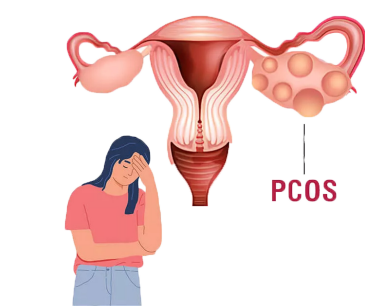
• Polycystic ovary syndrome
Polycystic ovary syndrome can be a cause for sexual dissatisfaction due to excessive secretion of androgens, the male hormone. Lucy Rowett, a clinical sexologist and certified sex coach, says, “Some of the many ways trauma can impact sexual response can be dissociating/ tuning out and leaving your body during sex; numbness and physical pain; difficulty getting aroused; flashbacks during physical arousal; getting triggered, panic attacks; difficulty
trusting your partner; wanting to have rougher or more intense sex to be able to feel something; or just feeling completely disconnected from your body.”
• Previous trauma of sexual abuse
Diana’s story: Sexual molestation by maths tutors at 15 years of age changed feminine, happy, bubbly Diana (a virgin then) into a reserved, serious, masculine woman, having a negative self-image and suffering from fibroids and heavy bleeding. The gynaecologist mistook the bleeding for a miscarriage, which hurt Diana mentally, socially, and sexually.
Immediately after marrying Sagar at the age of 34, Diana suffered heavy bleeding. The emergency surgical removal of fibroids and avoidance of penetrative sex for the next few months caused huge sexual stress and a breakdown of mutual communication. For the world, they were and still are the most happening, successful couple, sharing a beautiful house and a brilliant daughter. Both live diverse lives in two rooms of the same house and have shared no sexual intimacy for the past 22 years.
• Sex phobia
As the name suggests, sex phobia is the fear of sex or sexual intimacy. Genophobia or erotophobia are conditions that can cause intense fear or panic around sexual intimacy.
After marriage, Sheela could not understand her extreme fear of penetrative sex, the sight of her husband’s penis, and her need to run away from her husband, especially during intimate moments. During counselling sessions, she recollected that at three years of age, a male servant had sexually abused her, which made her understand the reasons for her discomfort with intimacy.
• Obsessive-compulsive disorder (OCD)
OCD can be a sexual dysfunction leading to reduced libido, obsession with cleanliness, and avoidance of any contact with bodily fluids.
Mohan’s story is about his compulsive need to wash the semen stains off the soiled bed sheets after sexual activity, or to make his wife do so. In the counselling session, Mohan told his therapist how his mother had made him wash bedsheets as a punishment for masturbating as a teenager.
The second story is about Bhavana compulsively imagining having sex with her father, after which she would feel horrible about herself and keep washing herself and her hands. Even as a teenager, Bhavana used to sleep between her mother and father, and had seen them having sex, which had left a negative impact on her psyche.
Gita started her first period at 14 years of age. Her mother instructed her to avoid disposing of the soiled period pads in a bin where her father or brother could see them. So she would hide stained period pads in a black bag and throw them out the window into the junkyard where strays would roam around looking for food. Later, she would wake up at night to obsessively wash her underwear and bedsheet with soap and a scrubber to clean and hide signs of her period overflow. She felt guilty about becoming a grown woman and blocked herself from fully experiencing sexual pleasure or enjoying romance.
Mohan, Bhavana, and Gita had strong religious upbringings and negative sexual beliefs of perceiving sex as a messy activity, a taboo to be hidden and avoided.
•Epigenetic trauma carried over generations Science proves that when your grandmother was carrying your mother in her womb, you were a
tiny egg in her ovary. Thus your grandmother’s, and your mother’s sexual trauma, conditioning, beliefs, and health status can impact our present sexual life at conscious or unconscious levels, which can move down our lineage.
Let us visit the story of four women — great grandmother, grandmother, mother, and granddaughter — living similar destinies and carrying the burden of unhealthy sexual patterns.
Great-grandmother’s family suffered from poverty. She was married at 16 to a wealthy, old widower to provide a better future for her family. This marriage was sexually, emotionally, and mentally not compatible. The process of sexual activity in the marriage was a painful, soulless act without grace, love, respect, and dignity, leaving her feeling neglected, unloved, unhappy, dissatisfied, angry, and trapped in the marriage.
The same conditioning of four women carried on for at least 150 years. No amount of education, self-empowerment, and money earned over the generations could make them feel loved and secure about their future. They avoided sex with their husbands.
It was only when the daughter’s daughter, in the present, started feeling anxious about her relationship with men and started showing a desire to be in a homosexual relationship instead of a heterosexual relationship did her mother seek help.
These patterns survive and become survival strategies within the generations to make them feel safe.
“If you don’t laugh during sex at least once, you’re having sex with the wrong person.” — Unknown.
To create this laughter, safety, and compatibility, couples have to seek professional help to solve the difficulties they are facing in their personal and sexual life by letting go of judgements, fear, anger, and anxiety. This can create awareness of the triggers that are preventing them from experiencing an ideal sexual intimacy.
Meditation, yoga, and deep breathing can help most couples transform their everyday life stress responses into relaxation responses and improve the quality of their sex life. These techniques can aid them in achieving immense mutual pleasure and love.

Discussion (0)
No comments yet. Be the first to comment!
Leave a Comment
You need to login to post a comment.